If you mainly want to warm up your own seat, a desk or under-desk panel designed for that purpose may be suitable. If you also want to warm other areas and the room itself, a convector is more likely to meet your needs. The key considerations are the area you want to heat, a safe position that’s suitable for the specific appliance, its power output and how long you plan to use it.
Who is each type of heating for?
People who feel cold at a fixed desk
If you mainly want extra warmth at your own seat, check whether a panel can be fitted under or on the desk, and which part of your body it will reach. ETHERMA and VASNER describe solutions for desk and under-desk areas.
People using a shared workspace
At a shared desk, the intended mounting method, cable routing and a suitable position all matter. The Federal Institute for Occupational Safety and Health recommends using electrical products as intended and in accordance with the manufacturer’s instructions.
People who need warmth throughout the room
If you want to warm other areas or the room itself, a convector is a different type of appliance from a desk panel aimed at a specific spot. VASNER describes the iTab as providing targeted warmth for your seat and legs, while STIEBEL ELTRON describes the CNS 1000 Plus LCD as a wall-mounted convector that warms the room air.
What should you look for when buying?
Desk or under-desk panel
Suitable if: you mainly want extra warmth for your seat or legs.
Consider: The heat is directed at the immediate area where you’re sitting, so it won’t warm the whole room evenly.
Freestanding infrared panel
Suitable if: you don’t want a fixed desk installation and have a suitable spot for it.
Consider: The appliance needs floor space. For the P-Series freestanding model, Könighaus Infrarot gives a surface temperature of 75–125 °C, depending on the version.
Electric convector
Suitable if: you want to warm the room as well as your desk area.
Consider: The documented STIEBEL ELTRON CNS 1000 Plus LCD model is wall-mounted and has a rated input of 1000 W; it isn’t an under-desk option.
| What you’re looking for |
What to check before buying |
Who is it important to? |
| Targeted warmth at your seat |
Intended mounting method and the area of your body it will reach; check whether the specific model has a controller. |
If I feel cold at my desk, I mainly want to warm my legs or seat without raising the temperature for everyone. Around 31% of consumers prioritise heating a specific area. |
| Safe positioning at a shared desk |
Instructions and mounting method; cable routing and a clear space for the appliance. |
At a shared desk, I want to check that the mounting method and position are suitable according to the appliance instructions before using it. Around 25% of consumers prioritise safe use in a shared space. |
| Electricity use during planned operation |
Rated input in kW, hours of use and your own tariff. For a continuous heating period, use this calculation: kW × hours = kWh. |
If I use the panel regularly, I want to consider its power, how long it runs and my electricity tariff together. Around 25% of consumers focus first on running costs. |
| Warmth for several areas |
Whether you want to warm the room air or just one seat; the wall or floor space required. |
If other areas are cold too, I’ll check whether a desk heater alone will be enough or whether I need to warm the room. Around 19% of consumers prioritise heating a shared space. |
Avoid common buying mistakes
-
Confusing targeted warmth with room heating
A desk panel and a convector heat different areas. VASNER describes the iTab as providing targeted warmth for your seat and legs, while STIEBEL ELTRON says the CNS 1000 Plus LCD warms the room air.
Before choosing, decide whether you want to warm only your own seat or the room air and other areas as well.
If several areas need heating, a solution aimed at just one spot could mean you end up running a room heater for longer as well.
-
Assuming advertised claims reflect your own electricity costs
The Verbraucherzentrale (German consumer advice centre) notes that reduced-rate heating electricity for infrared heaters is only available under certain technical conditions, so you shouldn’t assume you’ll be eligible.
Estimate electricity use based on the rated input, how long you plan to heat for and your tariff. Thermostat pauses can change actual consumption compared with continuous operation at the rated power.
-
Placing a freestanding panel too close to furniture or walkways
For the freestanding version of the P-Series, Könighaus Infrarot gives a surface temperature of 75–125 °C. The Federal Institute for Occupational Safety and Health recommends using appliances as intended and following the manufacturer’s instructions.
Check the instructions for your specific model, where to position it, any risk of contact and the recommended clearances.
Brands to consider
ETHERMA
According to the manufacturer, LAVA DESK ZONE combines a desk-mounted and an under-desk infrared panel for your personal workspace.
- The two separate positions target different areas of the body.
- Check that your desk surface and the mounting method are suitable for the intended position.
VASNER
The manufacturer describes the iTab as a targeted under-desk heater with a rotary control and adhesive fixing.
- According to the product description, no drilling is needed to install it.
- Check that your specific desk surface is suitable for the intended fixing method.
Könighaus Infrarot
According to the manufacturer, the P-Series is also available as a freestanding unit with castors.
- The manufacturer lists several power options for the specified freestanding version.
- The stated surface temperature of 75–125 °C for this version makes careful positioning particularly important. This doesn’t automatically apply to other models.
STIEBEL ELTRON
The CNS Plus LCD range includes wall-mounted convectors for supplementary or transitional heating.
- For the CNS 1000 Plus LCD, the manufacturer lists 1000 W, a weekly timer, open-window detection and overheat protection.
- Wall mounting doesn’t provide a portable heat source directly under your desk.
Bosch
The range includes infrared panels and Heat-Convector-4000 convectors.
- For the Heat-Convector-4000 range, Bosch lists models from 500–2500 W and an adjustable target temperature.
- These details refer to the specified product range; check the features of the particular model.
Joybuy products for warmth at your desk
The products below include infrared panels for wall mounting or freestanding use, as well as a convector for when you want to warm the room air too.
 No image available
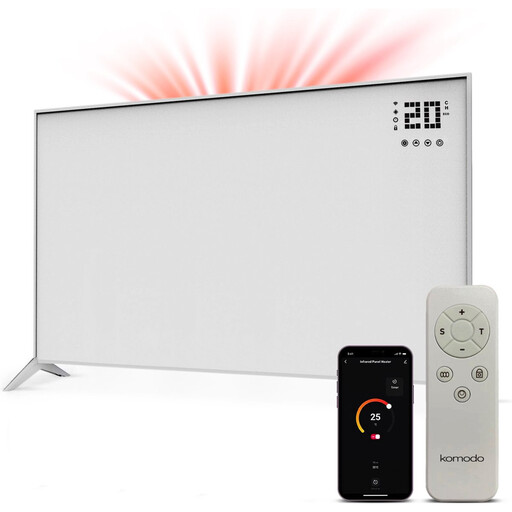
Komodo Blazi 800 W infrared heating panel
For warmth near your desk, if wall mounting or freestanding use suits the intended position.
800 W; 100 × 80 cm; Wi-Fi app control and adjustable thermostat. According to the product description, don’t cover it, keep it away from flammable materials and let it cool before moving it.
View at Joybuy
 No image available
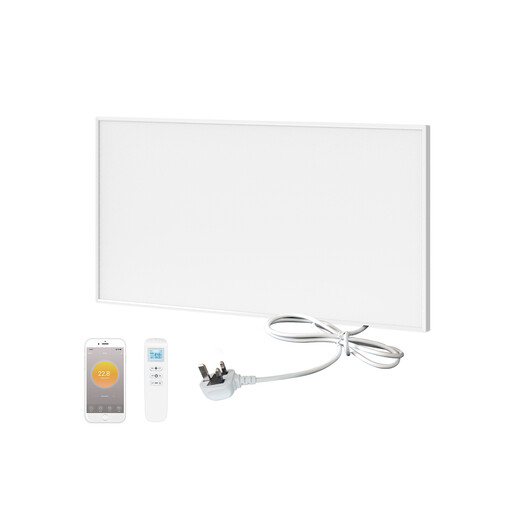
Welltin infrared heating panel, 60.3 × 30.3 × 1.4 cm
An option for warmth near your desk if wall mounting or floor stands are suitable for the intended position.
The surface temperature is stated as 80–100 °C. The product description says to keep it away from children and flammable materials.
View at Joybuy
 No image available
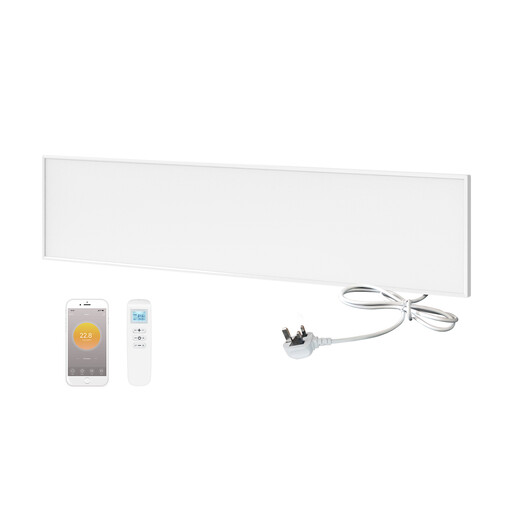
Welltin infrared heating panel, 90.3 × 20.3 × 1.4 cm
For warmth near your desk, provided wall mounting or floor stands are suitable for the planned position.
The surface temperature is stated as 80–100 °C. According to the product description, keep it away from children and flammable materials.
View at Joybuy
 No image available
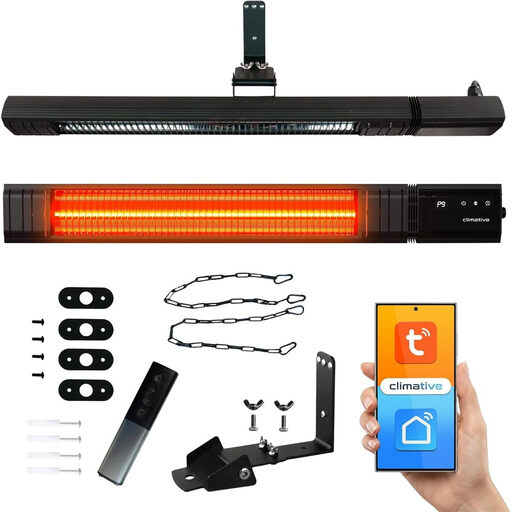
Ray Wifi infrared heater, 2500 W, 9 heat settings
A possible choice if wall mounting or floor-standing use suits the position and the stated power is right for how you plan to use it.
2500 W and 9 heat settings; the description also lists a 24-hour timer, remote control and IP65.
View at Joybuy
 No image available
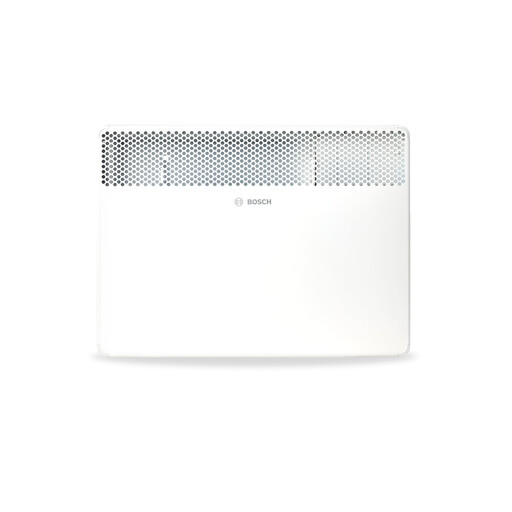
Bosch HC 4000-15 convector, 1500 W
For when you want to warm the air in a shared room, rather than just the area under your desk.
1500 W; adjustable temperature from 12–28 °C, weekly programme and open-window detection. Floor stands are available separately for freestanding use.
View at Joybuy
Frequently asked questions
Can an under-desk panel heat the whole room?
An under-desk panel is mainly designed to warm the immediate area around your seat and legs. VASNER describes the iTab as providing targeted warmth without heating the room air. If you want to warm several areas and the room itself, compare it with a room heater designed for that purpose.
What should I check before fitting and using a heater at a shared desk?
Check the desk surface and intended fixing method against the instructions for the specific model, and follow its warnings. Keep the appliance in good working order, and check the cable routing and position. Additional requirements may apply in a workplace; the term ‘shared room’ alone doesn’t establish that they do.
How can I estimate the electricity use of a heating panel?
Multiply the rated input in kilowatts by the planned hours of use to calculate consumption in kilowatt-hours, assuming continuous operation at rated power. Thermostat breaks will affect actual consumption; you’ll also need your tariff to work out the cost. The Verbraucherzentrale (German consumer advice centre) notes that reduced-rate heating electricity is only available under certain technical conditions.
Are electric heating panels generally banned in Germany or subject to EU requirements?
The relevant requirements don’t amount to a blanket ban on electric heating panels. Ecodesign Regulation 2024/1103 sets requirements for electric local space heaters within its scope; according to the European Commission’s guidance, the new requirements have applied since 1 July 2025. You’ll need to check whether a specific product meets the requirements. The German Federal Network Agency lists CE marking, manufacturer details and instructions in German among the points to check.


