
Lieferung heute & morgen

Qualitätsgarantie

Willkommens-Angebote freischalten: KOSTENLOSE Lieferung | Bis zu 80 % RABATT | Kostenlose 30-Tage-JoyPlus-Testphase
App herunterladen
A desk lamp needs to do more than complement your room. The key things to consider are suitable brightness, the right colour temperature, a stable design and a power supply that suits how you plan to use it. Students, people working from home, readers and design-conscious shoppers all have different needs.
Many disappointing purchases aren’t down to the price, but to unclear product details. A compact table lamp, for example, may be suitable for ambient lighting but not for extended periods of writing. A dimmable desk lamp offers more flexibility, provided its dimming settings suit the way you’ll use it. Before you buy, check the following points.
Power consumption in watts tells you how much electricity a lamp uses, not directly how bright it is. For brightness, luminous flux in lumens is a more useful guide. Depending on its design, a 7 or 8 W LED desk lamp can produce different amounts of light. A bedside reading lamp often needs less light than a task lamp on a large desk.
A dimmable desk lamp should clearly state how you can adjust its brightness. Touch controls, fixed settings and stepless dimming all work differently in everyday use. Colour temperature matters too: warm white feels softer and is often suited to living rooms or bedrooms, while neutral or cooler light is generally chosen for focused tasks.
A fabric lampshade, open metal frame or small base may look attractive, but could create shadows or restrict how the light spreads. That’s often fine for a bedside or decorative table lamp. For a workspace, adjustability, reach and even illumination should take priority.
Check the stated luminous flux in lumens and whether the light falls directly on your work surface. A monitor lamp with asymmetric optics can light your desk without shining directly onto the screen. According to its product details, the Leair monitor lamp is designed for screens from 24 inches, curved monitors and laptops, and offers colour temperatures of 3000, 4500 and 6500 Kelvin.
The right brightness depends on what you’re doing:
Colour temperature is measured in Kelvin (K). Lower values generally mean warmer light, while higher values mean cooler light. A lamp with adjustable colour temperature is especially practical if you’ll use it at your desk during the day and in your living space in the evening.
Measure the available space before you buy. A clip-on lamp saves desk space, but needs a suitable desk edge and must be securely attached. A cordless table lamp gives you more flexibility, but needs regular charging. If a lamp has a USB port, check whether it can charge only the lamp or an additional device too.
For lamps with replaceable bulbs, the fitting and maximum wattage are important. An E27 table lamp takes larger standard bulbs, while an E14 table lamp is designed for smaller bulbs. Some models don’t include a bulb. Don’t exceed the maximum wattage.

Why it suits this user: This compact LED desk lamp is designed for everyday indoor use, with touch controls for switching it on and adjusting the brightness.
The product details specify 8 W, around 400 lm, warm-white light and a USB charging port. That gives you key details to compare, rather than relying on design alone.
Touch controls, dimming, a USB port and 8 W power consumption.
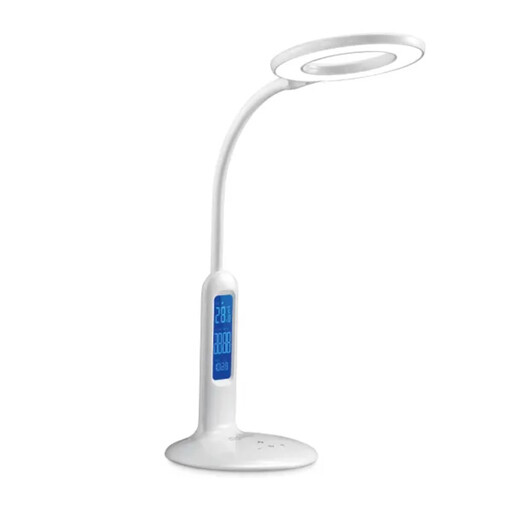
Why it suits this user: With adjustable colour temperatures and an articulated arm for directing the light, this model is a good choice for working from home or studying.
The specifications list 360 lm, 7 W, 2700 to 6500 K and stepless dimming. This makes it easier to see how well the features match your needs.
Adjustable arm, touch controls, three colour temperature settings and an integrated display showing the time, date and temperature.
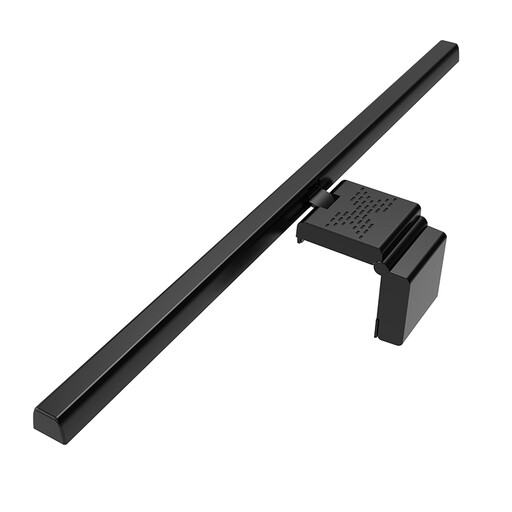
Why it suits this user: This monitor lamp is designed for people with limited desk space or a large-screen or multi-monitor setup.
It attaches to your monitor rather than sitting on your work surface. According to the product details, it should be powered by a 5 V/2 A USB power source or higher and securely attached.
50 cm light bar, three colour temperatures and stepless brightness adjustment via USB.

Why it suits this user: This rechargeable clip-on lamp is useful in places where a conventional table-lamp base would get in the way.
The product details specify 160 lm, 2.5 W, 4000 K, three brightness settings and a built-in 1200 mAh battery. The stated run time is 3, 7 or 30 hours, depending on the setting.
Clip-on fitting, flexible silicone arm, USB charging and three brightness settings.
We’ve put together a comprehensive, regularly updated list of products that meet these strict selection criteria and fully comply with the safety regulations in force in the EU.
Start by comparing the stated luminous flux in lumens and how the light is distributed. For writing and reading, an adjustable light source and even illumination across your work surface are more important than choosing the highest wattage possible. The brightness you need also depends on the size of the room, the distance from the lamp and your personal preference.
Warm-white light is often chosen for bedrooms and relaxed reading. Neutral colour temperatures can be a better fit for studying and office work. A lamp with several Kelvin settings gives you more ways to adjust the light, but make sure it’s positioned so the light source doesn’t shine directly into your eyes.
Running costs depend on the lamp’s power, how many hours you use it each day and your electricity tariff. A simple way to estimate them is: power in kilowatts × hours of use × electricity price. An 8 W lamp running for one hour uses 0.008 kilowatt-hours. For a more accurate comparison, also check whether you’ll be using the lamp at full brightness all the time.