
Lieferung heute & morgen

Qualitätsgarantie

Willkommens-Angebote freischalten: KOSTENLOSE Lieferung | Bis zu 80 % RABATT | Kostenlose 30-Tage-JoyPlus-Testphase
App herunterladen
The wrong desk lamp can be more than just an annoyance; it can disrupt your concentration and cause eye fatigue. Yet, the market is flooded with models whose marketing claims often overpromise and underdeliver. This guide will help you avoid common purchasing traps and identify the functional features that truly matter for your needs—whether for your home office, for reading, or as a stylish home accessory.
Before choosing a model, it's helpful to know the typical weaknesses that often only become apparent after the purchase.
To make an informed decision, you should examine three core aspects. These will determine if a lamp is suitable for your purpose.
Light quality is the most important criterion for eye-friendly illumination. Pay attention to two values:
The physical design of the lamp determines its potential uses.
The type of power supply affects mobility and convenience.
Here are some recommendations tailored to specific use cases.

Why it's a great fit: Ideal for students and avid readers who need an extremely portable and straightforward light source. It can be clipped anywhere and won't disturb others thanks to its directional light.
The lamp provides warm white light (3000 K), which is considered eye-friendly for reading, avoiding the trap of harsh, cold light. The clamp mechanism solves the problem of limited space and instability.
Ultra-portable at just 37 grams and offers up to 8 hours of operation (according to the manufacturer). The integrated 200 mAh battery is charged via USB.

Why it's a great fit: For professionals who spend long hours at their desk and need an adaptable, eye-friendly, and stylish lighting solution.
Directly addresses the pitfall of the wrong light colour: it offers three colour temperatures (3000K/4500K/6000K) and continuous dimming. The solid wooden base ensures a stable footing.
The memory function automatically restores the last-used brightness and colour when turned on. The combination of a wooden table lamp and metal also adds a stylish visual accent.
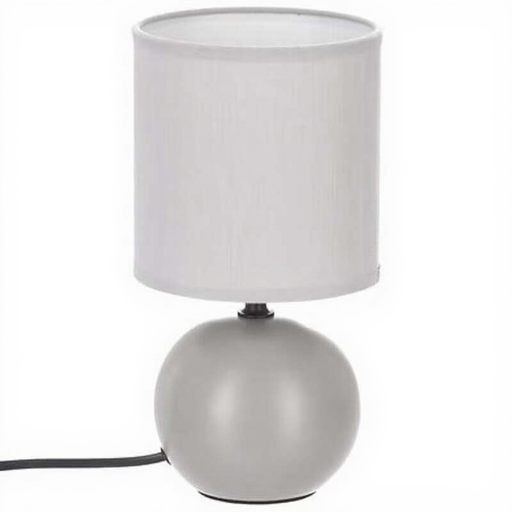
Why it's a great fit: For anyone who sees a lamp not just as a light source, but as part of their interior design. It produces a soft, atmospheric light and serves as a decorative element.
This lamp is designed for ambience, not for focused work. It avoids the pitfall of harsh light with its fabric shade, which diffuses the light softly. The solid ceramic base provides excellent stability.
The combination of a spherical ceramic base and a cylindrical fabric shade is a timeless design. Thanks to the E14 socket, the bulb can be chosen freely, allowing the lighting mood to be customised.
We have compiled a complete, up-to-date list of products that fully meet these strict selection criteria and relevant safety standards.
1. What colour temperature is suitable for a desk lamp at the workplace? For focused work, a neutral white to cool white colour temperature between 4000 K and 6000 K is recommended. An LED table lamp with adjustable colour temperature offers the greatest flexibility, as you can switch to warmer light for more relaxed activities.
2. How many lumens should a good reading lamp have? For a reading lamp or a desk lamp, a brightness of around 400 to 500 lumens is a good benchmark. However, more important than a high lumen value is that the light is well-focused and the lamp is dimmable, allowing you to adjust the brightness to your personal needs.
3. Are LED desk lamps really more energy-efficient? Yes. Compared to traditional incandescent or halogen bulbs, LEDs consume up to 80% less energy for the same light output. They also have a significantly longer lifespan, making them a cost-effective and more environmentally friendly choice in the long run.