
Lieferung heute & morgen

Qualitätsgarantie

Willkommens-Angebote freischalten: KOSTENLOSE Lieferung | Bis zu 80 % RABATT | Kostenlose 30-Tage-JoyPlus-Testphase
App herunterladen
A desk organiser should keep paperwork, post, books and work essentials neatly arranged. In practice, however, people often buy a model that is too small, unstable or unsuitable for the desk they have. Looks aren’t the only thing that matters, whether you’re working from home, in a classroom or at a reception desk. Size, load capacity, ease of access and the right layout are all important.
An organiser with lots of small compartments is suitable for letters, brochures or thin documents. But the compartments may be too narrow for ring binders, books and magazines. Check the internal dimensions and think about the formats you actually need to store.
A desktop shelf can take up a lot of width and block the back of your desk. A tall book stand shouldn’t obstruct your view of the monitor either. Before buying, make a note of the product’s width, depth and height, as well as the space available for it.
Figures such as “30 kg” or “132 lbs” generally refer to weight being distributed evenly on a stable, level surface. Don’t place all your heavy books on one side. For clamp-on shelves, the thickness of your desk top must also fall within the specified clamp range.
For a document tray or letter tray, A4 sizes and larger envelopes are worth considering. A two-compartment letter sorter is usually enough for “in” and “out”. If you want to sort bills, post, magazines and forms at the same time, you’ll need several levels or adjustable dividers.
Open compartments are handy for books and magazines. A magazine holder with an open front makes it easy to reach what you need. Bookends, on the other hand, keep books upright on a shelf, but need a stable, non-slip surface.
Wood and metal suit classic or industrial-style workspaces. PVC is easy to clean and works well in areas where you regularly sort paper, brochures or teaching materials. Look for:
A freestanding office organiser is flexible and can be moved when needed. Wall-mounted models save desk space, but require a suitable wall and the right fixings. Clamp-on shelves don’t need drilling, but the edge of your desk must be straight, thick enough and sturdy.
The recommendations below match different models to specific uses. The details are based on the respective product descriptions.
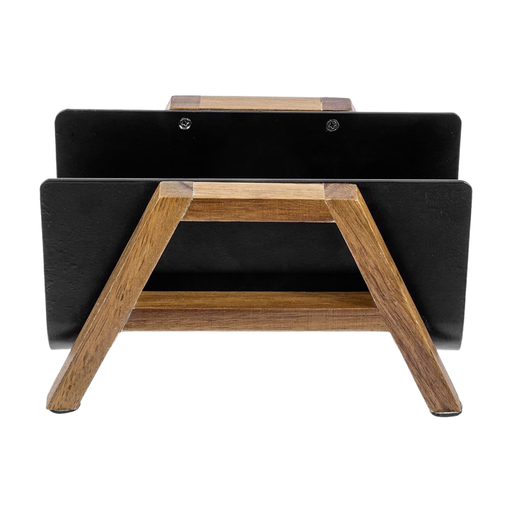
Why this product suits this type of buyer: This compact letter sorter is suitable for individual letters, post and smaller quantities of documents on a desk or shelf.
Its clearly defined purpose helps prevent a small letter holder from being mistaken for a substantial document organiser.
Compact dimensions, two materials and protective pads underneath; no assembly required.
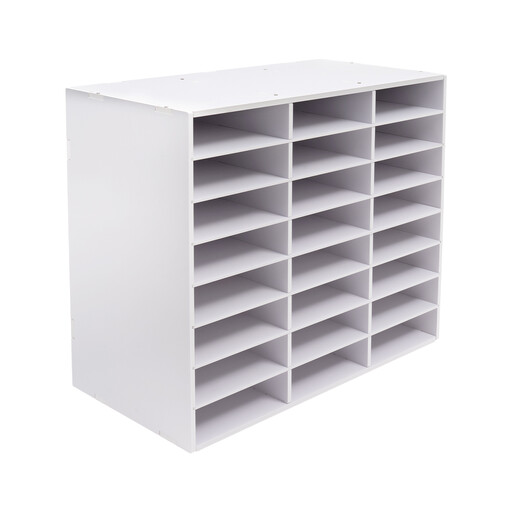
Why this product suits this type of buyer: With 24 compartments and removable dividers, it provides organised storage for forms, brochures, books and teaching materials.
The adjustable dividers reduce the risk of fixed compartments being unsuitable for documents of different heights.
PVC frame specified as 10 mm thick, 5 mm dividers, a semi-open design and a wipe-clean surface.
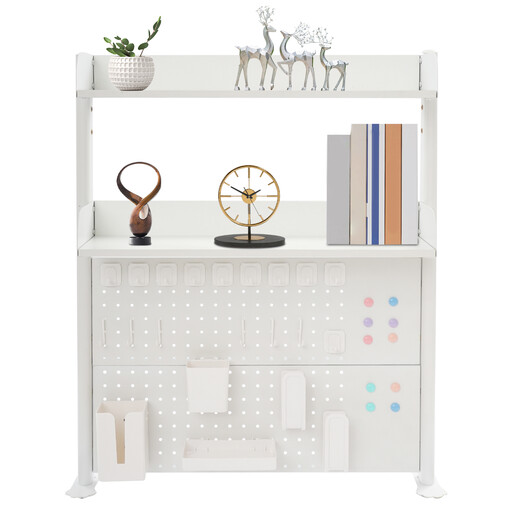
Why this product suits this type of buyer: Two tiers and a pegboard make use of the space above your workspace, without the need to drill holes in the wall.
The clamp range of 10 to 45 mm is clearly specified, so you can check in advance whether your desk top is suitable.
Two height-adjustable tiers, a pegboard with magnets and felt protection on the clamp; according to the product details, each tier can hold up to 20 kg.
We’ve put together a complete, regularly updated list of products that fully meet these strict selection criteria and the safety regulations in force in the EU.
It depends on what you’re storing and how much space you have. A compact model is enough for letters. For ring binders, books and magazines, wider or multi-tiered compartments are a good choice. Measure the available space and compare it with the product’s external dimensions.
Sort the compartments according to a consistent system, such as “in”, “in progress” and “archive”. Label the categories you use most often and regularly remove documents you’ve dealt with. This stops the organiser from simply becoming a place where you shuffle paper around.
No. The desk top must be straight, thick enough and suitable for the specified clamp range. Rounded, uneven or very thin edges can affect stability. Before fitting the shelf, make sure the clamps are firmly tightened and distribute heavy items evenly.