
Lieferung heute & morgen

Qualitätsgarantie

Willkommens-Angebote freischalten: KOSTENLOSE Lieferung | Bis zu 80 % RABATT | Kostenlose 30-Tage-JoyPlus-Testphase
App herunterladen
A desk organiser should keep stationery, small items and personal belongings neatly arranged and within easy reach. In practice, looks and a low price alone aren’t enough to help you choose the right one. The design, material, dimensions and intended use all matter.
Many models look spacious in product photos, but have only small compartments or hard-to-reach interiors. With a desk tray divided into several open sections, valuable depth can also be lost. So, check more than just the external dimensions:
A pen holder needs different dimensions from a storage box for cables, craft supplies or small tools.
Plastic is lightweight and can work well for drawer organisers. Metal often offers a sturdy construction, but is heavier. Wood has decorative appeal, but should be kept away from moisture. A metal desk organiser may slide on uneven surfaces or damage delicate finishes if it doesn’t have protective feet.
For a drawer organiser, smooth movement and a secure stop are important. Small drawers with poor runners can jam if they’re loaded unevenly. A fastening is also useful on portable models, to stop the compartments opening accidentally in transit.
Measure the space where you plan to put the organiser before you buy. Consider not only the width and depth, but also the height beneath shelves or monitor stands. For example, a compact desk organiser measuring 27,5 × 15 × 20,8 cm takes up less depth than a multi-section tray system, but its height can provide more vertical storage.
A fixed layout works well for items of a similar size. Adjustable dividers are more practical if you’re storing cutlery, office supplies, cosmetics or craft materials in different sizes. If you’re choosing a drawer box, check whether the dividers can be removed or moved.
Transparent lids are useful for small items such as buttons, beads, paperclips or electronic components. A small parts organiser lets you see what’s inside at a glance, without having to open every compartment.
Look for:
Don’t exceed the stated load capacity. If you’re choosing an organiser for tools or craft materials, it’s worth estimating the total weight of the items you plan to store in advance.
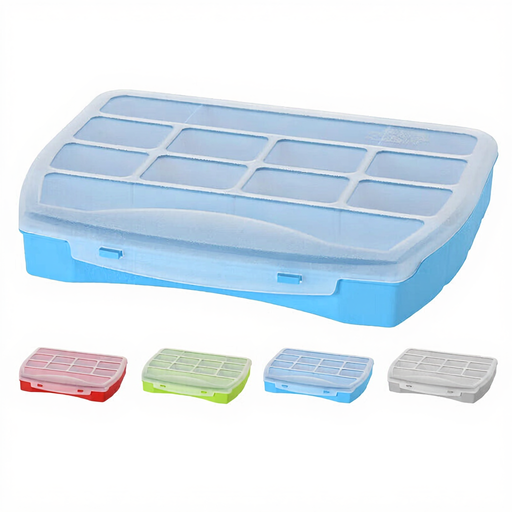
Why it suits this profile: This box has twelve separate compartments and compact dimensions of 21 × 20 × 4,5 cm. It’s suitable for paperclips, buttons, beads, sewing accessories or small electronic components.
The transparent cover makes it easy to see what’s inside and protects the contents from dust. The clearly divided compartments help keep small items separate.
Plastic construction, twelve compartments, a transparent cover and a weight of around 215 g.
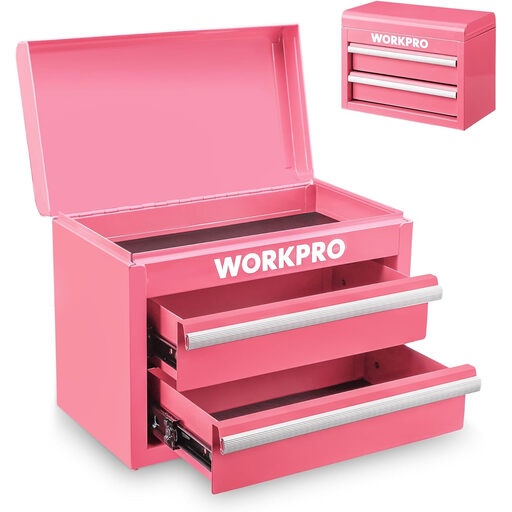
Why it suits this profile: Two drawers and an upper compartment divide the storage space into three sections. The metal body is designed for office supplies, cosmetics, craft materials or small tools.
Ball-bearing runners help the drawers glide smoothly. Removable PVC liners can help protect surfaces from scratches and can be cleaned separately.
Measures 27,5 × 15 × 20,8 cm, with two drawers, an upper shelf, a carry handle and a fastening.
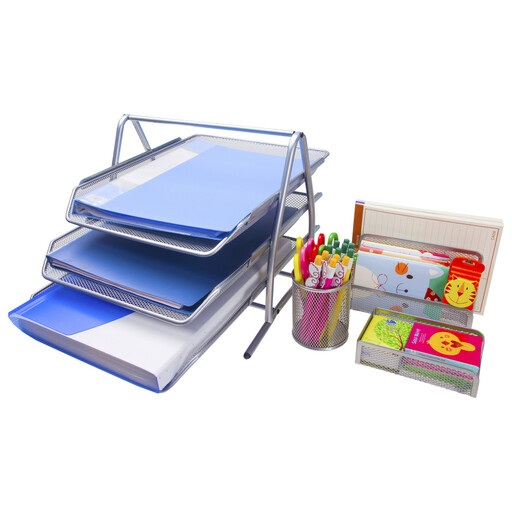
Why it suits this profile: This four-piece desk organiser set combines a three-tier A4 letter tray, a pen holder, a sticky note holder and a letter sorter. It’s well suited to workspaces that regularly handle documents.
The clearly separated sections stop letters, A4 documents and writing equipment from getting mixed together in one compartment. Non-slip pads help keep the organiser stable.
Coated metal mesh, four pieces, a vertical layout and stated overall dimensions of 13,5 × 28 × 36 cm.
We’ve put together a complete, regularly updated list of products that meet these strict selection criteria and fully comply with the safety regulations in force in the EU.
A tidy desk takes more than simply putting a box on it. Sort the contents by how often you use them:
With a drawer box, it’s also best to store heavier items towards the bottom. This can make it more stable. Clean a wooden organiser with a dry cloth; metal and plastic models can be wiped with a slightly damp cloth, depending on the manufacturer’s care instructions.
The right size depends on the space available and what you plan to store. A small pen holder is enough for a few pens and notes. For files, craft materials or tools, several drawers or separate compartments are useful. Measure the space, including the clearance needed to open the drawers, before you buy.
A drawer box offers better protection from dust and keeps everything out of sight. An open desk tray, on the other hand, gives you quicker access. An open compartment is handy for pens and notes you use often; a divided storage box is better for buttons, cables, spare parts or paperclips.
Avoid overloading the drawers, place the organiser on a stable surface and clean it according to the care instructions. For models with moving parts, make sure crumbs and small items don’t get into the runners. This can help prevent common issues during use.