Desk listeners
If you mostly listen to piano music at a permanent desk, you’ll need room for two speakers alongside your monitor and work essentials, with both speakers positioned towards your listening spot.


For listening to piano music at a permanent home-office desk, compact active desktop or nearfield systems are worth considering, provided they fit your available space and connect to your existing devices. Passive bookshelf speakers are a better option if you already have, or are planning to buy, a suitable amplifier. The key things to check are whether there’s room for both speakers, the complete signal path and what’s included in the sale. Compare bass specifications only when they use the same measurement reference.
If you mostly listen to piano music at a permanent desk, you’ll need room for two speakers alongside your monitor and work essentials, with both speakers positioned towards your listening spot.
If you switch between a computer and a mobile phone, check that the inputs on the specific stereo system match the outputs on your devices.
If you already own an amplifier, you could consider passive bookshelf speakers instead of choosing another active system.
First, check the space available and your listening distance, then look at how your devices connect. This will help you decide whether a passive pair with an amplifier or an active system is right for your setup.
If you’re choosing speakers for piano music at your home-office desk, key considerations include placement, connections, how to assess the bass and what you’ll need for a complete setup.
| Consideration | What to check before buying | Who it matters most to |
|---|---|---|
| Positioning and listening spot | Check the width and depth of both speakers, the space beside your monitor and the distance to your listening spot. | If I have limited free space on my desk, I want to know whether there’s room for two speakers. Around 36% of consumers choosing speakers for piano music in a home office would prioritise placement. |
| Connections and music source | Check the outputs on your computer and mobile phone against the inputs on the specific model, and check how the speakers connect to each other. | If I switch between a computer and a mobile phone, I need connections that work with my devices. Around 29% of consumers in this buying situation would prioritise the signal path. |
| Bass for piano music | Compare frequency specifications only when they use the same dB measurement reference, and, if possible, assess lower passages from your intended listening spot. | I want to know how lower piano passages sound at my desk, rather than focusing on a Hertz figure alone. Around 21% of consumers would prioritise assessing the bass. |
| Complete stereo system | Check what’s included and which components you’ll need, including a second speaker or a suitable amplifier for passive speakers. | If I still need to factor in an amplifier or a second speaker, I want to consider the complete setup. Around 14% of consumers would prioritise having a complete system. |
Genelec sells the 8010A as one monitor per pack, while Teufel describes the ULTIMA 20 Mk4 as a pair.
Before comparing offers, check exactly how many speakers are included and whether you’ll need a second unit for stereo.
KEF lists streaming features for the LSX II LT and also includes an inter-speaker cable as a setup option. Connecting to your music source and connecting the speakers to each other are two separate things to check.
For the specific model, check the power, source and speaker connections individually.
Genelec specifies 67 Hz at −6 dB for the 8010A, while Yamaha specifies 54 Hz at −10 dB for the HS5. Because the measurement references differ, these figures aren’t directly comparable.
Check the dB reference too, and, if possible, assess lower piano passages from your intended listening spot.
Teufel says the passive ULTIMA 20 Mk4 needs to be connected to an amplifier or receiver.
Before deciding, check whether you already have a suitable amplifier and the connections you’ll need.
The details below relate to specific product lines and aren’t a general assessment of each brand.
Active stereo and desktop systems, with connections that vary by model.
The D3V is an active desktop monitor pair designed for a fixed listening spot and connection to a computer.
The 8010A is a slim active single monitor for setups with a compatible analogue XLR signal path.
The LSX II LT is an active stereo system with a computer connection and network streaming.
The passive ULTIMA 20 Mk4 is described as a pair for listeners with an amplifier or receiver.
The 104-BT is a compact desktop monitor pair with analogue inputs and Bluetooth.
This selection includes passive bookshelf speakers for setups with an amplifier, as well as compact desktop speakers for your computer.
 No image available
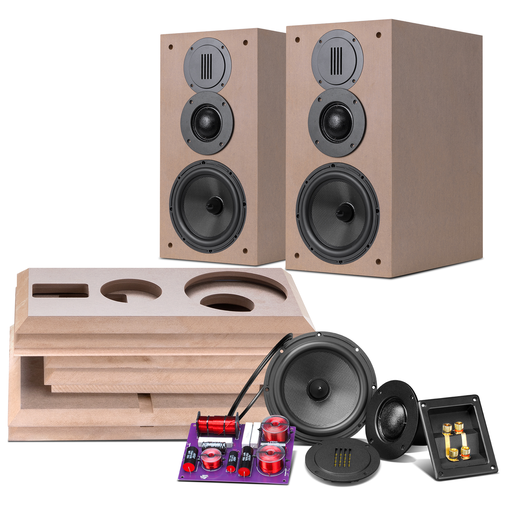
For a passive stereo setup if you already have a suitable amplifier or receiver.
Sold as a pair; you’ll need a compatible amplifier or receiver to use them.
 No image available
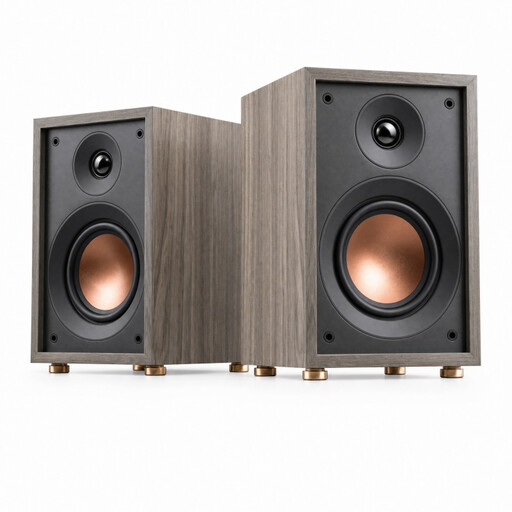
Could suit desk listening or smaller rooms; you’ll need a compatible amplifier.
Specifications listed in the product title: 4-inch woofer, 20 mm dome tweeter, 60 Hz–20 kHz, 4 Ω and 10W-50W.
 No image available
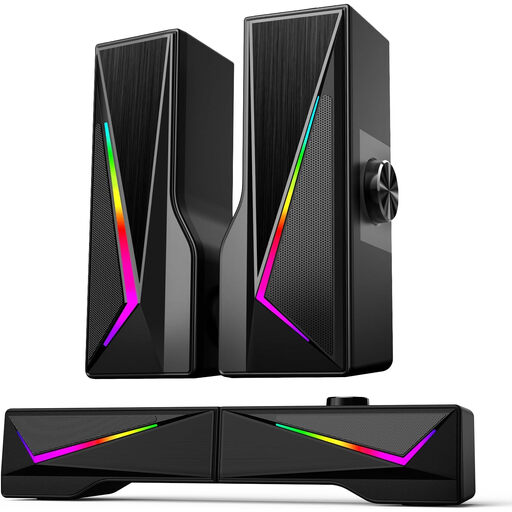
For computer and laptop playback at your desk, with the option to choose USB or Bluetooth as your audio connection.
According to the product information, USB power is still required in Bluetooth mode.
 No image available
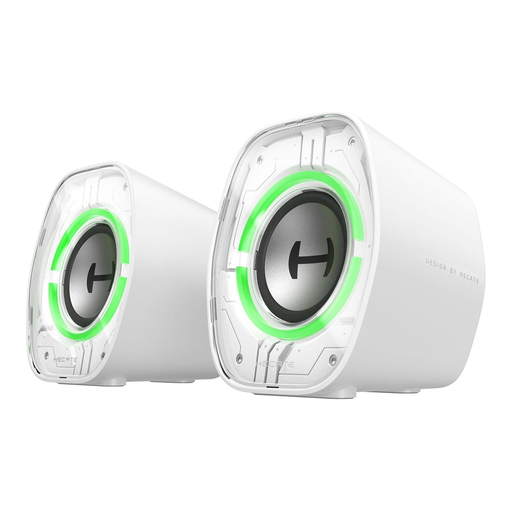
For a computer setup where USB-C, AUX or Bluetooth could work as your audio connection.
Specifications listed in the product title: 2.5-inch full-range drivers, Bluetooth 5.4, USB-C and AUX.
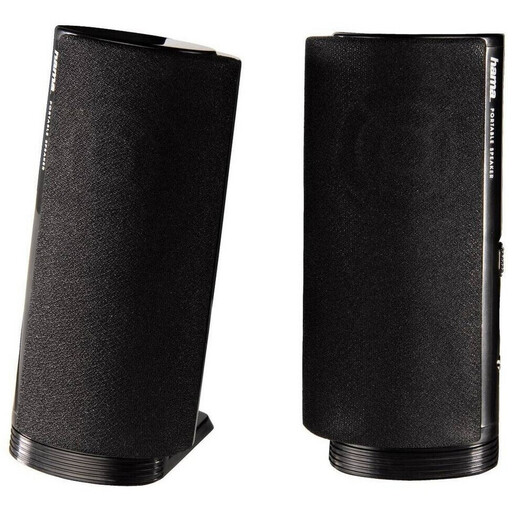 No image available
For compact stereo sound from your computer if a wired audio connection suits your setup.
The audio connection described is wired.
Yes. The passive Teufel ULTIMA 20 Mk4 needs an amplifier or receiver as part of the system. Also check whether you can connect your music source to it.
Allow space for both speakers, ideally at equal distances from your listening spot. Genelec recommends positioning monitors at equal distances from the listening position; reflections from the desk can affect playback. Check the setup from where you sit and, if needed, use suitable stands or room adjustment features.
It’s only useful when considered alongside the measurement reference. Genelec specifies 67 Hz at −6 dB for the 8010A, while Yamaha specifies 54 Hz at −10 dB for the HS5; these figures aren’t directly comparable.
If a product is faulty, statutory consumer rights against the seller are separate from any voluntary guarantee. The Verbraucherzentrale says new goods generally have a two-year statutory warranty. For online consumer purchases, you’ll usually have a 14-day right to cancel; exceptions and the circumstances of the contract should be checked on a case-by-case basis.
As part of its market surveillance, the Bundesnetzagentur checks factors including CE marking, product traceability and accurate manufacturer details. This doesn’t confirm that a specific offer complies with the rules. The Umweltbundesamt says old electrical equipment must not be put in household rubbish.