
Lieferung heute & morgen

Qualitätsgarantie

Willkommens-Angebote freischalten: KOSTENLOSE Lieferung | Bis zu 80 % RABATT | Kostenlose 30-Tage-JoyPlus-Testphase
App herunterladen
By Joybuy Product Recommendation Officer, 17 July 2026
Piles of paper, loose documents, and misplaced letters—a disorganised desk can disrupt concentration and hinder productivity. A functional desk tray is a simple and effective solution for bringing structure back to your workspace. The goal of this article is to provide a practical guide on which filing systems are best suited for your specific needs. We will introduce various models and explain the key features that will help you make your choice.
Before you decide on a model, there are a few basic criteria to consider. These will help you find a product that not only looks great but also fits the functional needs of your workspace.
The material significantly determines the product's durability and aesthetic. A metal paper tray, often with a grid or mesh design, offers a modern and sturdy solution that fits well in minimalist office environments. It is low-maintenance and resilient. In contrast, a wooden file tray exudes a warmer, more classic atmosphere. It can be a stylish element in a home office or in traditionally furnished offices. The choice here depends heavily on personal taste and existing decor.
The volume of documents to be organised is a crucial factor. A desk filing system can consist of a single tray or multiple tiers. A stackable letter tray offers great flexibility. It allows you to use the vertical space on your desk efficiently and add more levels as needed. Models with two to four trays are common and provide enough space for sorting your inbox, outbox, and ongoing projects.
Most documents in daily office life are the standard A4 size. It is therefore important to choose an A4 document tray to ensure that all papers, folders, and magazines fit without being creased or having overhanging edges. Additional features like sliding trays can make it easier to access the lower levels without having to move the entire stack.
Based on the criteria mentioned, we have compiled a selection of products that cover different requirements for functionality and design.

Why it stands out: This model combines high capacity with ease of use. The four pull-out trays allow for quick and uncomplicated access to all documents, making it an efficient office desk organizer.
Advantages:
Who it's for: Users with a high volume of documents who are looking for a structured and easily accessible solution for their office or home office.
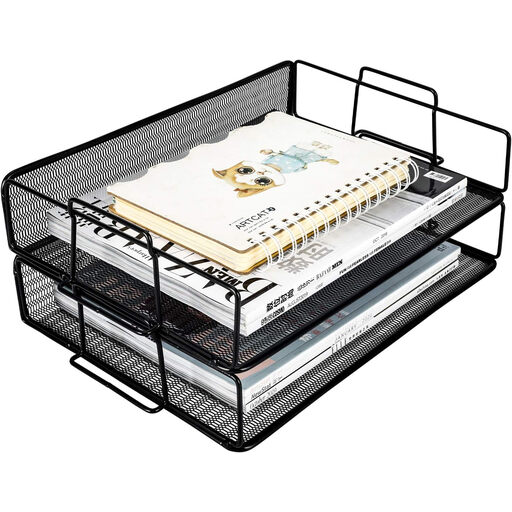
Why it stands out: This model's strength lies in its flexibility. As a stackable letter tray, it can be used individually for a minimalist setup or stacked for expanded capacity to make optimal use of vertical space.
Advantages:
Who it's for: Users who need a flexible and expandable solution for their workspace, whether in the office or a home study.
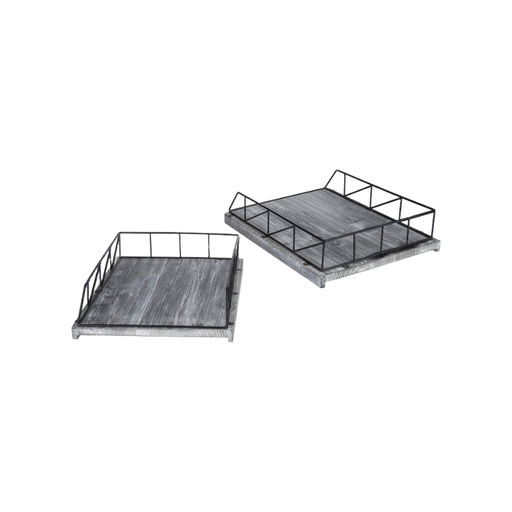
Why it stands out: This wooden and metal file tray makes a clear design statement. The combination of vintage-style grey wood and a black metal frame creates an appealing aesthetic that goes beyond pure functionality.
Advantages:
Who it's for: Design-conscious users who want to not only organise their workspace but also visually enhance it. Ideal for home offices and creative work environments.
Haven't found the right solution for you yet, or are you looking for more specific designs? Discover a wider selection of organisational tools in our Letter Tray Organisers category to find the ideal system for your needs.
For a metal paper tray, a soft, dry cloth is usually sufficient to remove dust. For more stubborn dirt, a slightly damp cloth can be used. It is important to avoid excess moisture to prevent rust. A wooden file tray should also only be wiped with a dry or damp cloth. Harsh cleaning agents should be avoided for both materials.
A stackable letter tray utilises the often-unused vertical space on a desk. This is particularly beneficial for limited workspaces. It also offers flexibility: you can start with one or two tiers and easily expand the system as your needs grow, instead of having to buy a completely new desk filing system.
An A4 document tray is primarily designed for loose papers, file folders, magazines, and thin binders. Standard, wide ring binders (approx. 5-8 cm spine width) do not typically fit into the shallow trays. For storing such binders, special binder shelves or magazine files are better suited.