Choose a desktop based first on the software you’ll actually use: 2D drawing, a 3D preview in track-planning software and detailed 3D modelling all have different requirements. The Blender Foundation publishes its own minimum and recommended specifications for Blender; these don’t automatically apply to other programmes. If you’re sharing a Windows PC, you should also plan for separate user accounts, a shared project folder and a backup.
Who is this workstation for?
3D landscape designers
If you create terrain and views in a 3D application, check the specific programme’s requirements for graphics, memory and operating system. The Blender Foundation publishes its own minimum and recommended specifications for Blender.
People planning layouts together
If several people take turns working on the same designs, separate user accounts help keep personal settings and files apart. Microsoft Support also explains how to back up files using File History to an external drive or network location.
2D sketchers
If you mainly draw landscape ideas digitally in 2D, choose a computer to suit your drawing programme and input device. Krita lists its own requirements for memory, graphics support and compatible graphics tablets.
What should you look for when buying?
Start by choosing your software and deciding how you’ll use it. Then compare the exact computer specification. If you’ll be sharing it, plan where files will be stored and how they’ll be backed up.
| What you need |
What to check before buying |
Who is it important to? |
| 3D design |
Check that the programme and version are compatible with the operating system, graphics support, memory and graphics memory of the specific configuration. For Blender on Windows, the Blender Foundation specifies at least 8 GB RAM and 2 GB graphics memory; it recommends 32 GB RAM and 8 GB graphics memory. AnyRail 7 requires DirectX 11 for its 3D viewer. |
If I want to model or render terrain in Blender, I’ll check that programme’s requirements rather than relying on the 3D preview in track-planning software. Around 31% of consumers say 3D capability is their top priority. |
| Shared files |
Check the supported operating system, set up separate accounts, and decide who can access the project folder and where backups will be stored. Microsoft Support explains how user accounts can have their own files and settings, and how to back up to an external drive or network location. |
If several people take turns working on the same designs, I want to keep personal files and shared projects clearly organised. Around 31% of consumers prioritise file storage and backups. |
| 2D drawing |
Check the programme version, operating system, graphics support and compatibility with your graphics tablet. Krita lists 4 GB RAM as the minimum and 16 GB as the recommended amount, along with OpenGL 3.0 or Direct3D 11. |
If I mainly create 2D sketches, I want to match the specification to my drawing programme and input device, rather than paying for demanding rendering capabilities I don’t need. Around 23% of consumers have this priority. |
| Space and connections |
Check the available desk space, the monitor and USB connections you need, and any plans to expand, against the specific configuration. Lenovo describes different ThinkCentre M case sizes, while ASUS lists configurable connections for the ExpertCenter PB64. |
If the computer will stay at a fixed, shared workstation, I want to be able to connect monitors, input devices and a possible backup drive. Around 15% of consumers prioritise space and connections. |
Common pitfalls
-
Assuming a 3D preview is the same as detailed 3D modelling
The requirements for a track-planning programme’s 3D viewer aren’t a guide to modelling and rendering in Blender. The programmes have different requirements.
Before choosing hardware, decide which programme you’ll use and what kind of 3D work you plan to do. Then compare the full computer specification with that software’s requirements.
-
Assuming separate user accounts take care of all project storage and backups
Personal accounts keep files and settings separate, but they don’t automatically provide a shared project folder or a backup of its contents.
Agree on a shared storage location and check that the relevant project files are included in your backup.
-
Assuming a mini PC’s product family name tells you what’s inside
HP components can vary by configuration, while ASUS lists configurable connections for the ExpertCenter PB64. The product family name alone doesn’t confirm that a particular model has the specification you need.
Check the full specification of the exact configuration, especially its memory, graphics, operating system and connections.
-
Assuming a trial version will support your entire planning workflow
According to WinTrack and IBS Ing.-Büro Schneider, the V17.0 3D trial version doesn’t let you save or print track plans; additional 3D models are available separately.
Check which features and content your workflow requires before you buy, rather than choosing a PC based solely on a trial version.
Brands to consider
Lenovo
Lenovo describes the ThinkCentre M range as offering Tiny, Small Form Factor and Tower cases, giving you different starting points in terms of space and expandability.
- The different case sizes make it easier to compare workstation set-ups.
- A general description of the range doesn’t confirm the specification of an individual configuration or its suitability for a particular drawing programme.
HP
HP lists the Pro Mini 400 G9 and Pro SFF 400 G9 as desktop form factors; components vary depending on the configuration.
- HP documentation lets you check the specification of each model configuration.
- You can’t tell how much memory a model has or how suitable its graphics are just from the product family name.
ASUS
ASUS offers different desktop case styles in the range, including the ExpertCenter PB64 and the P500 Mini Tower.
- ASUS lists configurable connections for the PB64 and an expandable case for the P500 Mini Tower.
- These manufacturer details aren’t an independent performance comparison and don’t confirm the specification of a particular version.
Joybuy products
This selection includes compact desktops for drawing and layout planning, as well as towers for shared workstations.
 No product image available
HP Z2 Mini G1a Ryzen AI Max+ Pro 395, 128 GB, 2 TB
Listed as a compact desktop for drawing and layout planning. Check that the specific configuration suits your software and the connections you need.
View at Joybuy
 No product image available
HP Z2 Tower G1i A40MMET, Core Ultra 7 265, 32 GB DDR5
Listed as a tower for a shared workstation. Check the exact configuration and set up separate accounts and a shared project folder.
Listed in the product name: 20-core processor, 32 GB DDR5 at 5600 MHz and Intel Graphics.
View at Joybuy
 No product image available
HP Z1 Tower G1i A40T1ET#ABD, Core Ultra 9 285, 64 GB DDR5
Listed as a tower for a shared workstation. Match the specific configuration to the software you use and how you plan to organise your files.
Listed in the product name: 24-core processor, 64 GB DDR5 at 5600 MHz, 1 TB M.2 SSD, Intel Graphics and Windows 11 Pro.
View at Joybuy
 No product image available
Lenovo ThinkStation P2 Tower Gen2, Core Ultra 7 265, 32 GB DDR5
Listed as a tower for shared workstations and graphics-related tasks. Check that the specific configuration is right for your software.
Listed in the product name: 512 GB NVMe SSD, NVIDIA RTX A400 with 4 GB graphics memory and Windows 11 Pro.
View at Joybuy
 No product image available
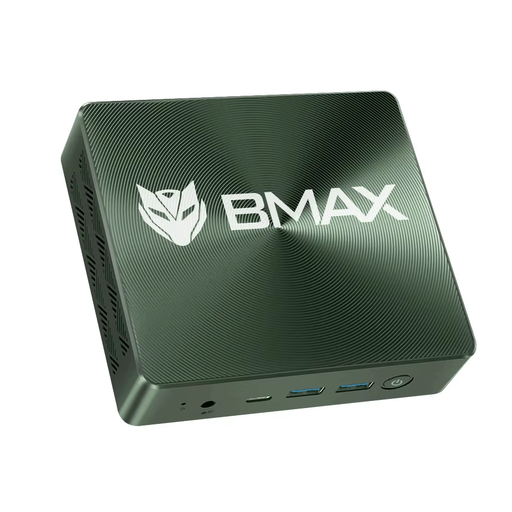
BMAX B6 Pro Mini PC, Intel Core i5-1030NG7, 16 GB LPDDR4
Listed as a mini PC for a compact drawing workstation. Before choosing it, check your drawing programme’s requirements and the connections you need.
Listed in the product name: 512 GB NVMe SSD, Wi-Fi 5, Bluetooth 4.2, triple 4K display output and Windows 11.
View at Joybuy
Frequently asked questions
Can I use a track-planning programme’s 3D preview as a guide to Blender’s requirements?
No, the requirements aren’t the same. AnyRail 7 specifies DirectX 11 for its 3D viewer, while the Blender Foundation publishes its own minimum and recommended specifications for the processor, memory and graphics. Check your computer against the programme you’ll actually use.
How do we set up a workstation for several people?
On Windows, separate user accounts can keep each person’s files and settings apart. You should also decide where shared designs will be saved and who can access them. Microsoft Support explains how to back up using File History to an external drive or network location.
Can I save and print plans with the WinTrack trial version?
No. According to WinTrack and IBS Ing.-Büro Schneider, the V17.0 3D trial version doesn’t let you save or print track plans. Check in advance which features and additional 3D models your workflow requires.


