Which development PC is right for you?

Developers working with personal financial data

If you’re developing an app that stores data locally, you should plan for access protection and backups on your development PC. Germany’s Federal Office for Information Security recommends regular backups to an external storage device; a local file isn’t a backup. SQLite provides a documented backup API.

Developers using emulators

If you’re testing an Android version or running several tools at once, compare their requirements with the specifications of the specific PC configuration. Google recommends at least 16 GB of RAM for the best experience with the Android Emulator.

Developers planning future upgrades

If you’d like to use your PC for more projects in future, check the upgrade options for the specific model. Lenovo lists the memory and SSD configuration, along with potential upgrades, for the ThinkCentre M75q Gen 5, model 12RQ000XGE. These details don’t automatically apply to other variants.

What should you look for when buying?

Compact mini PC

A good fit if: you have limited desk space and the operating system, ports and specifications suit the development work you have planned.

Things to consider: Upgrade options and what’s included depend on the exact model. Check separately whether you’ll need a monitor or other devices.

Larger or configurable desktop

A good fit if: you’re more concerned with future changes to the specifications or storage than with having the smallest possible case.

Things to consider: Depending on the case, the PC may take up more space. Additional specifications are no substitute for access protection or a separate data backup.

Your priority What to look for when buying Who is this important to?
Protection and backups Check user accounts, the available encryption feature and whether there’s a port for a separate backup device. Germany’s Federal Office for Information Security notes that Windows Home editions don’t support EFS. If you’re using a SQLite app, your backup method needs to be compatible with the application. If I manage financial data locally, I want to plan for access control and separate backups; around 33% of consumers put protection and data backup first.
IDE and testing Decide on your target platform and tools, then compare their requirements with the operating system, RAM and available storage of the specific configuration. Google recommends 16 GB of RAM for the best experience with the Android Emulator; this isn’t a general minimum requirement for every app project. Each additional virtual Android device may need up to 6 GB of extra memory. If I want to run my IDE and tests on the same PC, I want to check the requirements for my specific workflow; around 27% of consumers put suitability for development tools and testing first.
Upgrade options Check for available RAM and SSD slots, as well as the supported limits for the exact model. Lenovo lists two DDR5 SODIMM slots for the ThinkCentre M75q Gen 5, model 12RQ000XGE, with one 16 GB module installed and support for up to two M.2 SSDs. Check separately what’s actually included in the PC you’re buying. If I want to use the PC for more projects in future, I look for upgradeable memory and storage; around 20% of consumers put upgrade options first.
Space and ports Compare the case and display outputs with your workspace and existing devices. Also check whether the specific variant has the right USB ports for your peripherals and backup device, and which devices are actually included. If I have limited desk space, I want to check the case and ports against my monitor, input devices and backup device; around 20% of consumers put desk space and port planning first.

Avoid common buying mistakes

  • Assuming ‘stored locally’ means ‘secure and backed up’

    Locally stored data can still be lost if a device fails, or accessed by other people who use the PC. Remember to allow for a separate storage device, as well as time to set up and test recovery.

    Check user permissions and the protection features available with your Windows edition. Set up a separate backup method and test that you can restore your data.

  • Applying one development requirement to every app project

    Google’s recommendation of 16 GB of RAM for the best experience with the Android Emulator doesn’t apply universally to a household budgeting app that stores data locally. If you won’t be using that testing setup, the extra specifications may not be necessary.

    First decide whether you’ll use an Android Emulator, then compare your tools’ requirements with the specifications of the specific PC.

  • Confusing a product range with a fixed configuration

    With configurable PCs, the processor, memory and other components can vary between versions. The product range name doesn’t automatically tell you what’s included.

    Check the full model number and the components on offer. Assess the upgrade options separately from the specifications actually included.

Useful brands to consider

HP

HP’s German product page lists the HP Pro Mini 400 G9 in the 937U0EA#ABD configuration, with Windows 11 Pro, 16 GB of RAM and a 512 GB SSD.

  • The listed configuration provides a specific starting point for a Windows development PC.
  • What’s included and how suitable it is may vary between versions. The manufacturer’s information about security features doesn’t prove that an app you develop yourself is secure.

Lenovo

For the ThinkCentre M75q Gen 5, model 12RQ000XGE, Lenovo lists a configuration with 16 GB of RAM and a 512 GB SSD, as well as potential storage upgrades.

  • The model details make it easier to compare the installed specifications with the supported upgrade options.
  • Lenovo notes that specifications vary by model and region. Details for one model variant don’t automatically apply to another.

Dell

A German configuration of the Dell Pro Micro QCM1250 is listed with Windows 11 Pro, 16 GB of RAM and a 512 GB SSD.

  • Choosing a specific configuration lets you compare the processor, memory and storage with the needs of your planned workflow.
  • Dell notes that changing individual components may trigger further changes to the overall configuration. Check the complete configuration before buying.

Joybuy products for a Windows development setup

The Joybuy products below are tower desktops with Windows. Compare each specific configuration with your development tools and testing needs, rather than assuming that individual components are necessary for every app project.
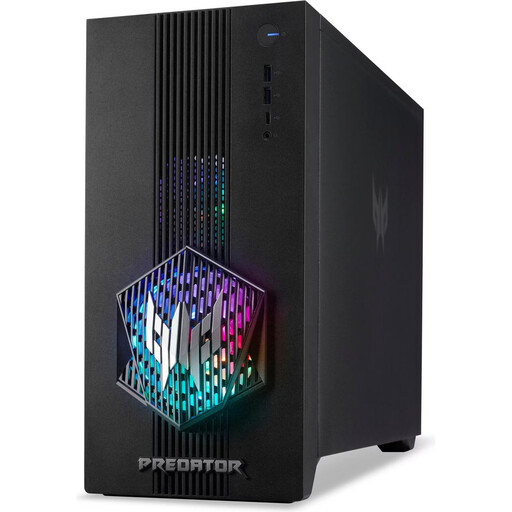
Acer Predator Orion 3000 desktop i5 Ultra with 16 GB RAM, 512 GB SSD and RTX 5060

Acer Predator Orion 3000 desktop i5 Ultra

For a Windows-based development setup; compare the operating system and specifications with the requirements of your IDE and tests.

Windows 11 Home; 16 GB DDR5 RAM; 512 GB M.2 SSD; RTX 5060.

View at Joybuy
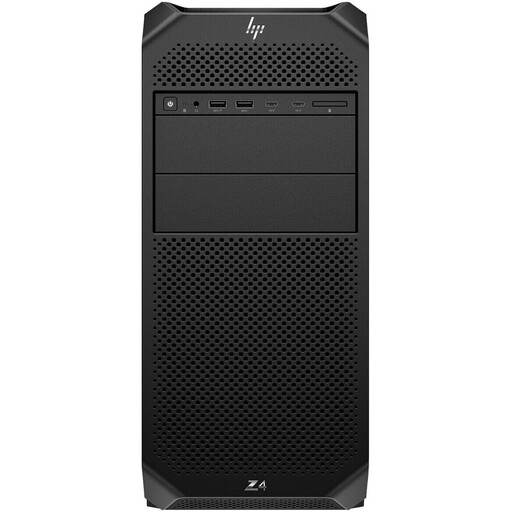
HP Workstation Z4 G5 Tower with Xeon W W3-2535, 64 GB RAM and 1 TB SSD

HP Workstation Z4 G5 Tower, Xeon W W3-2535

For a Windows development setup with the listed specifications; check which components your actual workflow needs.

Windows 11 Pro; Xeon W W3-2535 at 3.5 GHz; 64 GB RAM; 1 TB SSD; RTX 4000 Ada.

View at Joybuy

HP Z2 Tower G1i A40MMET with Core Ultra 7 265 and 32 GB RAM

HP Z2 Tower G1i A40MMET, Core Ultra 7 265

For a Windows-based development setup; check the exact configuration and how much storage you’ll need for your IDE, projects and tests.

Windows 11 Pro; 32 GB DDR5 RAM at 5600 MHz.

View at Joybuy

HP Z1 Tower G1i A40T1ET ABD with Core Ultra 9 285, 64 GB RAM and 1 TB SSD

HP Z1 Tower G1i A40T1ET#ABD, Core Ultra 9 285

For a Windows-based development setup; compare the specifications with your tools’ requirements before deciding they’re necessary.

Windows 11 Pro; 24-core Core Ultra 9 285; 64 GB DDR5 RAM at 5600 MHz; 1 TB M.2 SSD; Intel Graphics.

View at Joybuy

Lenovo ThinkStation P2 Tower Gen2 with Core Ultra 7 265, 32 GB RAM and 512 GB NVMe SSD

Lenovo ThinkStation P2 Tower Gen2, Core Ultra 7 265

For a Windows-based development setup; check whether the listed specifications suit your tools and planned tests.

Windows 11 Pro; 32 GB DDR5 RAM; 512 GB NVMe SSD; NVIDIA RTX A400 with 4 GB.

View at Joybuy

Frequently asked questions

Does a budgeting app need a dedicated graphics card?

The app project described here doesn’t in itself require a dedicated graphics card. First decide which development tools and test devices you’ll use, then check their requirements. The documented compact comparison configurations use integrated graphics.

How do I back up a locally stored budgeting database?

Alongside your local working file, plan regular backups to a separate device and check that you can restore them. If your app uses SQLite, SQLite documents an online backup API for database copies; the specific method needs to suit the application.

Which additional devices should I check before buying?

Check whether you already have a monitor, input devices and a separate backup device, or whether you still need to buy them. Also compare the ports on the specific PC variant with the devices you already own.

Does the GDPR apply to a household budgeting app used purely for personal purposes?

The GDPR sets out an exemption for the processing of personal data by a natural person in the course of purely personal or household activities. This doesn’t mean that a published app or its provider is automatically exempt; local storage alone isn’t enough to determine how the law applies.

Can I choose a Windows 10 PC as my new development computer?

Microsoft states that regular support for Windows 10 ended on 14 October 2025. When choosing a development PC, check which supported operating system the specific configuration offers, and don’t assume that regular Windows 10 updates will be available.