
Lieferung heute & morgen

Qualitätsgarantie

Willkommens-Angebote freischalten: KOSTENLOSE Lieferung | Bis zu 80 % RABATT | Kostenlose 30-Tage-JoyPlus-Testphase
App herunterladen
Anyone looking to buy a desktop PC will find systems for office work, gaming, multimedia, image editing and professional applications. Technical specifications often appear clear-cut, but they are not always directly comparable. For example, a high clock speed alone says little about overall performance. A budget mini PC may be perfectly adequate for office tasks, while a gaming PC without a suitable graphics card can quickly reach its limits with modern games.
Specifications such as “up to 4.6 GHz” or “Turbo clock speed” usually describe the maximum value under specific conditions. For a more accurate assessment, you should also consider the number of cores, thread count, processor series and cooling. A compact mini PC with an energy-efficient mobile processor is not automatically comparable with a tower PC, even when similar clock speeds are quoted.
A PC with an SSD will generally launch programmes and the operating system faster than a system with a traditional hard drive. However, SSD capacity determines how many programmes, games and media files you can store. 256 GB may be enough for basic office tasks. If you manage large image files, videos or games, you should consider 512 GB, 1 TB or more.
When it comes to RAM, 8 GB of RAM is suitable for basic tasks, but it may become limiting with numerous browser tabs and several applications running at once. 16 GB of RAM provides a more balanced foundation for office work and multimedia. A PC with 32 GB of RAM is better suited to demanding multitasking, image editing, development work or modern games.
A slim desktop PC saves space, but often offers less room for large graphics cards or additional drives. Before buying a mini PC, you should therefore check:
A fanless model should not be placed on soft surfaces or directly beside blocked air vents. For more compact devices, you can browse the selection of fanless Windows 11 PCs.
For office software, video conferences and web applications, an entry-level or mid-range processor is usually sufficient. A business PC with an Intel N200 or comparable specification is designed for everyday programmes. For development, data processing and extensive multitasking, more cores and threads are beneficial.
An Intel Core Ultra PC may also feature an integrated NPU. This unit is designed for specific AI functions. However, actual support depends on the operating system, software and compatible applications. An NPU is not a substitute for a powerful graphics card for demanding 3D calculations.
For a PC for gaming and multimedia, a dedicated graphics card is often more important than small differences in processor clock speed. An RTX gaming PC with dedicated graphics memory can be suitable for games, 3D applications and certain rendering tasks. In addition to the model, check:
Integrated graphics solutions are better suited to office work, streaming, basic image editing and multiple monitors with moderate requirements.
A desktop PC with Windows 11 is ready to use for many home users. Businesses and self-employed users may benefit from additional Windows 11 Pro features, such as management and security options. The key consideration is whether the specific software, peripherals and business environment are supported. For devices intended for the German market, you should also check the power supply, plug type, warranty terms and disposal requirements under WEEE regulations.
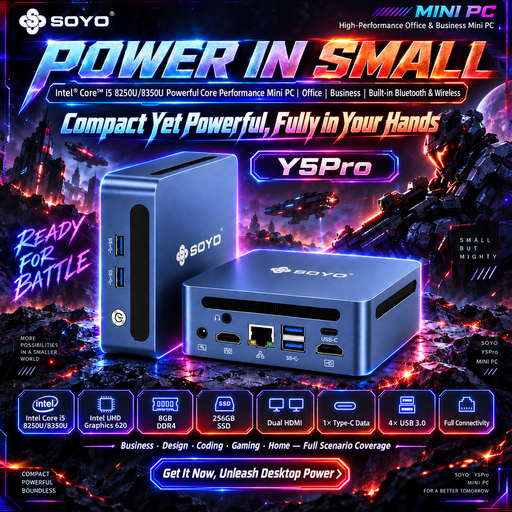
Why this product suits the profile: Measuring 105 × 113 × 45 mm, this compact mini PC offers 8 GB DDR4 and a 256-GB SATA SSD for basic office, web and multimedia tasks.
The product details clearly specify the processor, RAM, SSD, ports and dimensions. This makes it easy to check before buying whether the specification is sufficient for your intended use.
Compact case, two HDMI outputs, USB ports, Wi-Fi 5 and Gigabit LAN.
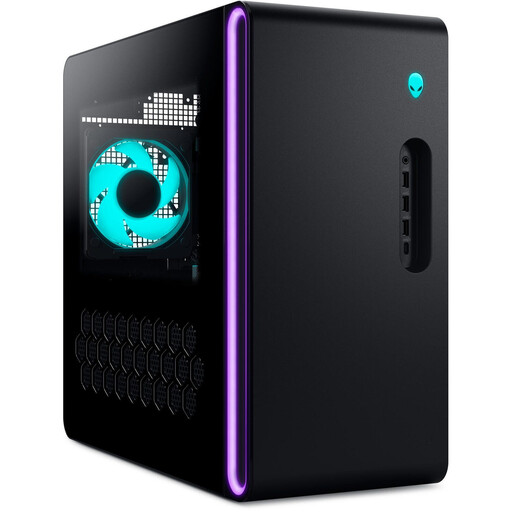
Why this product suits the profile: This tower combines an Intel Core Ultra 9 285K, 32 GB DDR5, a 2-TB SSD and an NVIDIA GeForce RTX 5080 with 16 GB GDDR7.
The dedicated graphics card, RAM, SSD capacity and 240-mm liquid cooling system are listed separately.
RTX 5080 graphics with 16 GB GDDR7, 32 GB DDR5, 2 TB SSD and a comprehensive selection of video outputs.
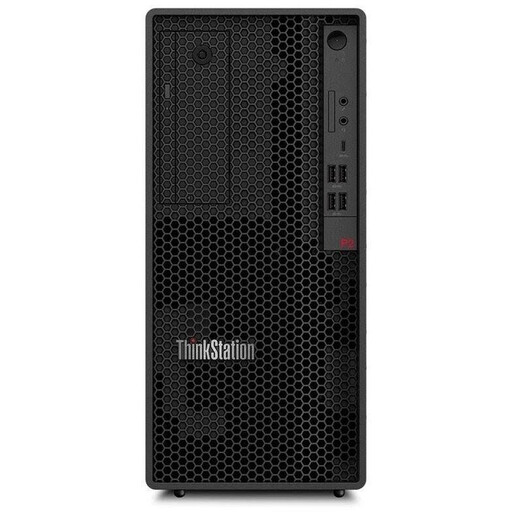
Why this product suits the profile: As a workstation PC, this system is designed for business applications, software development, data analysis, as well as design and engineering software.
The NVIDIA RTX A400 is specified as a professional graphics card with 4 GB of dedicated memory. Windows 11 Pro, 32 GB DDR5 and the 512-GB NVMe SSD are also clearly listed.
Intel Core Ultra 7 265 with 20 cores, AI-Boost NPU, 32 GB DDR5, plus DisplayPort and HDMI.
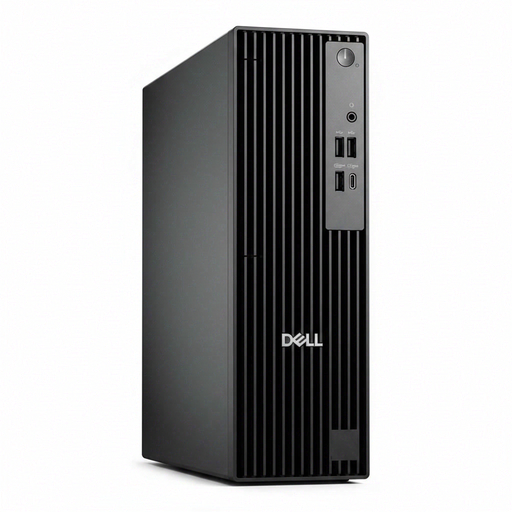
Why this product suits the profile: Measuring 95 × 293 × 303.5 mm, the slim case is ideal for workspaces with limited room and offers Windows 11 Pro, 16 GB DDR5 and a 512-GB NVMe SSD.
The dimensions, 180-watt power supply type, expansion slots and maximum supported RAM are clearly listed in the technical specifications.
Intel Core Ultra 7 265, two monitor ports, TPM 2.0 and upgradeable DDR5 memory up to 64 GB.
We have put together a complete, regularly updated list of products that fully meet these strict selection criteria and the safety regulations applicable in the EU.
8 GB is often enough for basic office tasks and web browsing. For using several applications, image editing and regular multitasking, 16 GB is more practical. If you use virtual machines, extensive projects or demanding games, you may want to consider a PC with 32 GB of RAM.
Service life depends on the components, workload, maintenance and upgrade options. A device with replaceable RAM, additional drive bays and standardised ports can be adapted to changing requirements for longer. Dust-free airways and adequate ventilation are also important.
A mini PC with efficient integrated graphics will usually use less energy for typical office tasks than a powerful tower with a dedicated graphics card. Actual consumption depends on the processor, graphics card, power supply, monitor and workload. When calculating running costs, you should therefore consider not only the maximum wattage, but also your daily usage profile.