Choose a computer based on the design software you actually use. For InDesign version 21.3 and later, Adobe recommends 16 GB of RAM, while browser-based design calls for a supported, up-to-date browser and a stable internet connection. At a shared desk, you should also check how user profiles are managed, where designs are stored, which monitor connections are available and what comes with the specific configuration. A compact computer saves desk space; a tower is a better choice if you have more room and want more scope for upgrades.
Who is this PC for?
Designing calendars with a rotating team
If several people use the same desk, agree in advance how user profiles will be managed and where designs will be stored. Microsoft describes settings for suitably configured Windows devices that can automatically remove profiles.
Designing for print
For multi-page layouts and calendars going to a print shop, you’ll need to consider your software’s requirements, choose a suitable screen and plan your colour workflow. Adobe explains InDesign’s system requirements and how colour profiles are used for print output.
Workspaces with limited desk space
A compact computer can leave more room for your monitor and input devices. Check the connections and what’s included with the specific configuration; manufacturer details for individual models or product ranges won’t necessarily apply to every version.
What should you look for when buying?
Start by checking the requirements of your design software. Then consider shared use, your existing monitor and—if you’re planning to print—the output process in the context of your actual workspace.
| What matters when buying |
What to check |
Who should pay particular attention |
| Software performance |
For InDesign version 21.3 and later, Adobe specifies at least 8 GB of RAM and recommends 16 GB. Windows users should also check for AVX2 support and a supported version of Windows. For Canva in a browser, the Canva Help Centre recommends a supported, up-to-date browser and a stable internet connection. |
When I design calendars in a particular application, I want the computer to meet its requirements rather than choosing one based on a broad label alone. Around 31% of consumers put software compatibility first. |
| Shared use |
Decide who will manage accounts, where designs will be saved and whether automatic profile clean-up settings will be used. Microsoft notes that profiles can be removed, depending on the settings, in the appropriately configured Windows Shared PC mode. |
When several people work on designs on the same computer, I want to know how files will be kept and separate accounts organised. Around 31% of consumers prioritise shared use. |
| Space and connections |
Compare the dimensions, the video and USB connections you need, and what’s actually included. Apple lists HDMI and Thunderbolt on the Mac mini; Lenovo notes that the monitor, keyboard and mouse are sold separately for the ThinkCentre M90t Gen 6. |
When there’s limited space at a shared desk, I want to be able to connect the computer, monitor and input devices sensibly. Around 23% of consumers prioritise desk space and connection planning. |
| Screen and print output |
Check that the screen resolution suits your application; for InDesign version 21.3 and later, Adobe recommends a resolution of 1920 × 1080 pixels. If you’re printing, agree on colour profiles and output specifications with the print shop. |
When I’m preparing a calendar for print, I want to assess the layout and intended output together. Around 15% of consumers prioritise screen and print output. |
Common buying and set-up mistakes
-
Assuming every model in a product range has the same specification
Configurations can vary within a product range. The range name alone won’t tell you what’s included with the specific version you order.
Check the full model number, memory, operating system and stated contents of the version you’ve chosen.
-
Buying a small computer before checking your monitor
The computer’s video outputs need to match your monitor’s inputs. Apple lists HDMI and Thunderbolt on the Mac mini; check the connections on your chosen configuration and screen.
Before ordering, compare the connections and how many monitors you want to use at the same time.
-
Turning on profile clean-up without planning where files will be stored
On suitably configured Windows devices, Shared PC mode settings can automatically remove local profiles. This could affect designs stored only on the computer.
Before setting up the device, decide where files will be stored permanently and who is responsible for backing them up.
-
Confusing computer performance with reliable print colours
A powerful configuration won’t determine how colours appear on a particular output device. Adobe describes print output as the result of the document, colour profile and output device working together.
For printed calendars, agree on colour profiles and output requirements with the print shop.
Key brands at a glance
Dell
The Dell Pro Slim Plus QBS1250 is a configurable slim desktop range for a permanent workspace.
- For a configuration shown on its German product page, Dell lists Windows 11 Pro, 16 GB DDR5 RAM and a 512 GB SSD.
- Specifications and images may vary depending on the configuration you choose; these details don’t apply to every Dell PC.
Lenovo
The ThinkCentre M90t Gen 6 is a tower range for workspaces where upgrade options may matter more than having the smallest possible case.
- Lenovo lists memory options and an optional dedicated graphics solution.
- The graphics option isn’t included as standard; Lenovo says the monitor, keyboard and mouse are sold separately. These details refer to the product range and aren’t based on an independent test of every version.
HP
The OmniDesk Slim S03-0750ng is a specific slim configuration for everyday design and office tasks, provided it’s suitable for the software you use.
- For this version, HP’s German product page lists Windows 11 Home, an Intel Core i5-14400, 16 GB RAM, a 512 GB SSD and a wired mouse.
- These details don’t confirm the specifications of other S03 versions. Also check whether the monitor and any other accessories you need are included with your chosen configuration.
Apple
The Mac mini is a compact macOS option if your applications and IT environment support macOS.
- For the listed base configuration, Apple specifies 16 GB of unified memory and a 256 GB SSD, with display outputs via Thunderbolt and HDMI.
- Check the memory capacity and connections on the configuration you actually choose. The manufacturer’s details don’t imply a general advantage for every calendar-design workflow.
Joybuy products for compact workspaces
The Joybuy products below are compact desktop and mini PCs for space-saving workspaces. Check your software’s requirements, compatibility with your existing monitor and what’s included with the specific version.
 No image available
Apple Mac mini M6, 12-Core CPU, 12-Core GPU, 16 GB Unified Memory, 256 GB SSD
A compact option if your design software and IT environment support macOS.
16 GB Unified Memory, 256 GB SSD, Thunderbolt 4 and HDMI. Check whether the monitor, keyboard and mouse are expressly included with this version for sale.
View at Joybuy
 No image available
Apple Mac mini M6, 12-Core CPU, 12-Core GPU, 24 GB Unified Memory, 512 GB SSD
A compact option if your design software and IT environment support macOS.
24 GB Unified Memory, 512 GB SSD, Thunderbolt 4 and HDMI. Check whether the monitor, keyboard and mouse are expressly included with this version for sale.
View at Joybuy
 No image available
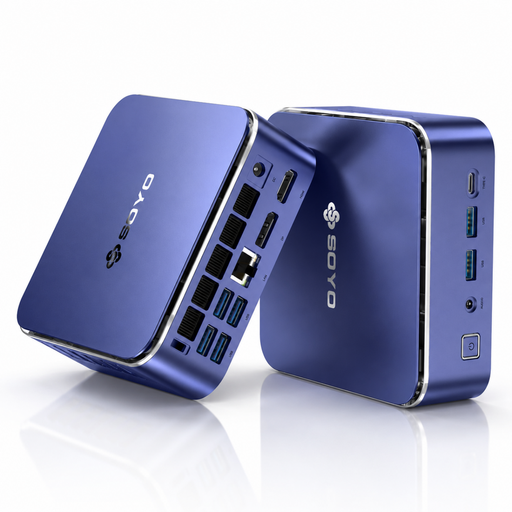
SOYO S5Air Mini PC, AMD Ryzen 5 7535HS, 16 GB LPDDR5, 512 GB NVMe SSD
A space-saving option if the specific software you use is compatible with the listed operating system and specifications.
Windows 11 Pro, AMD Radeon 660M, HDMI 2.0, DisplayPort 1.4 and Type-C are listed in the product name or details. Dimensions: 128 × 128 × 47,6 mm.
View at Joybuy
 No image available
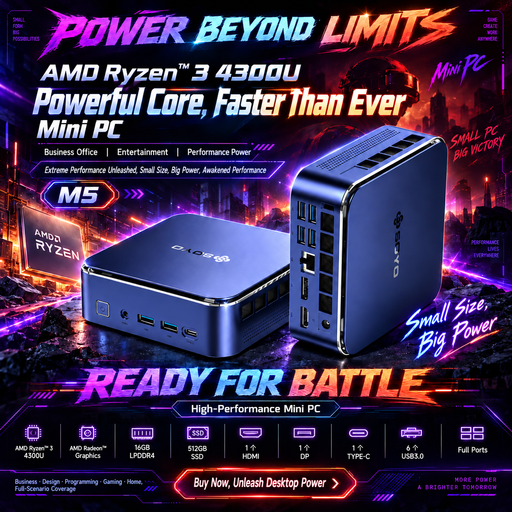
SOYO M5 Mini PC, AMD Ryzen 4300U, 16 GB LPDDR4, 512 GB SSD
A compact option if the operating system and connections suit your design software and monitor.
Windows 11; video outputs are listed as HDMI 2.0, Type-C and DisplayPort 1.4. Dimensions: 128 × 128 × 47,6 mm.
View at Joybuy
 No image available
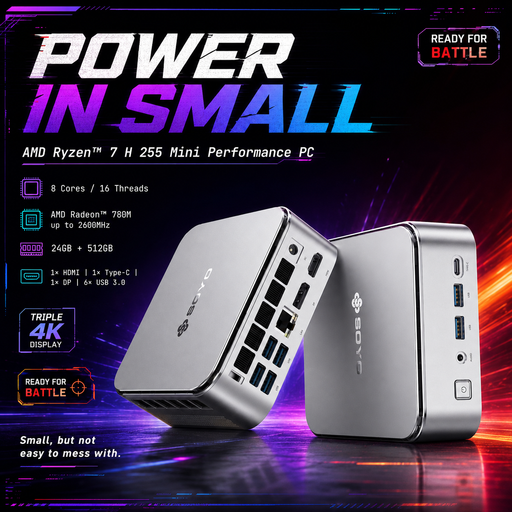
SOYO S4PLUS Mini PC, Ryzen 7 H 255, 24 GB LPDDR5, 512 GB PCIe 3.0 SSD
A compact option if the specific software you use is compatible with the listed operating system and specifications.
Windows 11; the product details list Radeon 780M, HDMI 2.0, DisplayPort 1.4 and Type-C. Dimensions: 128 × 128 × 47,6 mm.
View at Joybuy
Frequently asked questions
Do I need the same specifications for designing a calendar in Canva as I do for InDesign?
No. Choose a computer based on the programme you actually use. For using Canva in a browser, Canva recommends a supported, up-to-date browser and a stable internet connection. For InDesign version 21.3 and later, Adobe specifies at least 8 GB of RAM and recommends 16 GB. Windows users should also check the AVX2 requirements and make sure they have a supported version of Windows.
What should I agree on before setting up a computer for several users?
First decide where designs will be stored permanently and how user profiles will be managed. Microsoft describes a Shared PC mode for suitably configured Windows devices, where profiles can be removed automatically depending on the settings. Only enable these settings once you’ve agreed where files will be stored.
Is the PC on its own enough for a workspace and printing?
Not necessarily. Check whether the specific version includes a monitor, input devices and the connections you need. For printed calendars, you should also agree on colour profiles and output specifications with the print shop; Adobe describes these as part of the print workflow.
Does every purchase automatically come with a two-year guarantee?
The European Union’s consumer information states that consumer purchases of goods from a seller come with a minimum two-year legal guarantee from the date of receipt. A voluntary manufacturer’s warranty is separate. This consumer rule doesn’t automatically apply to business purchases.


