Catalogue designers
If you arrange text and images into pages, check the requirements for your layout software and its version before choosing a configuration. Adobe specifies particular computer requirements for InDesign, depending on the version.


For catalogue design, your desktop PC should meet the requirements of the layout and image-editing software you actually use. Check the RAM, SSD and monitor connections against the relevant software version and configuration. If you work extensively with images, available storage and the requirements of your graphics software become more important. At a shared workstation, separate user accounts, ports and desk space also matter. A dedicated gaming graphics card is not automatically necessary for conventional 2D layout work.
If you arrange text and images into pages, check the requirements for your layout software and its version before choosing a configuration. Adobe specifies particular computer requirements for InDesign, depending on the version.
When editing exhibition images, RAM and enough free storage are important considerations. Adobe describes colour profiles and output settings as part of a colour-managed print workflow.
If several people use the same computer, separate accounts, appropriate access rights and enough room for the screen and input devices should all be part of your workstation planning. The Federal Office for Information Security recommends individual password-protected accounts with appropriate permissions.
A good fit if: Desk space is limited and the screens and devices you need are compatible with the ports on the configuration you choose.
Things to weigh up: Storage options and what’s included vary by model. Check the specific PC and allow for a suitable external monitor.
A good fit if: You’re setting up a fixed workstation with an external monitor and don’t want a large case taking up space.
Things to weigh up: Features and upgrade options vary by model and configuration; similarly named PCs may come with different specifications.
A good fit if: Future storage or graphics options matter more than keeping the PC as small as possible.
Things to weigh up: Lenovo lists optional storage and graphics configurations for the ThinkCentre M90t Gen 6. According to Lenovo, the keyboard, mouse and monitor are sold separately.
Start by deciding which software and version you’ll use. Then check that the specific configuration, your existing monitor and any shared devices are all compatible.
| Requirement | What to check when buying | Who it matters most to |
|---|---|---|
| Smooth page layout | Check your layout software and its version, operating system, processor, RAM, SSD and monitor connection. For InDesign 21.3 on Windows, Adobe specifies at least 8 GB of RAM and recommends 16 GB. | If I mainly lay out catalogue pages, I want to meet the requirements of my layout software without paying extra for features I haven’t checked that I need. Around 28% of consumers prioritise smooth page layout. |
| Image editing and print colours | Consider your image-editing software, the size of your working files and the free space on your SSD. Adobe recommends at least 16 GB of RAM for Photoshop 27.x. Assess colour management separately from the PC. | If I edit exhibition images and prepare them for print, I look for enough storage and a well-coordinated colour workflow. Around 22% of consumers prioritise image editing. |
| Separate user accounts | Decide which accounts and access rights you need, and where to store files that everyone needs. The BSI recommends individual password-protected accounts with appropriate permissions when several people use a device. | If several people use the same computer, I want individual accounts and clearly managed access to shared files. Around 22% of consumers prioritise well-organised shared use. |
| Desk space and connections | Measure the space for the PC, monitor and input devices, then check the specific model has the monitor, USB and network ports you need. | If I’m setting up a shared desk, I want the PC to fit the space and connect to the devices we already have. Around 17% of consumers prioritise desk space and connections. |
| Complete setup | Check what’s included, which accessories you need and the service terms for the specific configuration. | If I’m putting together a complete workstation, I want to know which devices and services are included. Around 11% of consumers prioritise overall cost and support. |
A small case doesn’t tell you whether the complete workstation has everything you need, including a monitor, input devices and the right connections.
Check what’s included, the monitor connections and your existing devices together for the exact configuration.
A graphics card doesn’t replace the need to coordinate colour profiles and output settings in your print workflow.
Assess the PC’s performance and print preparation separately, and check the requirements with your printer.
Processors, RAM, graphics and support can vary between configurations in the same product range.
Compare the full model and configuration details, not just the product family name.
The Pro Slim Plus QBS1250 range is designed for a fixed workstation where desk space is limited.
The ThinkCentre M90t Gen 6 is a tower option if you may want to upgrade its storage or graphics later on.
The OmniDesk Slim S03-0750ng is a slim desktop option for a workstation with an external monitor.
The Cubi NUC 1M and PRO DP80 A14G represent different approaches to compact and larger desktop PCs.
The Mac mini is a compact macOS option, provided it’s compatible with your catalogue software and existing devices.
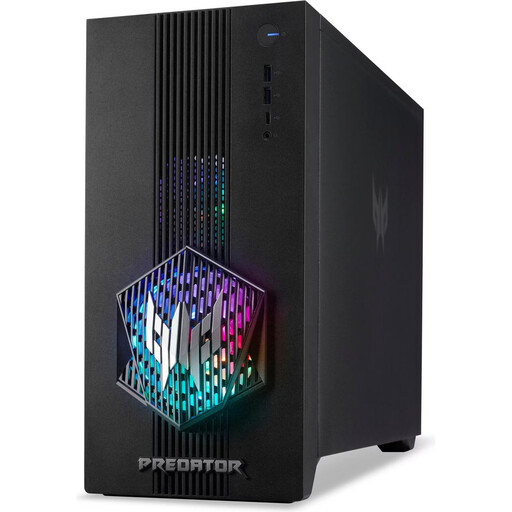
The models below are tower PCs for a fixed workstation. Check that each PC’s specifications suit your software, monitor and required connections.
 No image available
For a layout and image-editing workstation: check that the connections suit your monitor and shared devices.
16 GB DDR5 RAM, 512 GB SSD, NVIDIA GeForce RTX 5060 with 8 GB and Windows 11 Home. USB-C and RJ45 are listed.
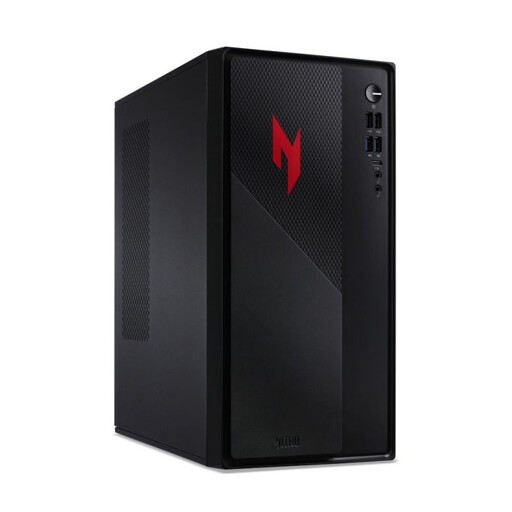 No image available
If you plan to use several monitors, check the listed video connections against your workstation setup.
32 GB DDR4 RAM, 1 TB SSD and an additional 1 TB hard drive. Three DisplayPort outputs, HDMI and NVIDIA GeForce RTX 5060 are listed.
 No image available
For a fixed workstation with several displays: check the connections you need and your software requirements.
32 GB DDR5 RAM, Intel Graphics and Windows 11 Pro. Four DisplayPort outputs are listed.
 No image available
If you want to connect several monitors and peripherals, check that the connections meet your specific needs.
Core Ultra 9 285K, 32 GB DDR5 RAM, 2 TB SSD and NVIDIA GeForce RTX 5080 with 16 GB. HDMI, three DisplayPort connections and USB-C are listed.
 No image available
For a layout workstation with several connected devices: check the display and USB connections against your existing equipment.
32 GB DDR5 RAM, 512 GB NVMe SSD, NVIDIA RTX A400 with 4 GB and Windows 11 Pro. DisplayPort, HDMI, USB-C and USB-A connections are listed.
Set up a separate password-protected account with appropriate access rights for each person. The Federal Office for Information Security recommends this approach for shared devices. You should also decide where to store the catalogue files everyone needs.
Not necessarily. First check the requirements of the layout and image-editing software you actually use. Adobe lists graphics requirements for InDesign and Photoshop that vary by version, so choose based on your applications and planned display setup.
For an InDesign workflow, Adobe recommends checking that image links are up to date, fonts are available, bleed and colour settings are correct, and the preflight check has been completed. Confirm the PDF and colour profile settings with your printer.
If a product is faulty, your statutory consumer rights apply against the seller. Any additional guarantee offered is voluntary and subject to its own terms. The Verbraucherzentrale explains the difference. Also check which support services apply to the specific configuration.
No. The German Environment Agency advises that waste electrical equipment must be collected separately from unsorted household waste. Find out about suitable local collection points or take-back schemes for electrical equipment.