Which desktop is right for you?

Editing team working with separate audio

If you’re bringing together camera footage with separately recorded interviews, speeches or event audio, your editing software should support a suitable synchronisation workflow. Adobe explains how to sync separately recorded audio and video files in Premiere; DaVinci Resolve lists timecode and audio waveforms as synchronisation methods.

Team working with demanding footage

For high-resolution footage or multiple video tracks, check that the specifications meet the requirements of your particular software and footage. For Premiere on Windows, Adobe recommends at least 32 GB of RAM for 4K and higher; this recommendation applies to the documented version of Premiere, not every club film as a matter of course.

Club with a large film archive

If you have lots of original footage, project files and working copies, you’ll need a plan for storing and backing them up separately. Adobe describes proxy workflows using smaller copies for high-resolution video files; these files also take up storage and don’t replace a backup of the originals.

What should you look for when buying?

Buying priority What to check before buying Who is this especially important to?
Syncing video and audio Check the operating system and the editing software’s synchronisation features, as well as the ports for recording and monitoring equipment. If I need to combine separate interviews or event audio with video, the right software workflow is my priority. Around 31% of consumers prioritise syncing video with separately recorded audio.
Editing footage Check the resolution, codec and number of tracks against the software’s requirements; if needed, check its proxy workflow too. If I want to edit high-resolution footage or multiple video tracks, the configuration needs to suit my footage. Around 25% of consumers prioritise editing demanding video files.
Storage and backups Allow space for original footage, project files, cache and any proxies, as well as a separate backup; check drive options and ports. If our club wants to keep lots of original footage and working copies, I need to plan for enough storage and a separate backup. Around 25% of consumers put storage space and archive organisation first.
Software and upgrades Check the operating system, full model and product number, installed graphics, monitor ports and possible future upgrades. If my editing software or the club’s existing equipment requires a particular operating system and suitable ports, the exact configuration matters to me. Around 19% of consumers prioritise software compatibility and future changes to their workstation.

Common buying pitfalls

  • Assuming optional graphics cards come as standard on every variant

    A product range’s graphics card options may not be included in every configuration. Lenovo lists integrated graphics and a 256-GB SSD for the ThinkStation P3 Tower Gen 2, product number 30HTCTO1WWDE2; for the documented version of Premiere, Adobe recommends 8 GB of GPU memory on Windows.

    Compare the full product number and the GPU actually installed with your editing software’s requirements.

  • Allowing storage only for the finished film

    Original files, cache and proxy copies can all take up storage in addition to the finished video. Make sure you plan for a backup that’s separate from your working files.

    Estimate the size of your raw footage before buying, then allow separate space for originals, working files and backups.

  • Assuming a fast PC will automatically sync audio

    Synchronisation methods are part of the editing software. Adobe describes a sync feature in Premiere; DaVinci Resolve lists timecode and audio waveforms as possible methods.

    Check that your chosen software supports your planned recording methods and synchronisation features, then review the result in the edit.

Key brands at a glance

Apple

Mac mini: a compact desktop option for a macOS workstation.

  • For the listed configurations, Apple Germany specifies media acceleration for H.264, HEVC and ProRes.
  • Storage and ports vary by model. The manufacturer’s media acceleration specifications are not a test of editing speed with your footage.

Lenovo

ThinkStation P3 Tower Gen 2 for buyers considering a configurable Windows workstation.

  • The 30HTCTO1WWDE2 variant is listed with 32 GB of RAM.
  • This specific variant has integrated graphics and a 256-GB SSD. Options available on other models in the range aren’t automatically included.

HP

Z2 Tower workstations are a Windows tower option; specifications depend on the product number.

  • For the 8T1K0EA#ABD variant, HP lists 32 GB of RAM, a 1-TB SSD and an NVIDIA T1000 with 8 GB.
  • These specifications apply to this variant. The manufacturer’s performance claims aren’t an independent test of a club film workflow.

Dell

Dell Pro Max Tower T2: a configurable Windows desktop for a dedicated editing setup.

  • The range offers a choice of processor and power supply options.
  • Changing your selections can alter the configuration. The model name alone doesn’t confirm that a PC is suitable for a particular 4K project.

Joybuy products for a compact editing setup

The compact desktops and mini PCs below could work as an editing setup, provided the operating system, exact specifications and storage plan suit your project.

Apple Mac mini M6 with 24 GB unified memory and 512 GB SSD

Apple Mac mini M6, 24 GB, 512 GB SSD

A compact Mac option if your editing software runs on macOS and you allow extra space for media and backups.

12-core CPU, 12-core GPU, 24 GB unified memory, 512 GB SSD, Thunderbolt 4 and HDMI.

View at Joybuy
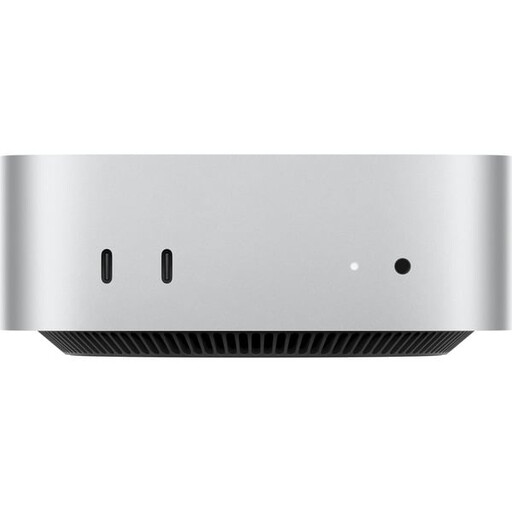
Apple Mac mini A3534 M6 with 24 GB unified memory and 1 TB SSD

Apple Mac mini A3534 M6, 24 GB, 1 TB SSD

A compact Mac option if your editing software is compatible with macOS; remember to plan a separate backup for your project files.

12-core CPU, 12-core GPU, 24 GB unified memory and 1 TB SSD.

View at Joybuy

Apple Mac mini MHQK4ZD/A_CTO with M6, 32 GB unified memory and 512 GB SSD

Apple Mac mini MHQK4ZD/A_CTO, M6, 32 GB, 512 GB SSD

A compact Mac option if your editing software is designed for macOS and you allow extra storage for media and backups.

12-core CPU, 12-core GPU, 32 GB unified memory and 512 GB SSD.

View at Joybuy
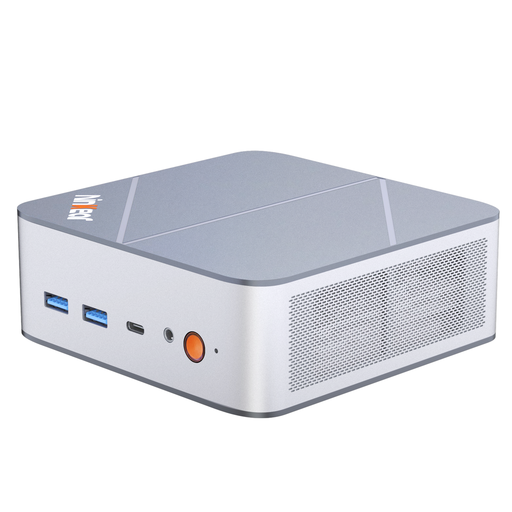
Ninkear M8 mini PC with Ryzen 7 8745HS, 16 GB DDR5 and 1 TB SSD

Ninkear M8 mini PC, Ryzen 7 8745HS, 16 GB, 1 TB SSD

This mini PC could work as a compact editing setup if your editing software and footage are compatible with the exact configuration.

AMD Ryzen 7 8745HS, 16 GB DDR5 RAM, 1 TB SSD and Windows 10/11.

View at Joybuy

FIREBAT F1 mini PC with Ryzen 5 7640HS, 24 GB LPDDR5 and 512 GB SSD

FIREBAT F1 mini PC, Ryzen 5 7640HS, 24 GB, 512 GB SSD

A compact option if your editing software is suited to the specifications and you allow storage for originals, working files and backups.

AMD Ryzen 5 7640HS, 24 GB LPDDR5 RAM, 512 GB PCIe 4.0 SSD, Radeon 760M graphics, USB 4.0 and HDMI 2.1.

View at Joybuy

Frequently asked questions

Do I need a special sound card for separately recorded audio?

Not just to combine existing audio and video files: the methods described for this are software features. Adobe explains how to sync clips in Premiere; DaVinci Resolve lists timecode and audio waveforms. Check audio ports or an interface separately if you want to record at your editing setup or connect specific monitoring equipment.

What can I do if high-resolution footage is difficult to edit?

A proxy workflow can use smaller working copies of high-resolution original files. Adobe describes this option for Premiere. Check that your chosen software supports the workflow with your files, allow space for the proxies and continue to back up the originals separately.

Is a manufacturer’s warranty the same as statutory consumer rights?

No. The Verbraucherzentrale distinguishes statutory rights against the seller from a voluntary warranty. Check the warranty terms and, if the club is buying the PC, who is named as the buyer in the sales contract; a purchase by a club isn’t automatically treated in the same way as a private consumer purchase.

Can the club publish the film if identifiable people and someone else’s music appear in it?

There’s no blanket yes or no. Under § 22 KunstUrhG, distributing or publicly displaying images generally requires the consent of the person shown; any possible exceptions and the legal basis under data protection law need to be considered on a case-by-case basis. GEMA points out that, when protected third-party music is used in film productions, the right to make the production must be cleared with the rights holders. Buying an editing PC doesn’t give you these rights.