Start by choosing a computer that suits your build, the operating system you need and the tools you’ll be running at the same time. Then check noise levels under sustained load, desk space and ports. A mini PC saves space, while a larger desktop may suit you if you need extra expansion options. A Mac mini is worth considering if your toolchain runs on macOS. No form factor, on its own, guarantees shorter build times or quieter operation.
Who is a desktop PC for compiling suited to?
Developers who regularly run large builds
If you compile locally often, consider parallel build jobs, sustained processor load and the size of your projects together. The CMake documentation explains how to limit the number of simultaneous build processes.
Developers using containers and local services
If your IDE, builds and additional environments all run at the same time, installed memory, storage space and the operating system you need all matter. Docker sets out the system requirements for Docker Desktop on Windows.
Developers at a shared desk
At a shared workstation, your computer and its ports need to fit the available space. Noise during longer builds may also affect the people around you. The Federal Institute for Occupational Safety and Health considers unwanted noise a workplace stressor in office work.
What should you look for when buying?
Configured Windows or Linux mini PC
A good fit if: desk space is limited and your tools run on the operating system supplied.
Consider: specifications and upgrade options vary by model. An office-use test does not tell you how long builds take or how noisy the computer is under sustained load.
Larger business desktop or tower
A good fit if: you know you need extra drives, memory or expansion cards, and have room for them.
Consider: a larger case takes up more desk space and does not automatically make a computer quieter or faster.
Mac mini
A good fit if: your development work requires macOS or Xcode, or your entire toolchain runs on a Mac.
Consider: check compatibility separately for tools that rely on Windows or Linux. Apple offers different memory and SSD configurations.
| Consideration |
What to look for |
Who it matters most to |
| Build time under sustained load |
Check the exact CPU model and, where possible, relevant tests under sustained load. Set the number of parallel build jobs to suit your project. |
If you regularly run local builds, performance during repeated workloads matters more than a brief burst of speed. Around 25% of consumers put build time first. |
| RAM and SSD for running several tools |
Compare the installed RAM, SSD capacity and available slots with the tools you actually use. |
If your IDE, builds and additional environments run at the same time, you need enough capacity for that combination and your local files. Around 20% of consumers prioritise the tools they use simultaneously. |
| Noise, desk space and ports |
Check the dimensions and ports of the specific configuration. Don’t treat idle figures as equivalent to measurements under build load. |
If you share a desk, look for a computer that fits the space and is less likely to disturb others during longer builds. Around 20% of consumers prioritise suitability for office use. |
| Operating system and toolchain |
Choose your compiler, SDKs, container backend and project target before deciding on an operating system. |
If your tools depend on a particular operating system, make sure your local toolchain can run on it. Around 20% of consumers prioritise compatibility with their tools. |
| Future upgrade options |
Check which RAM and SSD slots are occupied or free, and the limits of the full model number. |
If your projects may grow, it’s important to know whether you can add memory or drives later. Around 15% of consumers put potential future upgrades first. |
Which buying decisions can be misleading?
-
Assuming a high short-term boost clock means faster sustained builds
Longer builds and parallel processes put different demands on a computer than a brief burst of performance.
Look for relevant build or long-duration tests, and consider memory and cooling alongside the processor.
-
Assuming ‘mini’ automatically means ‘quiet’
A small case alone tells you nothing about noise during a build. The Federal Institute for Occupational Safety and Health highlights the impact of unwanted noise in the office.
Distinguish manufacturers’ claims from independent measurements, and look for tests under load as well as information about the intended setup.
-
Comparing only the series name, not the full specification
Specifications and what’s included can vary within a product range; GMKtec, for example, also lists a barebone version.
Before ordering, check the full model number, installed components, operating system and what’s included.
Depending on the configuration, you may also need to budget for extra RAM, an SSD, an operating system or input devices.
Key brands to consider
HP
The HP Pro Mini 400 G9 is a compact business PC range. The German product page describes a specific configuration with a Core i5-14500T, 16 GB RAM and a 512 GB SSD.
- The details for this configuration help you compare the processor, memory and SSD.
- These specifications are not a measured compilation benchmark. A COMPUTER BILD test of a different HP model cannot be applied to the Pro Mini.
MSI
The Cubi NUC 1M range is designed for compact workspaces, while the PRO-DP80-A14G range features a larger business desktop form factor.
- MSI lists two RAM slots and VESA 100 × 100 mm support for the Cubi NUC 1M range; specifications vary by configuration.
- COMPUTER BILD considers the upgrade options on the tested PRO DP80 A14G limited. This does not tell you anything about build times.
GEEKOM
The A5 Pro 2026 Edition described includes a configuration with a Ryzen 5 7530U, 16 GB RAM and a 1 TB SSD.
- The specific processor, memory and SSD details are useful when comparing configurations.
- Manufacturer claims such as ‘whisper-quiet’ are not independent noise measurements. The A5 Pro test does not establish build times for your project.
Lenovo
According to Lenovo, the ThinkCentre M75q Gen 5 range offers a choice of documented configurations for compact business PCs.
- The range specifications include different processor, RAM and SSD options.
- Some features are available only on selected models. Check the full model number; the specifications are no substitute for measuring build time and noise.
Apple
The Mac mini is a compact macOS option if you need to develop locally for Apple platforms or use Xcode. Apple’s German technical specifications describe M6 and M5 Pro configurations.
- Apple lists different memory and SSD configurations, which you can compare with your needs before buying.
- The technical specifications do not prove that it is better for any particular compiler project. Check compatibility separately for tools that rely on Windows or Linux.
Desktop PCs and workstations for local builds
This selection includes tower PCs and compact workstations for local builds and development tools used at the same time.
 No image available
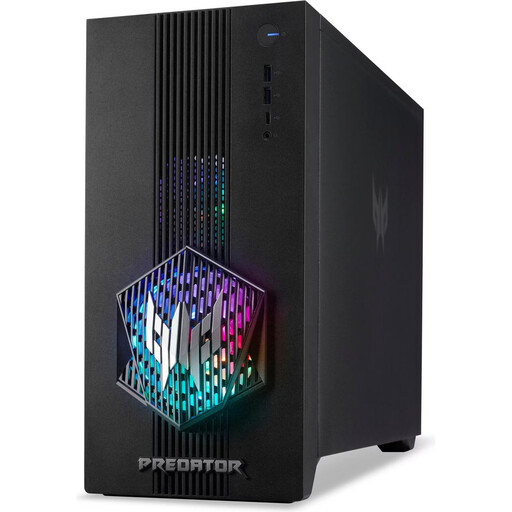
Acer Predator Orion 3000 desktop, i5 Ultra, 16 GB, 512 GB, RTX 5060, Windows 11 Home
Positioned as a larger desktop for local builds and tools used at the same time. Check whether this specific configuration suits your project and workspace.
Listed in the product name: 16 GB RAM, 512 GB storage, RTX 5060 and Windows 11 Home.
Joybuy
 No image available
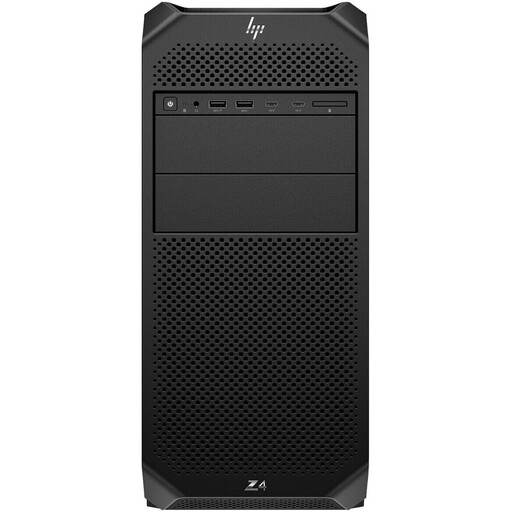
HP Workstation Z4 G5 Tower, Xeon W3-2535, 64 GB RAM, 1 TB SSD
Positioned as a tower workstation for frequent local builds and tools used at the same time. Compare the full configuration with your project requirements.
Listed in the product name: Xeon W3-2535 at 3.5 GHz, 64 GB RAM, 1 TB NVMe SSD and RTX 4000 Ada.
Windows 11 Pro and 1GbE are also listed in the product name.
Joybuy
 No image available
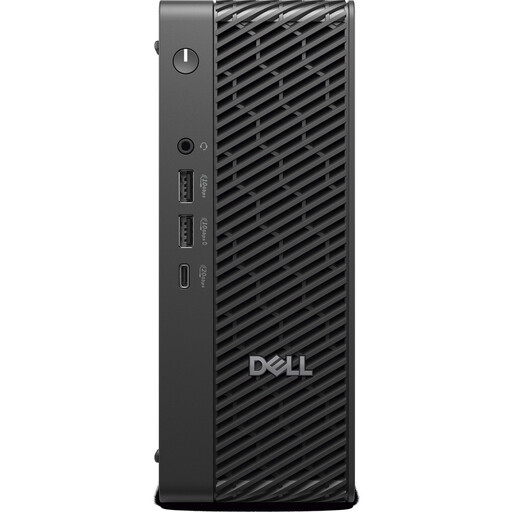
Dell Pro Max Micro FCM2250 MFF, Intel Core Ultra 7 265, 32 GB RAM, 1 TB SSD
Positioned as a compact workstation for builds and tools used at the same time when space is limited. Check its dimensions and ports against your workspace.
Listed in the product name: Intel Core Ultra 7 265 vPro, 32 GB DDR5 RAM and 1 TB PCIe NVMe SSD.
Windows 11 Pro and Wi-Fi 7 are also listed in the product name.
Joybuy
 No image available
Dell Alienware Aurora ACT1250, Core Ultra 9-285K, 32 GB RAM, 2 TB SSD
Positioned as a tower for local builds and large local files. Check whether the specific configuration and case suit your needs and available space.
Listed in the product name: Intel Core Ultra 9-285K, 32 GB DDR5 RAM, 2 TB SSD and RTX 5080.
Windows 11 is also listed in the product name.
Joybuy
 No image available
Lenovo ThinkStation P2 Tower Gen2, Intel Core Ultra 7 265, 32 GB RAM, 512 GB NVMe SSD
Positioned as a tower workstation for local builds and parallel development tools. Compare the configuration with your project and check how much space it needs.
Listed in the product name: Intel Core Ultra 7 265, 32 GB DDR5 RAM, 512 GB NVMe SSD and NVIDIA RTX A400 with 4 GB.
Windows 11 Pro is also listed in the product name.
Joybuy
Frequently asked questions
How many cores do I need for compiling?
There’s no single number that works for everyone. The right number depends on how well your project can be parallelised and how much memory it needs. The CMake documentation explains how to limit the number of simultaneous build processes. Where possible, compare processors using relevant builds under sustained load rather than looking only at boost clock speeds.
What should I check before installing Docker Desktop on a Windows PC?
Check the Windows requirements for your version of Docker, the backend you’ve chosen, and whether you need WSL or Hyper-V. Docker documents these prerequisites. Having suitable PC specifications alone does not replace checking the software and setup.
How do I set up a PC used by several people?
If several people will actually use the same computer, set up separate user accounts with suitable permissions. The Federal Office for Information Security covers this situation. It’s different from sharing a desk while using separate computers.
What marking is relevant for a new desktop PC in Germany?
For a new device covered by the EMC Directive 2014/30/EU and placed on the German market, its conformity requirements apply, including CE marking. Check the details for the specific device and power supply: a general model description does not prove that a particular offer is compliant.
What statutory warranty applies when buying a PC?
If you buy as a consumer from a business seller in the EU, you’re generally entitled to a statutory guarantee of at least two years from the date you receive the goods. This is separate from any additional manufacturer’s warranty. For a business purchase, check the contract terms and service arrangements separately.


