What should you look for when buying?
When cataloguing rare books, first decide on your software and data workflow. Then you can work out how much local storage you need, which ports are essential and how much room to leave for future upgrades.
| Priority |
What to check before buying |
Who should pay particular attention? |
| Catalogue software and custom fields |
Check the supported operating system, the field types you need and the available export options. If you’re using CollectiveAccess, also establish whether the computer will only act as a browser client or will run a server; the CollectiveAccess documentation distinguishes between these setups. |
If I want to record provenance and the individual features of books in a structured way, the software must support my preferred data model. Around 28% of consumers would say that software and field structure are their top buying priority. |
| Storage for scans |
Estimate the number and average file size of your images, as well as where you plan to store them locally. The CollectiveAccess documentation notes that media files can take up more space than metadata. |
If you want to store book scans locally, you’ll need room for the image files, so estimate their total size in advance. Around 22% of consumers would say that local scans and storage are their main priority. |
| Backing up your cataloguing work |
Establish where the database and images are stored, what needs backing up and how you would restore it. The German Federal Office for Information Security recommends keeping backups to protect against data loss. |
If you want to keep the data you’ve already entered and its linked images, a separate backup method should be part of your workflow. Around 22% of consumers would put data backup first. |
| Ports and desk space |
Check the video outputs, USB ports and accessories against your monitor, scanner and peripherals. Also consider how much room you have at your workstation. |
If you want to keep using your existing devices, check that the ports are compatible and that everything will fit neatly at your cataloguing station. Around 17% of consumers would say existing peripherals and workspace are their top buying priority. |
| What’s included in the system |
Check the model number and what’s included. A kit may not come with an operating system, RAM or a drive. Depending on the configuration, a monitor and peripherals may also need to be bought separately. |
If I want to put together a workstation that’s ready to use, I need to consider all the components I’ll need. Around 11% of consumers would say the cost of a complete system is their main priority. |
Joybuy products for your cataloguing station
These compact mini PCs are selected for a Windows-based cataloguing station. Before buying, check that your catalogue software supports the operating system and that the storage, ports and what’s included suit your workflow.
 No image available
HP Z2 Mini G1a Ryzen AI Max+ Pro 395
The listed 2 TB SSD gives you internal storage if you want to keep book scans on the computer.
128 GB DDR5; 2 TB SSD; Windows 11 Professional; Thunderbolt 4 and Mini DisplayPort.
View at Joybuy
 No image available
ACEMAGIC E3B Mini Desktop Computer
The listed storage specifications are worth considering for a workstation with locally stored images. Check how much space your collection actually needs.
24 GB LPDDR5; 512 GB NVMe SSD; second M.2-2280 slot with stated support for expansion up to 4 TB; Windows 11 Pro; HDMI, DisplayPort and USB-C video outputs.
View at Joybuy
 No image available
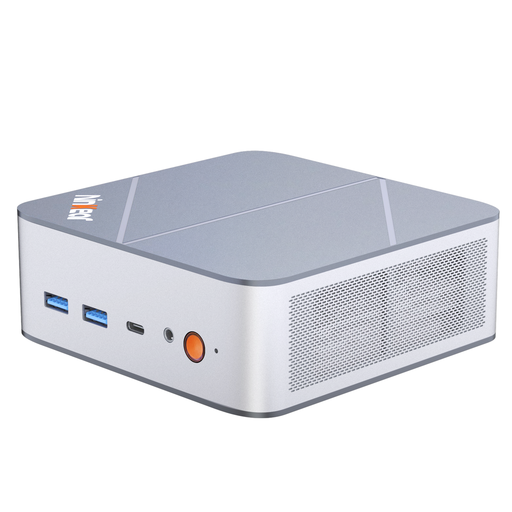
Ninkear M8 Mini PC
The listed 1 TB SSD provides internal storage for work files and locally stored media.
16 GB DDR5; 1 TB SSD; Windows 10/11; dual 2.5 Gigabit Ethernet and Wi-Fi 6; 130 × 127.5 × 52 mm.
View at Joybuy
 No image available
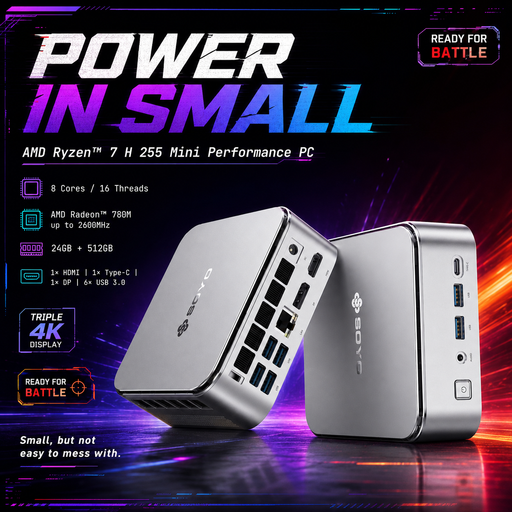
SOYO S4PLUS Mini PC
If you’re using multiple monitors, the listed video outputs are a useful point to check. Make sure they’re compatible with your screens.
24 GB LPDDR5; 512 GB PCIe 3.0 SSD; Windows 11; HDMI, DisplayPort and USB-C video outputs; 128 × 128 × 47.6 mm.
View at Joybuy
 No image available
FIREBAT A8 Mini PC
The listed 1 TB SSD is useful if you want to store work files or scans internally. Remember to plan for a separate backup as well.
24 GB DDR5; 1 TB PCIe 4.0 SSD; Windows 11 Pro according to the product description; USB4, HDMI 2.1 and two 2.5 Gigabit Ethernet ports.
View at Joybuy
Frequently asked questions
Will a more powerful PC let me create custom catalogue fields?
No. Field definitions are a feature of the software you choose. Claris FileMaker Pro Help explains how to create custom fields. Before buying, check that the data model and export options you need suit your workflow.
Does CollectiveAccess need to be installed on the cataloguing PC?
Not necessarily. Providence can run as a browser-based application on a server and be accessed through a browser. According to the CollectiveAccess documentation, the server can also run on a local network or on a single computer. If so, the server requirements will apply.
How do I back up my catalogue and linked image files?
First, establish where the database and images are stored, then back up both in a way that suits your setup. The German Federal Office for Information Security recommends backups to protect against data loss caused by hardware failure, accidental deletion or malware. A copy on the same internal drive doesn’t count as a separate backup.
What rights apply when buying a PC in Germany?
For a consumer purchase, statutory rights against the seller are different from a voluntary guarantee. The consumer advice centre generally gives two years for faults present at the time of delivery. For sales contracts from 31 July 2026 onwards, it explains that this period can be extended once by twelve months if you choose a repair when a fault arises. If an institution is buying, check the specific contract terms.
Do I need to consider data protection when recording provenance?
If you’re processing personal data, you must consider the GDPR. The German Federal Commissioner for Data Protection and Freedom of Information explains the fundamentals of data protection law. In particular, if your records include details about identifiable people, check the data involved and the legal basis for processing it.


