For a graphic novel script with scenes, references and revision notes, start by considering your writing software, version control and screen space; you don’t automatically need a particularly powerful graphics PC. A mini PC paired with a separate monitor lets you choose your own screen, while an all-in-one comes with a fixed display. If you also want to create comic pages, check the requirements of your drawing software and projects too.
Who is this writing setup for?
Scriptwriters making frequent revisions
If you regularly revise dialogue and scenes, you’ll want to keep track of changes and earlier drafts. Literature & Latte describes a revision mode, comments and snapshots for Scrivener; you should also plan for a separate file backup.
Scene planners working with references
If you rearrange scenes and want to keep synopses, character details or research alongside your text, check the organisational features of your writing software and make sure your screen space is up to the task. Literature & Latte describes features in the Scrivener Inspector including notes, bookmarks, snapshots and comments.
Writers with specific drawing needs
If you want to create comic pages at the same workstation, bear in mind that this is an extra step beyond scriptwriting. Clip Studio Paint describes features for managing panels and pages in its drawing application.
What should you look for when buying?
First decide how you’ll organise scenes and revisions, then check that the software, backup and screen suit your planned setup.
| Buying priority |
What to check before buying |
Who it matters most to |
| Revisions and earlier drafts |
Check the writing software’s revision and commenting features, as well as your separate backup routine. |
If I often revise dialogue, I want to track earlier versions and back up my files separately; around 33% of consumers have this as their main priority. |
| Organising scenes and notes |
Check how the application manages scenes, synopses and comments, and whether it works with your chosen operating system. |
If I rearrange scenes, I want to organise notes and character details alongside the text; around 27% of consumers put this kind of organisation first. |
| Text and references on screen |
Check your existing monitors and ports, or, for an all-in-one, check the display size and setup. |
If I want to see my draft and references at the same time, I need enough screen space; around 20% of consumers prioritise this. |
| A complete writing setup |
Check what’s included, which peripherals you already own and which software licence you need. |
If I still need a monitor or input devices, I want to plan the complete writing setup rather than just the computer; around 13% of consumers give this the highest priority. |
| Extra work on comic pages |
Decide whether you’ll actually be drawing, then check the software, project requirements and drawing input you’ll need. |
If I want to create finished comic pages as well as write the script, I need to account for this additional workflow; around 7% of consumers put it first. |
Which buying mistakes should you avoid?
-
Confusing in-app snapshots with a full data backup
Snapshots in Scrivener help you return to an earlier version of your text. They don’t replace a separate backup of your project files.
Set up a separate backup for your Windows or Mac workstation and check that you can restore a file from it. Microsoft describes using an external drive or network location for File History; Apple recommends an external storage device for Time Machine.
-
Confusing scriptwriting with drawing finished comic pages
Tools for panels and pages are for an additional stage of production, and aren’t an automatic requirement for writing dialogue and revision notes.
Only choose extra equipment based on your drawing software and project requirements if you actually plan to create comic pages.
-
Assuming a mini PC and an all-in-one come with the same screen
An all-in-one has an integrated screen, while a mini PC is paired with a monitor you choose separately. Ports and specifications can vary between models.
Check the screen format, ports and what’s included for the exact configuration you’re planning to buy.
-
Confusing software compatibility with current operating system support
Scrivener lists 64-bit Windows 10 or later as a requirement for its Windows version. Microsoft ended regular security support for Windows 10 on 14 October 2025.
When buying, check the support status of the Windows version installed as well as its technical compatibility.
Relevant brands to consider
GEEKOM
The A5 Pro 2026 is a mini PC that can be paired with a separate monitor.
- For the configuration described, GEEKOM lists a Ryzen 5 7530U, 16 GB RAM, 1 TB SSD and Windows 11 Pro.
- These specifications apply to the configuration described. Check the features and what’s included with the specific variant.
Dell
The Pro Micro QCM1250 is a compact Windows desktop option with configurable specifications.
- Dell offers a choice of processor, operating system and memory for this model.
- The specifications of one selected configuration won’t necessarily apply to every QCM1250 version.
HP
The OmniStudio all-in-one range integrates the screen into your desktop setup.
- HP describes display options of 24 and 27 inches for the range.
- For the specific configuration, check that the screen size, setup and ports suit your workspace.
Apple
The Mac mini with M6 is a macOS option for a workstation with a separate monitor.
- Apple documents support for external displays via Thunderbolt and HDMI on M6 configurations.
- Check that your writing software is compatible, and note that Literature & Latte offers separate Scrivener licences for macOS and Windows.
Joybuy products for your writing setup
The Joybuy products below include mini PCs and tower desktops running Windows 11 or Windows 11 Pro. If you choose a mini PC, allow for a suitable screen setup, and check the specific specifications and what’s included with each model.
 No image available
SOYO Y5Pro mini PC, Intel Core i5 8250U/8350U
The mini PC format is an option for a separately arranged writing setup; check whether a monitor and input devices are included.
Listed in the product title: Windows 11, 8 GB DDR4, 256 GB SATA SSD and Intel Core i5 8250U/8350U.
The product description lists two HDMI outputs and a Type-C port.
View at Joybuy
 No image available
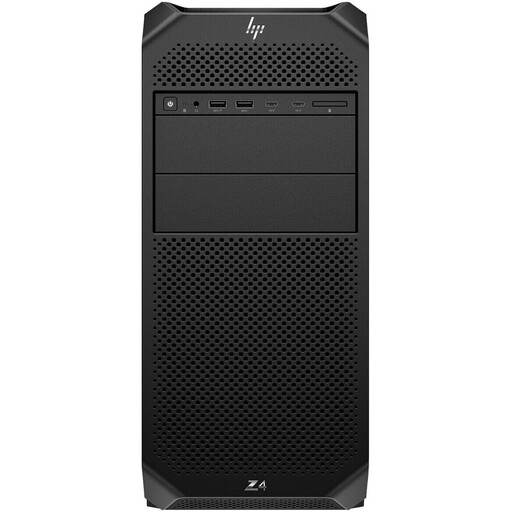
HP Workstation Z4 G5 tower, Xeon W3-2535
This tower workstation is a desktop format for a permanent writing setup; check that the screen and what’s included meet your needs.
Listed in the product title: Windows 11 Pro, 64 GB RAM, 1 TB SSD and RTX 4000 Ada.
View at Joybuy
 No image available
HP Z2 Tower G1i, Core Ultra 7 265
The tower format is a good starting point for a desktop setup arranged separately; check the ports and what’s included with the configuration.
Listed in the product title: Windows 11 Pro, 32 GB DDR5, 2 TB M.2 SSD and integrated Intel graphics.
View at Joybuy
 No image available
Lenovo ThinkStation P2 Tower Gen2, Core Ultra 7 265
The tower format is well suited to a permanent desktop writing setup; check that the specific configuration works with the software you use.
Listed in the product title: Windows 11 Pro, 32 GB DDR5, 512 GB NVMe SSD and NVIDIA RTX A400 with 4 GB.
View at Joybuy
 No image available
ACEMAGIC AK1PLUS mini PC, Intel Celeron N5095
The mini PC format suits a writing setup with a separately chosen screen; check which peripherals are included with the specific offer.
Listed in the product title: Windows 11 Pro, 16 GB LPDDR4X and 256 GB M.2 2280 SATA SSD.
The product description lists two HDMI 2.0 outputs.
View at Joybuy
Frequently asked questions
Do I need a dedicated graphics card for a graphic novel script?
Writing and revising the script alone doesn’t make one necessary. If you also create comic pages, check the requirements of your drawing software and projects; Clip Studio Paint describes features including panel tools and page management.
How do I back up my draft and revision notes?
Treat software versioning and a separate file backup as two different things: Scrivener snapshots keep earlier versions of your text in the project. For Windows, Microsoft describes File History with an external drive or network location; Apple recommends an external storage device for Time Machine. Also check that you can restore your backed-up project files.
Can I keep using a Scrivener licence if I switch between Windows and Mac?
Not as a licence for the other desktop platform: Literature & Latte explains that a macOS licence won’t unlock the Windows version, and that licences are platform-specific.
What should I know about statutory warranty rights and manufacturer’s warranties in Germany?
Your statutory rights against the seller are separate from a voluntary manufacturer’s warranty. The Verbraucherzentrale generally describes a two-year statutory warranty period for new goods; your rights in a particular case depend on factors including the goods and the circumstances of purchase.
Is a second-hand desktop with Windows 10 enough?
Technical compatibility with your writing software isn’t enough to make your decision: Scrivener lists 64-bit Windows 10 or later as a requirement, while Microsoft dates the end of regular Windows 10 security support to 14 October 2025. So check the support status of the specific operating system installed.


