Choose a desktop PC based first on your photo-editing software, whether you work with RAW or non-RAW files, and the scale of your photography projects. More processing power won’t make up for a missing lens profile or remove the need for manual correction. Adobe distinguishes between lens profiles for RAW and non-RAW files, while DxO explains that optical corrections can be applied manually if there’s no suitable optics module. A compact computer could suit a fixed workspace and smaller projects, while large RAW libraries or additional GPU-intensive features make storage, graphics options and expandability more important.
Which desktop is right for you?
Photographers using RAW lens profiles
If you want to correct distortion for specific camera and lens combinations, first check whether your software offers suitable profiles for your file types. Adobe distinguishes between profiles for RAW and non-RAW files; DxO notes that you can apply corrections manually if there’s no suitable optics module.
Photographers with large image libraries
With lots of RAW files, or particularly large ones, cataloguing, storage and exports matter as well as correction. Puget Systems explains that RAW files contain extensive image data that needs to be processed during editing.
Photographers short on desk space
If your computer needs to stay on a small desk, a compact model could be a good fit. Check that the specific configuration works with your monitor and includes all the components you need.
What should you look for when buying?
First, check that your software and file format support your correction workflow. Then compare the demands of your photo work with the storage, ports and case of the specific configuration you’re considering.
Compact Windows desktop
A good fit if: you use Windows software, have limited desk space and the specific configuration meets your needs for image files and your monitor.
Consider: Mini PCs vary in what’s included; a kit may need extra components and some setup.
Mac mini
A good fit if: your editing software and other devices are compatible with macOS, and you can choose a suitable monitor and storage.
Consider: Storage and ports vary by configuration. The specifications alone don’t prove any particular lens-correction speed.
Upgradeable Windows tower
A good fit if: you work on large RAW projects, produce demanding exports or plan to use GPU-intensive features, and future hardware upgrades matter to you.
Consider: A tower takes up more space. Check that the upgrades you’re planning will benefit your actual workflow.
| Buying priority |
What to check |
Who is this important to? |
| Correction workflow that suits you |
Software and operating system; support for your camera and lens combination and the file types you use. |
If I want to correct my shots in a way that suits my workflow, I’ll check the software and profiles first; around 36% of consumers put a suitable profile and software workflow first. |
| Large image libraries |
Size of your photo archive; RAM and SSD in the specific configuration. |
With lots of RAW files, or particularly large ones, I want enough storage for cataloguing, editing and exports; around 29% of consumers prioritise processing large image libraries. |
| Space, ports and what’s included |
Dimensions and monitor ports; components included with the specific version on sale. |
If my desk space is limited and I need to connect a monitor, I also want to know whether the computer comes fully equipped; around 21% of consumers prioritise a space-saving, ready-to-connect setup. |
| Extra features and upgrades |
The specific GPU-intensive feature and its requirements; graphics card and upgrade options. |
If I also want to use GPU-intensive features or upgrade later, I’ll check the required specifications separately from basic distortion correction; around 14% of consumers prioritise additional processing or the option to upgrade. |
Common buying mistakes
-
Assuming processing power means automatic lens support
Adobe distinguishes between profiles for RAW and non-RAW files. DxO explains that optical corrections can be applied manually if there’s no suitable optics module.
Try your planned software workflow with files from your camera and lens before choosing hardware based solely on its correction features.
Without suitable automatic correction, you may have to spend more time editing manually.
-
Comparing a barebone kit with a fully equipped PC
ASUS offers both kits and fully equipped mini PCs in its NUC 14 Pro range. A kit may not include RAM, an SSD or a pre-installed operating system.
Compare the full model numbers and what’s included, rather than relying on the product family name alone.
Depending on the configuration, you may need extra components and time for setup.
-
Assuming lens correction requires a GPU-intensive feature
DxO’s GPU recommendation applies to the additional DeepPRIME noise reduction feature, not to geometric lens correction in general.
First decide whether you want to use this extra feature. Then check its requirements separately from those of your correction workflow.
Paying for graphics hardware for a feature you don’t need could make your configuration unnecessarily expensive.
Key brands to consider
Apple
The Mac mini is a compact macOS desktop for a compatible photo-editing workflow.
- For the 2024 Mac mini with M4, Apple lists 16 GB of unified memory and an SSD starting at 256 GB; other configurations differ.
- Check that the storage and ports suit your monitor and photo archive. These specifications don’t indicate any particular editing speed.
Lenovo
The ThinkCentre M75q Gen 5 Tiny is a compact Windows desktop with specifications that vary by configuration.
- For the configuration reviewed, Lenovo lists 24 GB RAM and integrated graphics, and describes access to the memory and SSD modules.
- Check the storage and what’s included with the specific version on sale before comparing it with a fully equipped PC.
ASUS
The NUC 14 Pro is available as kits and mini PCs with different specifications.
- The product range includes configurations with different CPUs, RAM, SSDs and operating systems.
- A kit without a pre-installed operating system or included storage isn’t directly comparable with a complete PC.
HP
The Z2 Tower G9 is a Windows tower with upgrade options described by the manufacturer.
- For model 8T1K0EA#ABD, HP lists 32 GB RAM, a 1 TB SSD and an NVIDIA T1000 with 8 GB.
- Check that the tower’s size and specific configuration suit your workspace and the applications you actually plan to use.
Joybuy products
Joybuy product options for a compact Windows workspace and image files stored locally.
 No image available
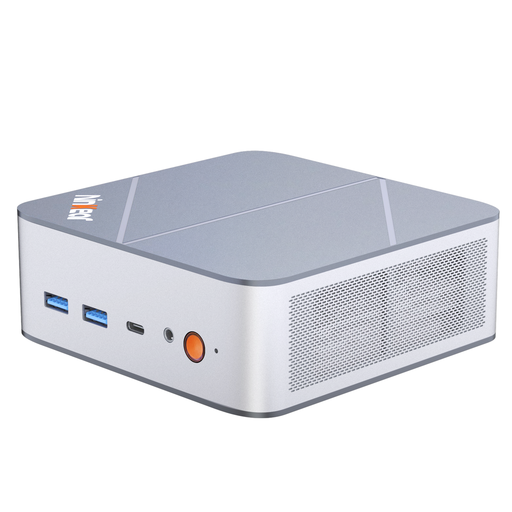
Ninkear M8 Mini PC, AMD Ryzen 7 8745HS, 16 GB DDR5, 1 TB SSD
Could suit a space-saving Windows workspace with image files stored locally. Check that your photo-editing software is compatible and that you can connect your monitor.
AMD Ryzen 7 8745HS; 16 GB DDR5 RAM; 1 TB SSD; Wi-Fi 6; dual 2.5G connection; Windows 10/11; 130 × 127,5 × 52 mm.
Joybuy
Frequently asked questions
Will a faster PC correct distortion automatically without a suitable lens profile?
No. A faster PC can’t replace a suitable lens profile. Adobe distinguishes between profiles by file type, while DxO explains that optical corrections can be applied manually if there’s no suitable optics module. So check your camera and lens combination and the files you use first.
What should I bear in mind when setting up a mini PC?
Compare the full model number with your monitor and check what’s included. ASUS offers both fully equipped versions of the NUC 14 Pro and kits that may not include RAM, storage or a pre-installed operating system.
Do I need a graphics card that meets DxO’s DeepPRIME recommendation for basic distortion correction?
This recommendation relates to accelerating the additional DeepPRIME noise reduction feature, not to a general minimum requirement for geometric lens correction.
What should I do if a new desktop bought from a business seller is faulty?
For consumer purchases, the seller is generally responsible for a statutory guarantee lasting at least two years from the date you receive the goods. Your Europe, the European Union’s information portal, distinguishes this legal right from a voluntary manufacturer’s warranty.
Can I put an old desktop in general waste in Germany?
No. Germany’s Federal Environment Ministry states that old electrical equipment must be taken to an authorised collection point, a manufacturer or a retailer with the relevant legal obligations. A retailer’s take-back obligations depend on the conditions set out by law.


