Author planning chapters
You’re drafting and rearranging sections of a longer manuscript, and want to keep the structure in view as you write.


Choose a desktop PC that suits your writing software, and check that you can connect your monitor and the devices you need. For planning chapters, correctly formatted headings and your application’s features matter more than processing power alone. Microsoft Support explains how to use the Navigation pane in Word for Windows, while LibreOffice Help describes how to move headings in Writer’s Navigator. You should also plan a separate backup for your manuscript and sources, as recommended by the German Federal Office for Information Security.
You’re drafting and rearranging sections of a longer manuscript, and want to keep the structure in view as you write.
You work with your manuscript, digitised sources and other files at the same time, so you need a suitable screen and storage setup.
You want to keep your drafts and sources safe for the long term, so you plan to back them up separately from your computer.
Start by choosing your writing software and operating system. Then check that the storage, connections and included items suit your sources and workspace.
| Priority | What to check before buying | Who is this important to? |
|---|---|---|
| Planning chapters | Choose your writing software and operating system; test heading navigation with a sample document. | If I want to find and rearrange chapter headings as I write, my software’s outlining feature is essential. Around 33% of consumers put this priority first. |
| Working with sources side by side | Estimate how much digitised material you have and check the connections for a monitor, scanner or external drives. | I want to work on my manuscript alongside digitised sources, so I need a suitable screen and device setup. Around 27% of consumers prioritise working with sources side by side. |
| Backing up text and sources | Plan a separate backup option and check that you can restore files from it. | If I want to keep my drafts and collected sources safe, the internal SSD isn’t enough as my only backup. Around 20% of consumers put protection against data loss first. |
| Setting up a suitable workspace | Compare the case size, monitor connection and included items with the devices you already have. | I want to put together a desktop writing setup that fits my desk and works with my existing monitor. Around 20% of consumers prioritise a setup that suits their workspace. |
In the applications described, whether chapters appear in the navigation pane depends on using the right heading styles. A more powerful CPU won’t replace this feature.
Before choosing a PC, try your intended writing software with a short chapter outline.
If your computer develops a fault or you delete something by mistake, you could lose your manuscript and sources. The German Federal Office for Information Security recommends planning for backups.
Back up your drafts and sources separately on a regular basis, and check that you can restore the files.
Depending on your backup plan, you may need separate storage media or an additional backup method.
Some kit versions may not include an operating system, RAM or SSD. Depending on the desktop configuration, you may also need to buy a monitor and input devices separately.
Check the full model number and what’s included against the devices you need for your workspace.
Depending on the version, you may need additional hardware to complete your workspace setup.
The Acer Revo Box RB102-14U5U is a compact Windows PC. The official specifications for this configuration list 16 GB RAM, a 512-GB SSD, HDMI and DisplayPort.
The HP Pro Mini 400 G9, configuration 937U0EA#ABD, is described as a compact business PC with Windows 11 Pro, 16 GB RAM and a 512-GB SSD.
Lenovo describes the ThinkCentre neo 50q Gen 5 Tiny, product number 13B9009EEZ, as a compact Windows desktop with 16 GB RAM and a 512-GB SSD.
The Mac mini is a macOS alternative if the writing and research software you need works with this operating system.
The NUC range includes compact PCs. For the NUC 14 Pro+, ASUS distinguishes between a fully equipped mini PC and a kit.
The Joybuy models below are desktop PCs for a dedicated writing and research workspace. For each configuration, check that the operating system, connections and included items suit your writing software and the devices you already have.
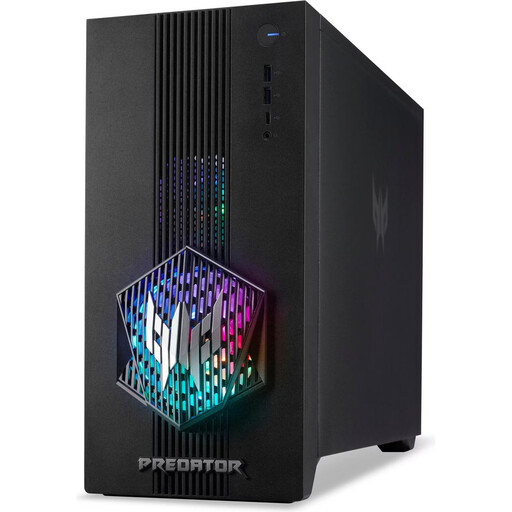 Image unavailable
A good choice for a dedicated Windows writing setup if the software you need works with Windows 11 Home.
The listed specifications include 16 GB DDR5 RAM, a 512-GB SSD and Windows 11 Home, along with HDMI, DisplayPort and case dimensions of 378 × 190 × 438 mm.
 Image unavailable
A tower PC for a dedicated writing setup if Windows 11 Pro suits your applications.
The specifications list 32 GB RAM, several DisplayPort and USB connections, and a tower measuring 388 × 175 × 426 mm. Check whether a monitor, keyboard and mouse are included.
 Image unavailable
A tower PC for a dedicated writing setup, provided the programmes you need work with Windows 11.
The listed specifications include 32 GB RAM, a 2-TB SSD and Windows 11, along with HDMI and several DisplayPort connections.
 Image unavailable
A dedicated Windows writing setup if your applications are compatible with Windows 11 Pro.
The listed specifications include 32 GB DDR5 RAM, a 512-GB NVMe SSD and NVIDIA RTX A400 with 4 GB, as well as HDMI, DisplayPort, a keyboard and a mouse.
 Image unavailable
A compact macOS option if your writing and research software runs on this system.
The configuration lists 16 GB Unified Memory, a 256-GB SSD, Thunderbolt 4 and HDMI. The Mac mini and power cable are listed as included; check whether you’ll also need a monitor, keyboard and mouse.
No. The key things for outlining are using suitable writing software and formatting your headings correctly. Word for Windows displays these headings in the Navigation pane, while LibreOffice Writer lets you move them in the Navigator. This doesn’t mean your project needs a particular minimum CPU specification.
Start by using consistent heading styles. For very large projects, the LibreOffice documentation describes master documents, which let you combine separate documents into a book. Consider whether the extra management involved suits the way you work.
No, not if you want to be able to recover it after a fault or accidental deletion. The German Federal Office for Information Security recommends making backups, so plan to keep a separate copy of your writing and sources.
For consumer purchases, statutory rights against the seller for faulty goods are separate from a voluntary guarantee. Section 438 of the German Civil Code (BGB) generally gives a period of two years from delivery for ordinary goods. The rights that apply in a particular case depend, among other things, on the fault and the circumstances of the purchase.
No. The age of the material or owning a copy doesn’t automatically clarify the rights to use it. Before publishing anything, check the rights for the specific work or photo, as well as the archive’s terms of use. The guidance from the German Federal Archives sets out requirements for source references and, depending on how you use the material, permission. It doesn’t replace checking the rights for your specific material.