Choose a desktop that suits your toolchain and projects first. A tower is worth considering if you regularly run large local builds and want room to upgrade; a mini PC can work well when space is limited, provided its specification and connections meet your needs. If your development environment requires macOS, a Mac is the right choice; for Windows-specific tools, you’ll need a supported Windows system. More CPU cores alone won’t guarantee shorter build times, as the benefits depend on your project structure and how well it can be parallelised.
Which desktop is right for you?
Developers running large local builds
If you regularly compile large projects, choose a CPU and potential upgrades to address your actual build bottlenecks. Gradle notes that the benefits of parallel builds vary according to project structure and dependencies; HP offers the Z2 Tower G1i in several configurations.
Developers using an IDE and containers
If your IDE, build processes and local services are running at the same time, check that the RAM, SSD and operating system suit your specific workload. Microsoft Learn lists the Windows systems supported by Visual Studio; Docker sets out its own requirements and backends for Docker Desktop on Windows.
Developers with limited desk space
If space is at a premium, compare the specification and monitor connections of the exact mini PC model. Lenovo notes that some features are available only on selected ThinkCentre M70q Gen 5 models; ASUS offers the NUC 14 Pro as both a mini PC and a kit.
What should you look for when buying?
Upgradeable tower
A good fit if: You regularly build large projects locally or may need more RAM and storage later.
Things to consider: A tower takes up more space, and extra CPU or graphics performance won’t automatically benefit every project.
Windows or Linux mini PC
A good fit if: You need a compact case and the specific model has enough storage and the right monitor connections.
Things to consider: Kits may not include RAM or a storage drive. Check what’s included and how easy it is to upgrade, using the full model number.
Mac mini with macOS
A good fit if: Your toolchain requires macOS, for example for Xcode.
Things to consider: Available memory and SSD configurations vary; they won’t meet Windows-specific requirements.
| What matters |
What to check before buying |
Who is it most relevant to? |
| Build throughput and CPU |
Measure your builds and compare the CPU in the specific model with the bottleneck you’ve observed. According to Gradle, the benefits of parallel builds depend on project structure and dependencies. |
If I build locally often, it matters whether my project can be parallelised and which CPU will address my bottleneck. Build throughput comes first for around 33% of consumers. |
| RAM and storage |
Check the installed RAM, SSD capacity and upgrade options for your IDE, projects and local services. ASUS offers NUC 14 Pro kits without RAM or a storage drive included. |
If I’m running several development tools and local services at once, I need enough RAM and space for my projects. Around 27% of consumers prioritise these simultaneous tasks. |
| Operating system and toolchain |
Check that your IDE, operating system version and, where relevant, container backend are compatible. Microsoft lists requirements for Visual Studio; Apple requires a Mac running macOS Sequoia 15.6 or later for Xcode 26. |
If my development tools require Windows or macOS, my computer needs to support that environment. The right toolchain is the main concern for around 20% of consumers. |
| Space and connections |
Compare the case dimensions and the exact display outputs with your workspace and monitors. Lenovo lists HDMI and DisplayPort for the ThinkCentre M70q Gen 5; options may vary by model. |
If I have limited desk space, I need a compact device that works with my existing monitors. A small workspace is the priority for around 13% of consumers. |
| Upgrades and support |
Check the upgrade options for the specific configuration and the terms of the support service. A voluntary warranty is separate from your statutory rights against the seller. |
If I want to upgrade my computer later or get help if it breaks down, the specific upgrade options and support matter to me. Around 7% of consumers focus on this. |
Common buying misconceptions
-
More CPU cores always mean faster builds
According to Gradle, the benefits of parallel builds depend on project structure and dependencies. A high core count alone won’t tell you how much faster your particular build will be.
Measure your own builds, then choose a CPU that addresses the bottleneck you’ve actually observed.
-
A mini PC kit is a fully equipped desktop
ASUS offers NUC 14 Pro kits without RAM or a storage drive included. You may need to buy additional components and set them up yourself.
Before buying, check what’s included using the full model number, and allow for any missing components and the operating system installation.
-
The SSD listed in the product title is always enough to go on
For a specific HP Z2 Tower G1i configuration, the title and description may list different SSD capacities. In that case, neither listing alone gives you a clear picture of the storage included.
If the details don’t match, ask the seller to confirm the exact manufacturer SKU and SSD capacity before buying.
Brands and product ranges at a glance
HP
The Z2 Mini and Z2 Tower ranges cater for different space and configuration requirements.
- HP Germany offers the Z2 Mini G1i in configurations including one with Windows 11 Pro, Intel Core Ultra 7 265, 32 GB DDR5 and a 1 TB SSD.
- Specifications and upgrade options vary by SKU; manufacturer information isn’t an independent build benchmark.
Lenovo
The ThinkCentre M70q Gen 5 is a compact desktop range, provided its specification and connections suit your existing setup.
- Lenovo lists HDMI and DisplayPort for the product family.
- Some connection options are available only on selected models, so check the exact variant.
ASUS
The NUC 14 Pro is available as a mini PC or a kit, offering different options for what’s included.
- The kit may suit buyers who want to choose components to match their own requirements.
- ASUS lists kit versions without RAM or a storage drive included, so check exactly what comes in the box before buying.
Apple
The Mac mini (2024) with M4 or M4 Pro is an option for workflows that require macOS.
- Apple lists different RAM and SSD configurations for the Mac mini.
- According to Apple, Xcode 26 requires a Mac running macOS Sequoia 15.6 or later. This doesn’t mean it’s suitable for Windows-specific tools or guarantees a particular build speed.
Dell
The Precision 7875 Tower is a workstation range for setups where a configurable platform suits your local build workflow.
- Dell offers several Threadripper PRO and operating system options for this model, including Ubuntu.
- You’ll need to assess whether a particular core configuration can make full use of your software by testing your actual builds.
Joybuy products for local software builds
This selection includes desktop PCs and towers for Windows-based development setups and local builds. Check that the specific configuration is compatible with your toolchain and workspace.
 No image available
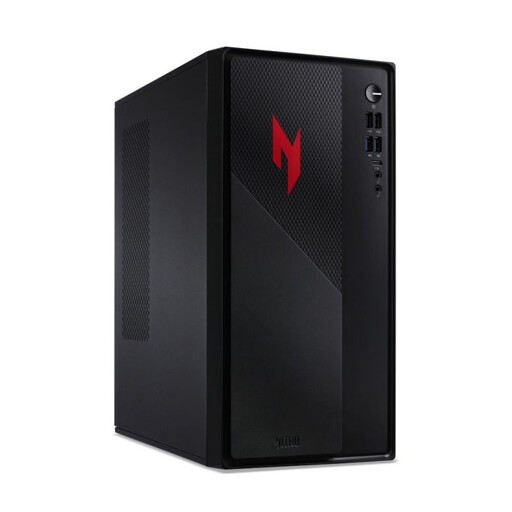
Acer Nitro 20 N20-100 Desktop i5
A Windows-based development setup, if the listed specification suits your projects and monitors.
Intel processor with 8 cores and 12 threads, 32 GB DDR4, 1 TB SSD and 1 TB HDD, RTX 5060 and Windows 11 Home.
View at Joybuy
 No image available
HP Z2 Tower G1i A40MMET, Core Ultra 7 265
A tower for a fixed development setup, if the specific configuration suits your local builds and Windows tools.
Intel Core Ultra 7 265 with 20 cores, 32 GB DDR5 and Windows 11 Pro. If the details for the configuration on offer don’t match, confirm the SSD capacity before buying.
View at Joybuy
 No image available
HP Z1 Tower G1i A40T1ET#ABD, Core Ultra 9 285
For a fixed Windows workstation, if the specification suits your build projects and development tools running at the same time.
Intel Core Ultra 9 285 with 24 cores, 64 GB DDR5, 1 TB SSD and Windows 11 Pro.
View at Joybuy
 No image available
Dell Alienware Aurora ACT1250 1J3N5
For a fixed Windows workstation, if the listed specification suits your local development tasks.
Intel Core Ultra 9 285K with 24 cores, 32 GB DDR5, 2 TB SSD, RTX 5080 and Windows 11 Home.
View at Joybuy
 No image available
Lenovo ThinkStation P2 Tower Gen 2
For a fixed development setup, if Windows Pro and the listed specification suit your local builds.
Intel Core Ultra 7 265 with 20 cores, 32 GB DDR5, 512 GB NVMe SSD, NVIDIA RTX A400 with 4 GB and Windows 11 Pro.
View at Joybuy
Frequently asked questions
Do I always need as many CPU cores as possible for faster builds?
No. More cores don’t guarantee shorter build times. According to Gradle, the benefits of parallel builds depend on project structure and dependencies. Measure your builds before comparing CPU configurations.
What should I check before setting up Docker Desktop on Windows?
Check the requirements for your chosen version of Docker Desktop, including the Windows version, WSL and installation mode. Docker also offers several container backends; their requirements matter if you plan to use Docker Desktop in this way.
Is a NUC kit a complete development PC straight out of the box?
Not necessarily. ASUS offers NUC 14 Pro kits without RAM or a storage drive included. Check what comes with the exact model variant and allow for any components you need to add, as well as installing the operating system.
Which operating system do I need for Visual Studio or Xcode?
It depends on your development environment: Microsoft lists the Windows systems supported by Visual Studio, while Apple requires a Mac running macOS Sequoia 15.6 or later for Xcode 26. Also check the requirements for the specific tools and projects you use.
Can I add RAM and an SSD to a mini PC kit myself?
That depends on the specific kit. ASUS offers NUC 14 Pro kits without RAM or a storage drive included, so check the specification and upgrade options for the exact model before buying.


