Tutorial writer using reference images
If you mainly write and want to keep your guide, images and browser in view at the same time, screen space and suitable video ports are key things to consider.


If you mainly write and view finished reference images alongside your text, a compact desktop is a sensible starting point, provided the monitor and ports suit your workspace; a large graphics card isn’t justified for that alone. If you edit large image files yourself or use demanding software features, choose the RAM, SSD and, where appropriate, graphics to suit your specific software and workflow. Before buying, also check the specifications and conformity information for the exact model variant.
If you mainly write and want to keep your guide, images and browser in view at the same time, screen space and suitable video ports are key things to consider.
If you edit your example photos yourself, your requirements will depend on the software, file sizes and features you use. Adobe distinguishes between minimum and recommended specifications for Photoshop.
If you need to assess colours while editing, you should consider the monitor you use, too. EIZO highlights colour reproduction and calibration for photo editing.
A good fit if: You mainly write, view references in your browser and have limited desk space.
Bear in mind: A suitable monitor isn’t automatically included with the computer; SSD capacity and ports depend on the specific model variant.
A good fit if: You have more room for your computer and want a tower configuration with the right specifications.
Bear in mind: A tower takes up more space; the configuration you choose determines the storage and graphics.
A good fit if: You regularly edit large photo projects alongside your tutorial and your software needs additional resources.
Bear in mind: A high-performance configuration isn’t justified by writing a tutorial alone; check that it suits your software and projects.
A good fit if: Your workflow requires macOS and you already have a suitable external monitor.
Bear in mind: Apple’s M4 model overview lists a 16 GB/256 GB configuration, but doesn’t confirm current availability in Germany; also check software and port compatibility.
For consumers creating desktop tutorials with reference images, priorities depend on whether they mainly write while viewing other content, edit photos themselves, assess colours or store projects locally.
| Consideration | What to check before buying | Who it matters most to |
|---|---|---|
| Writing and viewing images side by side | Check the screen space, available video outputs and RAM of the specific PC configuration. | If I want to see text, my browser and reference images at the same time, I check the screen layout and ports first. Around 37% of consumers prioritise writing and viewing content side by side when buying. |
| Editing my own example photos | Check the software version, file sizes and features against the system requirements. Adobe lists 8 GB of RAM as the minimum for Photoshop 27.x and recommends 16 GB or more; for Windows displays of 4K or higher, Adobe recommends a graphics card with 4 GB of GPU memory. | If I edit my own photos and use demanding features, I choose specifications to suit the software I actually use. Around 27% of consumers put editing their own photos first. |
| Assessing colours | Check the colour reproduction and calibration options of the monitor you use, as well as the PC’s compatible video outputs. EIZO covers colour accuracy and calibration for graphic design monitors; Adobe describes sRGB for images on the web. | If I want to compare colours as I work, I consider the monitor as well as the computer. Around 18% of consumers prioritise colour checking. |
| Storing projects locally | Check the SSD capacity and expansion options of the specific model against your archive; back up original photos separately from catalogue files. Adobe describes the Lightroom Classic catalogue as a record of file locations and image information, not a replacement for the original files. | If I want to store photos and tutorial files locally, I plan my storage needs around my archive. Around 18% of consumers put local project storage first. |
Colour reproduction and calibration also matter when assessing image colours. Extra graphics performance can’t make up for an unsuitable screen.
Start by checking your existing monitor, then match its ports to the video outputs on the desktop variant you’ve chosen.
A suitable monitor and, where necessary, a calibration option should be part of your workspace plans.
Writing and viewing finished images isn’t the same as extensive photo editing. Requirements depend on your version of Photoshop, your display and the features you use.
Choose specifications based on the software, files and tasks you actually use, rather than assuming the tutorial topic alone determines your graphics needs.
A Lightroom Classic catalogue includes information such as file locations and editing details, but not the original photos themselves. You’ll also need enough storage space for working files and exports.
Estimate your storage needs based on your files, and back up original images separately from your catalogue and working files.
You may need additional storage for a separate backup of your original images.
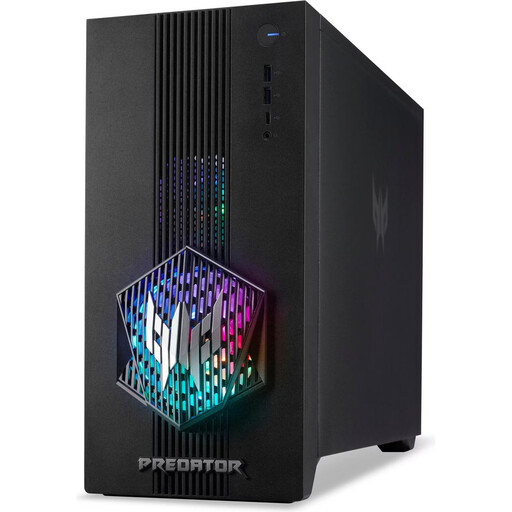
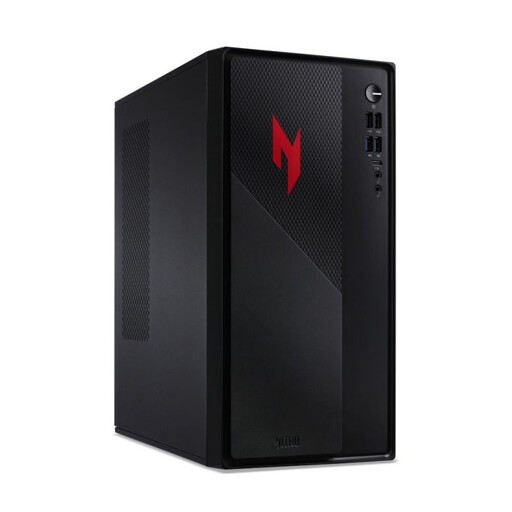
The documented tower range includes configurable Windows desktop PCs. A version of the ECT1250 with 16 GB of RAM and a 1 TB SSD is listed.
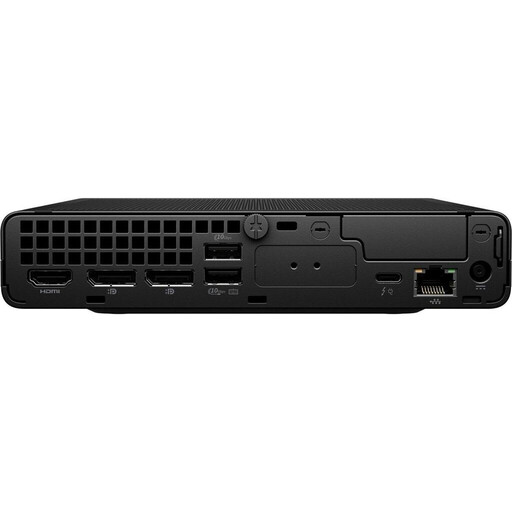
The ProDesk 4 Mini G1i B6YZ6ET#ABD is an example of a compact Windows desktop; this variant is listed with 16 GB of RAM and a 512 GB SSD.
The ThinkCentre M70q Gen 5 range features compact business desktops; Lenovo’s PSREF lists up to two M.2 SSDs and two RAM slots, depending on the configuration.
The M4 Mac mini is a compact macOS alternative for workflows using compatible software and an external display.
This selection includes Windows desktop PCs in tower and mini PC formats for workspaces used for writing, viewing reference images and, depending on the model, editing photos. Before buying, check the specific configuration, ports and required conformity information for the model.
 No image available
For a tower-based workspace with multiple displays, three DisplayPort outputs and one HDMI output are listed.
 No image available
The listed video outputs are suitable for a workspace where you want to connect multiple displays.
 No image available
The mini PC format is an option if you want your computer to take up little desk space; DisplayPort and HDMI are listed as video outputs.
 No image available
The tower is an option for a workspace with several connected displays; the description lists multiple DisplayPort outputs.
 No image available
Consider the listed DisplayPort and HDMI outputs when planning to connect an external monitor.
Not just for writing and displaying finished images. Check the requirements of your specific photo software, the features you use and your screen resolution; Adobe distinguishes between minimum and recommended graphics requirements for Photoshop.
Match the display’s ports and resolution to the video outputs on the exact PC variant. The computer doesn’t automatically include a suitable monitor for photo editing.
No. Adobe describes the catalogue as a file that records information such as file locations and editing details; the image files themselves are separate. Make sure you back up the original photos as well.
For electrical and electronic equipment covered by the relevant rules, applicable EU conformity requirements and the required CE marking are important. The German Federal Network Agency lists marking, traceability and manufacturer details among the aspects it checks when monitoring the market. A model name or shop listing alone doesn’t prove that the specific variant complies.
Not simply because you’re using the images as references. Under section 51 of the German Copyright Act (UrhG), use as a quotation is permitted only if the stated conditions are met and the extent is justified by the purpose of the quotation; otherwise, you should check that you have the appropriate usage rights.