If you mainly organise plant photos and compare them with an existing identification service, you don’t automatically need a desktop with a dedicated training GPU. A compact mini PC could be a good fit, provided its ports and specifications suit your workspace. If you want to train your own models locally, decide on your framework and operating system first: TensorFlow documents a route to GPU use on Windows via WSL2, while version 2.10 was the last TensorFlow release to support GPUs on native Windows. An all-in-one combines the screen and computer, a mini PC uses a separate screen, and with a desktop featuring a graphics card, the specific configuration is what matters.
Which desktop PC is right for you?
Students who organise photos
If you mainly review and save plant photos, then check identification suggestions from an existing service, choose your specifications to suit that workflow. iNaturalist describes how it provides automatic identification suggestions using an image recognition system trained on photos and identifications from its users.
Students short on desk space
If space is limited in your student room, consider the computer’s dimensions, the screen you already have and the ports you need. A mini PC can offer a compact form factor, but be sure to check the dimensions and setup requirements of the specific model.
Students working with their own image model
If you want to set up your own classification workflows or train models locally, first check the software, operating system and computing setup you’ll need. TensorFlow documents different installation options, and the right GPU depends on the workflow you choose.
What should you consider when choosing?
Mini PC with a separate screen
A good fit if: you have limited desk space, already own a suitable screen, and mainly organise photos or use existing identification tools.
Consider: A compact design alone doesn’t confirm that a PC is suitable for local model training or indicate its power consumption.
All-in-one desktop
A good fit if: you want the screen and computer together as one complete workstation.
Consider: The screen size and specifications are part of the unit you choose. The Dell configurations reviewed have integrated Intel graphics, which doesn’t confirm they’re suitable for a specific GPU training workflow.
Desktop with a separately checked graphics card
A good fit if: you’ve chosen your framework and operating system, plan to train your own models locally on a regular basis, and the specific configuration includes a supported GPU for the job.
Consider: An NVIDIA graphics card is available on some configurations of the MSI PRO DP80 series. TensorFlow documents a route to GPU use on Windows via WSL2, so make sure the hardware suits your chosen software setup.
| Priority |
What to check |
Who it matters most to |
| A suitable photo workflow |
Check which programmes you use, how you store images, and whether processing is local or service-based; assess the RAM and SSD for the specific configuration. |
If I mainly want to organise plant photos and compare them with an existing identification service, the computer should suit that workflow. Around 31% of consumers prioritise a computer that suits their specific photo workflow. |
| Space and setup |
Check the case dimensions, placement options, the screen you already own and its connection; only rely on noise figures for the specific model. |
With a small desk, I want to know whether the computer and my existing monitor will fit comfortably. Around 31% of consumers prioritise a limited workspace. |
| A complete workstation |
Check the contents against the equipment you already own; for barebone versions, check the operating system, RAM and SSD separately. |
If I’m looking for a workstation that’s ready to use, I want to know in advance whether it includes a monitor, keyboard, mouse, RAM, SSD and operating system. Around 23% of consumers prioritise a complete system. |
| Local model training |
Check the framework version, operating system, supported GPU and the graphics card actually installed. |
If I want to train my own image models locally, the specific combination of framework, operating system and graphics card needs to be right. Around 15% of consumers prioritise local training. |
Which assumptions can lead you astray?
-
A “AI PC” is automatically suitable for training your own models
What matters is the hardware actually installed, along with the framework and operating system. TensorFlow’s documentation distinguishes between native Windows use and GPU use via WSL2.
Choose your training workflow first, then check the full device configuration and the documented software setup.
-
A barebone PC is ready to use straight away
According to the manufacturer, the barebone version of the GMKtec NucBox M6 Ultra doesn’t include RAM, an SSD or an operating system. This doesn’t apply across the board to fully equipped versions.
Check what’s included with the specific version and which components you’ll need to add before getting started.
Depending on the version, several components may need to be bought and set up separately.
-
A test result applies to every version in a product range
Processors, memory and accessories can vary between versions. A tested configuration isn’t automatically identical to a differently named model in the same range.
Compare the full model number and key specifications with the specific item you’re considering.
Useful brands to consider
GEEKOM
The A5 Pro 2026 is a mini PC for a workstation with a separate screen. GEEKOM lists a Ryzen 5 7530U, 16 GB RAM and a 1 TB SSD for this version.
- COMPUTER BILD describes the tested configuration as compact and notes that its memory can be upgraded.
- According to COMPUTER BILD, a keyboard and mouse aren’t included. The test result doesn’t confirm suitability for local GPU training.
MSI
The Cubi NUC 1M and PRO DP80 A14G product lines offer different desktop form factors and specification options.
- MSI lists features for the Cubi NUC 1M including SO-DIMM slots, storage options and display connections.
- Specifications vary between versions. An NVIDIA graphics card is available on some PRO DP80 configurations, but isn’t included in every device.
GMKtec
The NucBox M6 Ultra is a mini PC to consider. GMKtec lists a Ryzen 5 7640HS and offers several versions, including a barebone option.
- COMPUTER BILD describes the tested model as compact and quiet.
- According to the manufacturer, the barebone version doesn’t include RAM, an SSD or an operating system; this doesn’t apply to every version.
HP
The Pro Mini 400 G9 is a mini desktop range. The reviewed configuration, 937U0EA#ABD, has 16 GB RAM and a 512 GB SSD.
- HP lists a wired mouse as included with the 937U0EA#ABD configuration.
- This configuration shouldn’t automatically be treated as identical to a differently named version in the same range.
Dell
The Dell 24 All-in-One EC24260 combines a computer and integrated screen. The configurations reviewed include a 23.8-inch FHD display.
- The integrated screen is part of the unit you choose, so there’s no need to select a separate monitor.
- The configurations reviewed have integrated Intel graphics, which doesn’t confirm they’re suitable for a specific GPU training workflow.
Joybuy products for a plant photo workspace
The following Joybuy products are compact mini PCs and SFF desktops for a workstation with a separate screen. Check the graphics and software configuration before choosing a device for local model training.
 No image available
HP Z2 Mini G1a Ryzen AI Max+ Pro 395, 128 GB RAM, 2 TB SSD
For a compact workstation with a separate screen; suitability for local training depends on the specific software setup.
Ryzen AI Max+ Pro 395, 128 GB RAM, 2 TB SSD, Radeon 8060S graphics, Windows 11 Pro and Thunderbolt 4.
Joybuy
 No image available
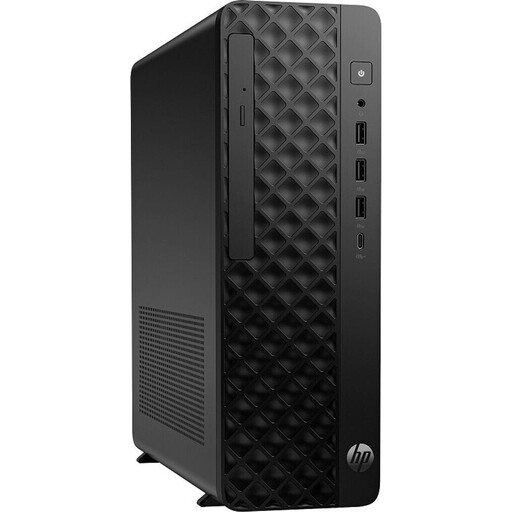
HP Z2 SFF G1i, Core Ultra 7 265K, RTX A400 4 GB
For an SFF workstation with a separate graphics card included in the configuration; check that it supports your intended workflow.
32 GB DDR5-5600 RAM, 1 TB M.2 SSD, RTX A400 with 4 GB GDDR6, Windows 11 Pro and two DisplayPort outputs.
Joybuy
 No image available
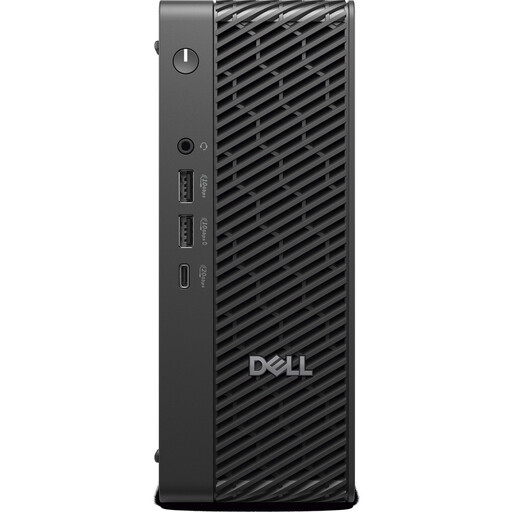
Dell Pro Max Micro FCM2250 MFF, Core Ultra 7 265 vPro
For an especially slim mini workstation with a separate screen; the description gives a width of 7,93 cm.
32 GB DDR5 RAM, 1 TB SSD, integrated Intel graphics and Windows 11 Pro.
Joybuy
 No image available
FIREBAT F1 mini PC, Ryzen 5 7640HS, 24 GB RAM, 512 GB SSD
For a compact workstation with a separate screen; check whether the listed specifications suit your photo workflow.
24 GB LPDDR5 RAM, 512 GB PCIe 4.0 SSD, Radeon 760M graphics, USB 4.0 and HDMI 2.1. The product name states that it supports 4K output on three screens.
Joybuy
 No image available
FIREBAT A8 mini PC, Ryzen AI 9 365, 24 GB RAM, 1 TB SSD
For a compact workstation with a separate screen; the listed multi-screen support is only relevant if you want to connect several displays.
24 GB DDR5 RAM, 1 TB PCIe 4.0 SSD, Radeon 880M graphics, USB4 and HDMI 2.1. The product name states that it supports four displays.
Joybuy
Frequently asked questions
Do I need a special AI graphics card to get plant photo identification suggestions?
Not just to use an existing identification service. iNaturalist describes suggestions generated by its own image recognition system. If you want to train models locally instead, check the requirements for your software and specific configuration.
What do I need to set up before using it for the first time?
First, check whether the screen, keyboard, mouse, storage drive and operating system are included with the version you’ve chosen. For your own TensorFlow project, the official guide describes a training workflow; if you want to use a GPU on Windows, the documented installation route is also relevant.
Which components might be missing from mini PCs?
It depends on the model and version. According to the manufacturer, the GMKtec barebone version doesn’t include RAM, an SSD or an operating system. COMPUTER BILD also notes that tested mini PCs may not include a keyboard and mouse. Check what’s included with the specific version before setting up your workstation.
What are the rules in Germany for online purchases and disposal?
In Germany, consumers who buy online generally have a 14-day right to cancel, starting from the day they receive the goods; exceptions and the specific contract should be taken into account. The Verbraucherzentrale explains this rule as of 13 August 2026. According to the German Environment Agency, end-of-life electrical appliances must not be put in household rubbish; take them to an appropriate collection or take-back point instead.


