Designers working with large photographs
If you combine high-resolution images, layers and layouts, choose specs to suit your files and software. Adobe recommends at least 16 GB of RAM for Photoshop 27.x.


Choose a desktop PC based on your files and the design software you use. For image-heavy projects, compare the memory and SSD capacity with your software’s requirements rather than relying on the ‘workstation’ label alone. For print jobs, also factor in your monitor, working environment and colour management: a powerful computer by itself won’t ensure accurate colour assessment.
If you combine high-resolution images, layers and layouts, choose specs to suit your files and software. Adobe recommends at least 16 GB of RAM for Photoshop 27.x.
If you’re having posters printed, factor in your monitor, ambient lighting and colour profiles. Adobe notes that colours can look different on screen and in print.
If your monitor is separate and desk space is limited, compare compact computers and slim desktops. Check the ports and upgrade options for the specific model, too.
First compare the requirements of your software and files, then consider your print workflow, ports and space requirements.
| Buying priority | What to check | Who is this most important to? |
|---|---|---|
| Large image files | Check the requirements for your software version, the RAM, the SSD capacity and how much storage space is available. Adobe recommends at least 16 GB of RAM for Photoshop 27.x. | If I work with high-resolution images and multiple layers, I want the specs to suit my files. Around 36% of consumers put large image files first. |
| Colour accuracy before printing | Consider your monitor, calibration, ambient lighting and the colour profiles for your intended output. Adobe describes these as part of assessing colour for print. | If I’m having posters printed, I want to assess colours on screen and consider the output process. Around 29% of consumers prioritise colour assessment before printing. |
| Existing software and devices | Check that the operating system and ports on the specific configuration are compatible with your software, plug-ins, monitor input and input devices. | If I want to keep using my design software and devices, I check their requirements and the available ports. Around 21% of consumers put compatibility with their existing setup first. |
| Desk space and upgrades | Check the dimensions, where you’ll place the PC and the clearance needed for ventilation. Also check access to the RAM or SSD and the upgrade options for the exact model variant. | If I have limited desk space or might upgrade my computer later, I compare the case and how easy it is to access components. Around 14% of consumers prioritise space or future upgrades. |
Colour assessment also depends on how your monitor, printer, working environment and colour profiles work together. The computer’s performance alone doesn’t determine the printed result.
For print jobs, factor in your monitor and colour workflow as well as your PC specs.
Specs and ports can vary depending on the configuration you choose. The model name alone doesn’t tell you which components and accessories are included in a particular variant.
Check the processor, RAM, SSD, ports and what’s included against the exact configuration you’re ordering.
Specs designed for more demanding tasks such as 3D or rendering aren’t automatically the right choice for a straightforward 2D poster layout.
Start by checking your software and files. Compare larger tower configurations with more compact options if you genuinely need the extra headroom.
The Mac mini (2024) is a compact macOS computer for a workspace with a separately selected monitor and compatible design software.
The ThinkCentre M75q Gen 5 Tiny is designed for a compact Windows workspace where access to components matters.
The Pro Slim QCS1250 is a slim Windows desktop for a workspace with a separately selected monitor.
The Z2 Tower G1i is a tower configuration for people who take on demanding tasks in addition to poster design.
The selection below includes tower desktops and workstations. Compare the specs of each with your software requirements, files and available space.
 No image available
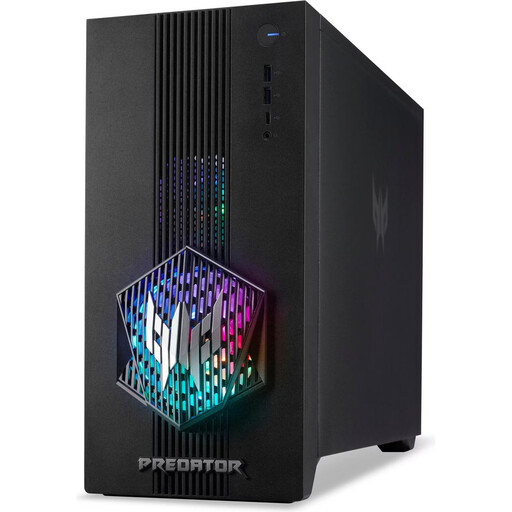
If you work with image files and several applications at once, compare the listed specs with your software requirements.
Listed specs include 16 GB DDR5 RAM, a 512 GB SSD and a dedicated RTX 5060. The description lists three DisplayPort outputs and HDMI. Allow at least 10 cm of clearance for ventilation.
 No image available
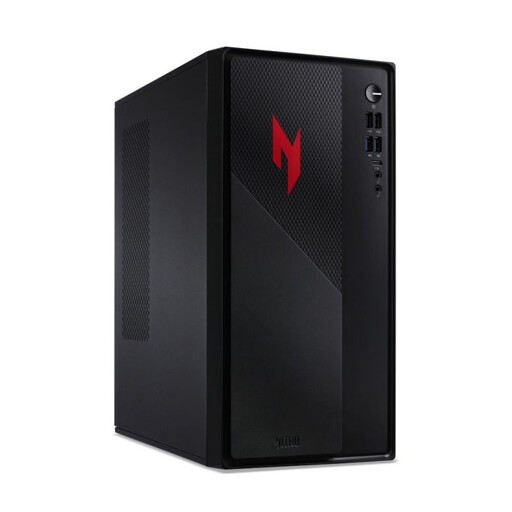
If you work on larger layout files and run several applications at once, compare the listed memory with your specific needs.
The product title lists 32 GB of RAM and a 1 TB SSD. The description lists a dedicated NVIDIA graphics card, three DisplayPort outputs and HDMI. Allow at least 10 cm of clearance for ventilation.
 No image available
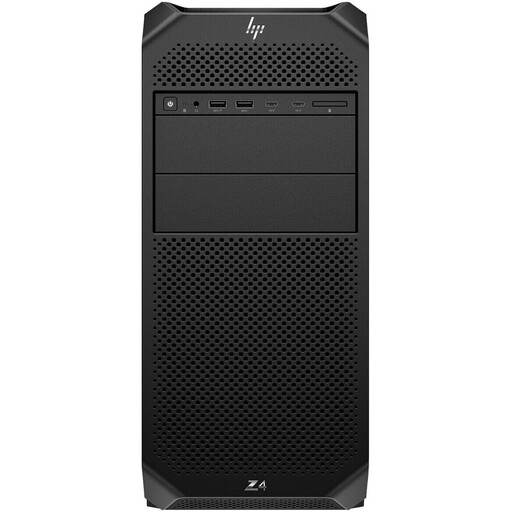
If you take on demanding tasks as well as poster design, check whether the tower’s specs suit these additional requirements.
The product title lists 64 GB of RAM, a 1 TB SSD, an RTX 4000 Ada and Windows 11 Pro. The description lists multiple PCIe slots and USB-C ports. Allow at least 10 cm of clearance for ventilation.
 No image available
If you run several applications at once, compare the listed memory with the requirements of your software versions and files.
The product title lists a Core Ultra 7 265, 32 GB DDR5 RAM, Intel Graphics and Windows 11 Pro. The description lists multiple DisplayPort outputs. Allow at least 10 cm of clearance for ventilation.
 No image available
If you work on large projects and run several applications at once, compare the listed specs with the requirements of your workflow.
The product title lists 64 GB DDR5 RAM, a 1 TB M.2 SSD, Intel Graphics and Windows 11 Pro. The description lists DisplayPort and HDMI ports. Allow at least 10 cm of clearance for ventilation.
Adobe recommends at least 16 GB of RAM for Photoshop 27.x; Adobe also recommends 16 GB for InDesign 21.3 and later. That alone doesn’t tell you whether it will be enough for your image sizes, layers and the number of programmes you have open at once.
Consider your monitor and workspace lighting together. Adobe explains that monitor calibration, ambient lighting and paper quality affect colour assessment. Make sure your colour profiles and print file are suited to the actual output process.
Check whether you already have a monitor, input devices, the right connection cables and the design software you need. Adobe also lists an internet connection as necessary for activation and subscription checks.
For distance contracts, consumers generally have a right to cancel, which must be exercised within 14 days; exceptions and potential return costs should be taken into account. The German Federal Ministry of Justice explains this deadline. The statutory guarantee against the seller is distinct from a voluntary manufacturer’s guarantee, as the consumer advice centre explains. If you’re buying for work, check separately whether you legally qualify as a consumer.