Who will use the computer?

Teams with different users

If several people review changes on the same computer, keep work data and access rights separate with individual, password-protected accounts. The German Federal Office for Information Security recommends that each person has their own account on a shared device.

Reviewers at a fixed workstation

If you review and discuss changes on existing monitors, first check that the computer has the right video, network and peripheral ports. The German Federal Institute for Occupational Safety and Health covers work at fixed display screen workstations in its ASR A6 guidance.

Developers running local tests

If you also run builds or tests as well as reviewing changes, choose specifications to suit your specific projects. Bitkom points out that you can’t compare the performance of desktop PCs by looking at individual technical specifications alone.

What should you look for when buying?

Compact business mini PC

A good fit if: you have limited space at a fixed, shared workstation and the configuration you choose is compatible with your monitor and IT environment.

Things to consider: ports, accessories and expansion options vary by model and configuration.

Mac mini

A good fit if: your review and development tools run on macOS and your existing monitors are compatible with the ports on the configuration you choose.

Things to consider: don’t assume your existing Windows environment will be compatible with macOS without checking first.

Expandable desktop

A good fit if: planned hardware upgrades or demanding local tests matter more than keeping the footprint small.

Things to consider: weigh the extra space required against the specific expansion options you need.

What matters What to check before buying Who it matters most to
Separate user accounts Check with your IT team how to set up personal accounts, restricted permissions and a lock between sessions. If I work with my own data on a shared computer, I need separate logins rather than one shared account. Around 33% of consumers put separate accounts and access rights first.
Monitors and ports Check the monitor connection types, how many displays you’ll use at once, and the ports for input devices and networking against the exact PC configuration. If I discuss changes on existing monitors, I need compatible video and peripheral ports. Around 27% of consumers prioritise display and port compatibility.
Local builds and tests Decide whether you’ll run local builds, containers or tests as well as a browser and editor. Choose RAM, SSD and operating system to suit your actual workflow. If I run local builds or tests, the specifications need to suit my projects. Around 20% of consumers put performance for local tasks first.
Space and expansion Check the available desk or mounting space, room for ventilation, mounting options, accessories and expansion options for the specific configuration. If I share a desk, I care about how much room the computer takes up and whether I can adapt it later. Around 20% of consumers prioritise footprint and expandability.

Common buying misconceptions

  • A mini PC means you don’t need separate accounts

    A compact design won’t stop other users accessing data or settings in a shared account.

    Set up personal accounts and appropriate access rights, whatever device you choose.

  • The product family name tells you which ports you’ll get

    Configurations and what’s included can vary, even within the same product family. If you don’t check the ports, you may not be able to connect your existing monitors or devices as planned.

    Check the ports on the specific configuration against the devices at your desk, and confirm exactly which accessories are included.

  • A kit is a ready-to-use PC

    ASUS distinguishes between NUC 15 Pro mini PCs and kit versions. According to the specifications, kits don’t come with an operating system pre-installed.

    Check everything included in the box, and factor in the components you’ll need and the time required to set it up.

    Depending on the kit, you may also need to buy an operating system and additional components, and allow time for setup.

Key brands at a glance

Lenovo

The ThinkCentre M70q Gen 5 Tiny is one example of a compact business desktop for a fixed workstation.

  • Lenovo lists specifications such as 16 GB RAM and integrated Ethernet for some configurations.
  • The operating system, SSD and accessories vary by configuration; these specifications don’t necessarily apply to every version.

HP

The ProDesk 4 Mini G1i is a compact business option with specifications that vary by configuration.

  • For the B6YZ6ET#ABD configuration, HP lists Windows 11 Pro, 16 GB RAM and a 512 GB SSD. HP also says the model can be mounted behind a monitor.
  • These specifications apply to the named configuration or the product family described; they are not an independent performance test.

Apple

The Mac mini is worth considering if your tools and management requirements are compatible with macOS.

  • Apple says the Mac mini with M6 supports up to three external displays, subject to the relevant connection requirements.
  • Display support doesn’t tell you whether your existing work tools will run on macOS.

ASUS

The NUC 15 Pro is available as a mini PC or a kit.

  • The different product versions let buyers choose between a preconfigured mini PC and a kit.
  • According to the specifications, kit versions don’t have an operating system pre-installed. Check the storage and specifications for the exact version you’re considering.

Dell

The Pro Micro QCM1250 is another example of a compact business desktop.

  • Dell lists the Pro Micro QCM1250 on its German product page.
  • Dell notes that images may differ from the configuration you choose.

Joybuy product selection

This selection includes compact mini PCs and Mac mini configurations for a fixed, shared workstation. Check that the ports and operating system are compatible with your existing work setup.

SOYO Y5Pro mini PC

SOYO Y5Pro mini PC, Intel Core i5 8250U/8350U, 8 GB DDR4, 256 GB SATA SSD

Its compact design makes it a practical option for a fixed workstation where space is limited. Check that the specific configuration suits your workflow.

Specifications include 8 GB DDR4, a 256 GB SATA SSD and Wi-Fi 5. The listed connections are two HDMI, one Type-C and four USB ports, plus RJ45 Ethernet.

View at Joybuy

HP Z2 Mini G1a with Ryzen AI Max+ PRO 395, 128 GB DDR5 and 2 TB SSD

HP Z2 Mini G1a, Ryzen AI Max+ PRO 395, 128 GB DDR5, 2 TB SSD

The mini design suits a fixed workstation with limited desk space. Check the ports against your monitors and devices.

Specifications list 128 GB DDR5, a 2 TB SSD, USB-C, Mini DisplayPort outputs and 2.5 GbE LAN. Check the operating system for the specific configuration before buying.

View at Joybuy
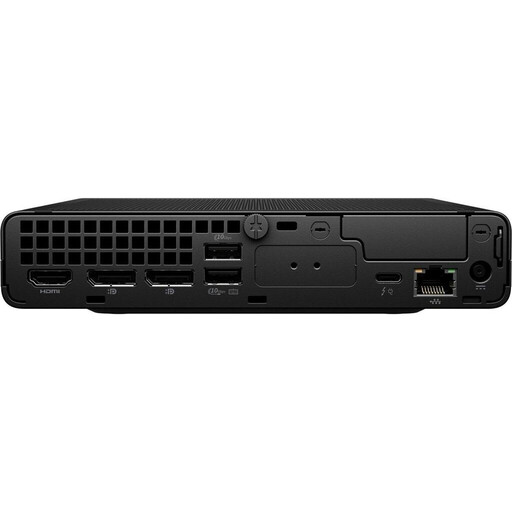
HP EliteDesk AI Mini 8 G1i 623K2ET with Core Ultra 9 285T, 64 GB DDR5 and 1 TB SSD

HP EliteDesk AI Mini 8 G1i 623K2ET, Core Ultra 9 285T, 64 GB DDR5, 1 TB SSD

The mini PC design is worth considering for a space-conscious workstation. Check that the monitor connections match the specific configuration.

Specifications include Windows 11 Pro, 64 GB DDR5 and a 1 TB SSD. The listed connections are HDMI, DisplayPort, Thunderbolt 4, USB and Gigabit Ethernet. An optional bracket is required for VESA mounting.

View at Joybuy

Apple Mac mini M6 with 16 GB unified memory and 256 GB SSD

Apple Mac mini M6, 16 GB unified memory, 256 GB SSD

This configuration is a good fit if your review and development tools run on macOS.

Specifications include a 12-core CPU, a 12-core GPU, 16 GB unified memory and a 256 GB SSD. The listed connections are HDMI, Thunderbolt 4, USB-C and 2.5 Gigabit Ethernet.

View at Joybuy

Apple Mac mini M6 with 24 GB unified memory and 512 GB SSD

Apple Mac mini M6, 24 GB unified memory, 512 GB SSD

This configuration is a good fit if your review and development tools run on macOS.

Specifications include a 12-core CPU, a 12-core GPU, 24 GB unified memory and a 512 GB SSD. The listed connections are HDMI, Thunderbolt 4, USB-C and 2.5 Gigabit Ethernet.

View at Joybuy

Frequently asked questions

Is one shared user account enough for reviewers who take turns?

For several people using the same computer, the German Federal Office for Information Security recommends individual, password-protected accounts with appropriate access rights. This is security advice, not a feature of any particular PC brand.

What should I check before mounting a mini PC behind a monitor?

Check that the computer and monitor can be mounted together, and that you can still reach the ports and cables. HP says the ProDesk 4 Mini G1i can be mounted behind a monitor, but that doesn’t mean it’s compatible with every bracket.

Why isn’t a kit directly comparable to a complete PC?

ASUS distinguishes between complete NUC 15 Pro mini PCs and kit versions without a pre-installed operating system. Check what components and software are included with the version you’ve chosen, and how much setup it will need.

What rules apply to a display screen workstation?

Within its scope, ASR A6 from the German Federal Institute for Occupational Safety and Health sets out requirements for display screen workstations in workplaces and at teleworking locations. Whether a particular shared desk is covered depends on how it is used as a workstation. This doesn’t mean there’s a universal minimum processor requirement for a PC.

Can I put an old desktop PC in the general waste bin?

No. Section 10 of the German Electrical and Electronic Equipment Act (ElektroG) requires old devices to be collected separately. Take-back obligations under Section 17 of the ElektroG depend, among other things, on sales floor area and how the item is returned. This doesn’t mean every old PC can be collected free of charge.