Who is this desktop for?

Designers working with lots of references

You keep image references and design files open at the same time and want to check RAM, SSD storage and usable display connections first. For Photoshop on Windows, Adobe recommends at least 16 GB of RAM from version 27.x onwards. This is a recommendation for that software, not a guarantee that you can work with any number of files open at once.

2D stage designers

You mainly create digital layouts or image designs and want to match the specification to your software, rather than choosing a 3D configuration just because it says “design”.

Designers planning 3D stage models

You model or visualise stage spaces, so you should compare the graphics card, graphics memory and RAM with the requirements of the software you use.

What should you consider when choosing?

References and 2D designs

A good fit if: You mainly work with images, browser references and 2D files open at the same time. Check the RAM, available SSD storage and connections for the displays you plan to use.

Consider: You don’t need a dedicated graphics card just because you have lots of references open; the requirements of your specific software are what matter.

3D stage models and visualisation

A good fit if: You create 3D models or render scenes. Blender recommends 32 GB of RAM and 8 GB of VRAM for Windows; SketchUp specifies a discrete graphics card for Windows.

Consider: These requirements apply to the relevant software and functions, and don’t justify paying extra across the board for purely 2D work. (Blender Foundation; SketchUp)

Priority What to check before buying Who is it especially important for?
Keeping references open at the same time Compare the RAM, SSD capacity and, if you’ll use multiple screens, the video outputs on the exact model variant. If I keep references and design files open at the same time, I don’t want to keep switching between them. Around 36% of consumers prioritise having references and files open side by side when choosing.
2D stage designs Check the operating system, RAM, GPU requirements and available storage against the version of the software you use. If I mainly work on stage designs as layouts or image designs, I match the specification to that exact workflow. Around 29% of consumers prioritise 2D design work.
3D models and visualisations Check the GPU model, VRAM, RAM and, where applicable, the requirements of your chosen rendering method. If I model or visualise stage spaces in 3D, I want to match the graphics specification to the software I use. Around 21% of consumers put 3D work first.
Desk space and upgrade options Check the case dimensions, available slots and options for adding drives using the model number. If I have limited space at my workstation or may want to upgrade components later, I compare the form factor and the specific upgrade options. Around 14% of consumers prioritise size or future upgradeability.

Which buying mistakes should you avoid?

  • “Workstation” doesn’t automatically mean a dedicated 3D graphics card

    The Lenovo ThinkStation P3 Tower Gen 2 is also available with integrated graphics and 8 GB of RAM. The range name alone therefore doesn’t tell you what a particular variant includes.

    Check the GPU, VRAM and RAM for the complete product number before comparing the configuration with Blender or SketchUp’s requirements.

  • Models with similar names aren’t necessarily the same variant

    Acer Germany lists the N200-100-13H5U with 16 GB of RAM, while a Joybuy product page lists the N20-100 with 32 GB of RAM. The different model names and specifications don’t prove that these are the same product.

    Compare the complete model and part numbers, along with the main components, rather than assuming that a shared range name means the specifications are the same.

  • Planning for a second screen without checking the connections

    You can only use multiple displays if the PC’s video outputs match the connections on your monitors.

    Plan to use two screens only if you actually need them, and check the connections on the PC variant you’re ordering and on your monitors.

Which brands are worth considering?

HP

The OmniDesk M03-0790ng is an example of a pre-configured desktop whose specific specification can be compared with the needs of a reference-heavy and 2D workstation.

  • HP lists 32 GB of RAM, a 2-TB SSD and integrated Intel graphics for this variant.
  • These specifications apply to the M03-0790ng and don’t confirm that other models in the range have a dedicated GPU. (HP Store Germany)

Dell

The Pro Max Tower T2 is a configurable tower range, so you should match your chosen specification to the work you plan to do.

  • Dell lists various processor and power supply options for the FCT2250 model.
  • Changing your selection can affect the specifications; the range doesn’t have a single standard GPU or RAM configuration. (Dell Germany)

Lenovo

The ThinkStation P3 Tower Gen 2 is available in various configurations, which should be compared based on their actual specifications rather than the workstation label alone.

  • Lenovo lists different RAM configurations and integrated graphics for specific variants.
  • The workstation name or an optional NVIDIA graphics card doesn’t confirm the specification of a particular product number. (Lenovo Germany)

MSI

The PRO DP80 A14G is a desktop range with several sub-models that need to be compared individually.

  • The German specifications overview lists the A14G-204XDE, A14G-053AT and A14G-055AT variants separately, among others.
  • The processor, RAM and SSD aren’t the same across the entire range. (MSI Germany)

Acer

The Nitro 20 range shows why the exact model and part number matter when comparing PCs for 3D work.

  • For the N200-100-13H5U, part number DG.BQBEG.004, Acer Germany lists 16 GB of RAM and an RTX 5060 with up to 8 GB of graphics memory.
  • You can’t automatically apply these specifications to variants with different names. (Acer Germany)

Desktop PCs at Joybuy

These desktop PCs are suited to working with references and 2D designs. For 3D work, pay particular attention to the graphics card listed for each model and its requirements.
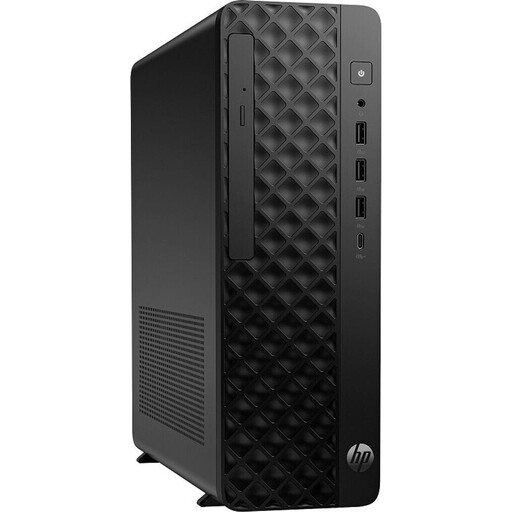
HP Z2 SFF G1i A40M2ET#ABD with Intel Core Ultra 7 265K

HP Z2 SFF G1i A40M2ET#ABD, Intel Core Ultra 7 265K

With 32 GB of RAM and two DisplayPort outputs, this configuration suits a workstation for handling multiple files and, optionally, several screens.

32 GB DDR5-5600, 1 TB M.2 SSD, NVIDIA RTX A400 with 4 GB, Windows 11 Pro. Blender recommends 8 GB of VRAM for Windows, so check that the 4 GB configuration meets the needs of your specific Blender workflow. (Blender Foundation)

View at Joybuy

HP Z2 Tower G1i A40MMET with Intel Core Ultra 7 265

HP Z2 Tower G1i A40MMET, Intel Core Ultra 7 265

With 32 GB of RAM and integrated graphics, this tower configuration could suit reference-heavy and 2D design work. For SketchUp on Windows, you’ll need a discrete graphics card. (SketchUp)

32 GB DDR5-5600, integrated Intel graphics, Windows 11 Pro.

View at Joybuy

HP Z1 Tower G1i A40SYET with Intel Core Ultra 7 265 vPro

HP Z1 Tower G1i A40SYET, Intel Core Ultra 7 265 vPro

32 GB of RAM and a 1 TB SSD are useful for working with multiple design files. For SketchUp on Windows, bear in mind that you’ll need a discrete graphics card. (SketchUp)

32 GB DDR5-5600, 1 TB M.2 SSD, integrated Intel graphics, Windows 11 Pro.

View at Joybuy
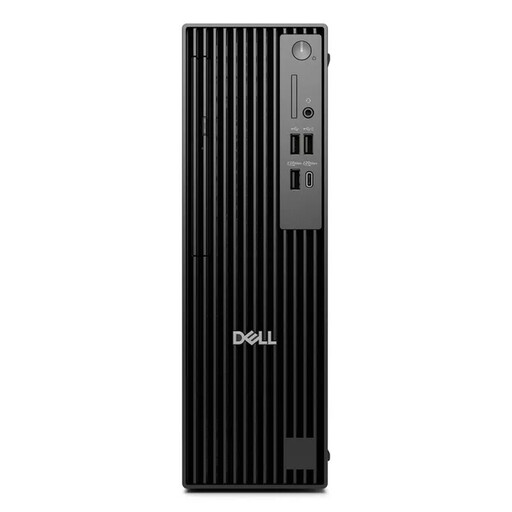
Dell Pro Plus SFF QBS1250 slim desktop PC

Dell Pro Plus SFF QBS1250 Slim

The slim case, 32 GB of RAM and three DisplayPort outputs could suit a space-saving workstation with multiple screens. For SketchUp on Windows, you’ll need a discrete graphics card. (SketchUp)

Intel Core Ultra 7 265, 32 GB DDR5, 512 GB NVMe SSD, integrated Intel graphics, Windows 11 Pro.

View at Joybuy
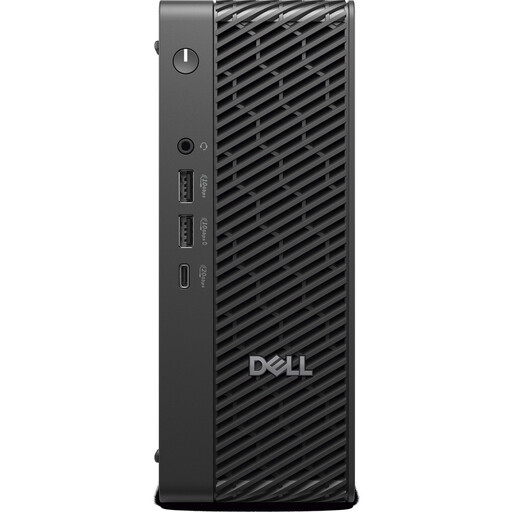
Dell Pro Max Micro FCM2250 TPM desktop PC

Dell Pro Max Micro FCM2250 TPM

The Micro case is designed for a compact workstation. For SketchUp on Windows, integrated graphics aren’t a substitute for the required discrete graphics card. (SketchUp)

Intel Core Ultra 7 with 14 cores and NPU, 16 GB DDR5-6400, 512 GB M.2 PCIe SSD, integrated Intel graphics, Windows 11 Pro.

View at Joybuy

Frequently asked questions

Does a PC for keeping multiple references open need a dedicated graphics card?

Not just because of the references. Check the requirements of your design software: SketchUp specifies a discrete graphics card for Windows, while Adobe lists a compatible DirectX 12 GPU for Photoshop. Blender and certain SketchUp materials also have software-specific VRAM requirements to consider.

How can I view references on a second screen?

Check the video outputs on the exact PC variant and the connections on your monitors. HP lists DisplayPort and HDMI for up to two monitors on the OmniDesk M03-0790ng; Blender supports workspaces across multiple displays. A second screen is an option, not a requirement for every design project.

How much storage should I allow for, and what about maintenance?

Allow enough storage for your programmes and work files, and keep your graphics drivers up to date if you use graphics-intensive software. Adobe recommends a fast internal SSD and free storage for Photoshop; the Blender Foundation recommends using the latest drivers from the relevant manufacturer.

What are my rights in Germany if a product is faulty or I buy online?

Your statutory rights against the seller are separate from any voluntary guarantee. The Verbraucherzentrale states that consumers generally have a 14-day right to cancel online purchases after concluding the contract or receiving the goods ordered. Exceptions, such as made-to-order goods, apply. Simply returning an item doesn’t replace giving notice that you’re cancelling the contract.

What does the CE mark tell me about a desktop PC?

The CE mark is the manufacturer’s declaration that the product meets the legal requirements that apply to the marking; it isn’t a rating of the PC’s performance. Within its remit, Germany’s Federal Network Agency checks matters including labelling, product identification, manufacturer details and required accompanying documentation in German.