Editorial team using two monitors
You keep the manuscript or cast list open on one screen while working on the layout on the other. You’ll need two displays that can be used at the same time, with suitable connections.


A desktop PC is suitable for designing a theatre programme if its operating system is compatible with your layout software and it can be confirmed to run both of your existing screens at the same time. A mini PC saves desk space, but the ports and resolutions supported by the exact configuration matter more than gaming or performance claims. You’ll also need enough storage for your workflow and the right items included in the box.
You keep the manuscript or cast list open on one screen while working on the layout on the other. You’ll need two displays that can be used at the same time, with suitable connections.
You’re laying out a programme for the printer and want to check the file before sending it over. The key considerations are your layout software’s requirements and its PDF and preflight workflow.
You want to keep using your monitors and input devices, and buy only the computer you need. Compare the ports and items included with the exact configuration.
First, check that the exact PC configuration can run both monitors at the same time and at the resolutions you need. Then consider software compatibility, the equipment you already have and how much space your project files will need.
A good fit if: you already have two monitors and have limited desk space.
Things to weigh up: ports, upgrade options and included input devices vary by configuration.
A good fit if: your layout software and existing files work with your macOS workflow.
Things to weigh up: Check the supported combination of ports, resolution and refresh rate, as well as the storage capacity of the exact configuration.
A good fit if: future hardware upgrades matter more to you than keeping your setup as compact as possible.
Things to weigh up: Space requirements, upgrade options and the number of monitors you can use at the same time depend on the exact model.
| What matters | What to check before buying | Who should pay particular attention |
|---|---|---|
| Two screens | Check that the full model configuration supports both displays at the same time. Match the video outputs to your monitor inputs and check the supported resolutions. | If you want your design and text or image reference visible side by side, both screens need to work at the same time. Around 36% of consumers would put this first. |
| Layout software and print-ready PDF | Check that the operating system and RAM meet the requirements of your software. Adobe specifies at least 8 GB of RAM for InDesign and recommends 16 GB; make sure preflight and PDF export suit your printing workflow. | If you’re preparing a programme for the printer, you need a computer that works with your layout application and PDF workflow. Around 29% of consumers would make this their top buying priority. |
| Existing equipment | Compare the items included and the ports on the exact configuration with the monitors, keyboard, mouse and cables you already have. | If you want to keep using your monitors and input devices, avoid unnecessary replacements and check compatibility. Around 21% of consumers would prioritise this. |
| Storage and future upgrades | Check the installed SSD capacity, how much free space you’ll need and the upgrade options documented for the exact configuration. | If local project files and possible future hardware upgrades are important, choose a specification that suits your expected workload. Around 14% of consumers would prioritise storage and expandability. |
Having several video outputs doesn’t, by itself, confirm that two monitors can run at the resolutions you need at the same time.
Compare the documentation for the complete computer configuration with the inputs and resolutions of both monitors.
Depending on the ports you already have, you may need suitable cables or adapters.
Processors, installed memory and items included can vary within the same model range. COMPUTER BILD notes that the HP Pro Mini 400 G9 has different product numbers for the tested and advertised configurations.
Compare the full model number and specification rather than assuming a review applies to a different configuration.
Monitors and input devices aren’t necessarily included with a mini PC. You may also need cables or layout software for your setup.
Before you buy, make a note of which devices you already have and which items are included with the specific offer.
The A5 Pro 2026 is one example of a compact Windows PC. When comparing models, check the full processor configuration.
The Cubi NUC 1M range is one option to consider if you’re looking for a compact Windows PC to use with separate monitors.
The Mac mini could suit a macOS workflow if your layout software and files are compatible.
The ThinkCentre neo 50q Gen 5 is one example of a compact Windows PC for a desk setup with separate monitors.
The Pro Mini 400 G9 is a compact Windows option. Make sure you check the full product number when comparing configurations.
This selection includes compact Windows and macOS desktops, as well as a tower PC. For each configuration, check that it can run both of your existing monitors at the same time and at the resolutions you need.
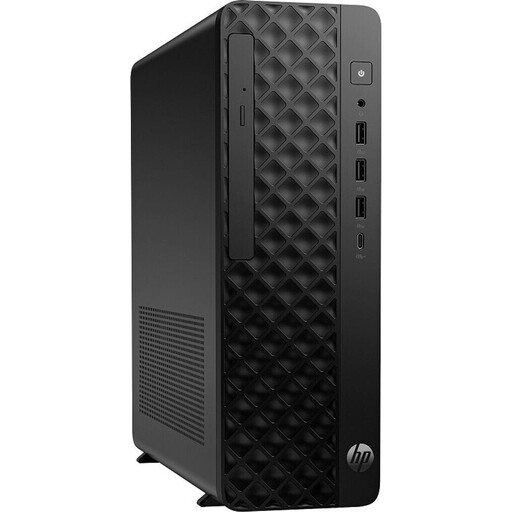 Image unavailable
This SFF configuration could suit a workspace with limited room. Before buying, check that it supports both monitors at the same time.
It’s listed with 32 GB DDR5 RAM at 5600 MHz, a 1 TB M.2 SSD, an RTX A400 with 4 GB and Windows 11 Pro. The description lists two DisplayPort outputs; check the supported resolutions against your monitors.
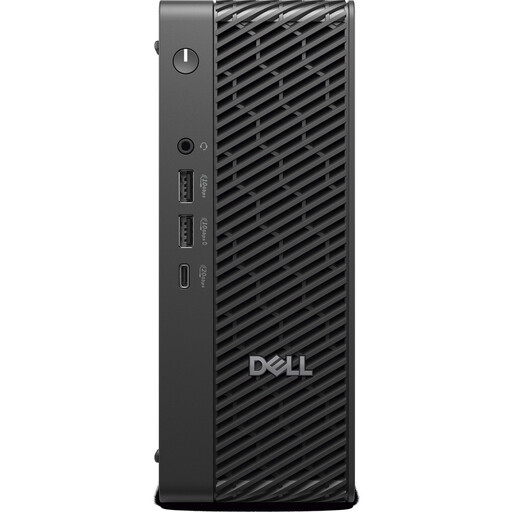 Image unavailable
The micro form factor could work well if you have limited desk space. Check whether the exact configuration can run both monitors at the same time.
The specifications list 16 GB DDR5 RAM at 6400 MHz, a 512 GB M.2 PCIe SSD and Windows 11 Pro. HDMI and DisplayPort are listed; check that the supported combination works with your monitors.
 Image unavailable
This tower could be a good option if you have room for a larger case. Check that the exact configuration can run both monitors at the same time.
The title lists 32 GB DDR5 RAM, a 2 TB SSD and Windows 11. The description lists HDMI and three DisplayPort outputs; the number of ports alone doesn’t confirm that both screens can be used at the same time.
 Image unavailable
This Mac mini could suit a macOS workflow if your layout software and existing files are compatible.
It’s listed with 16 GB Unified Memory, a 256 GB SSD, HDMI and Thunderbolt 4. The description says it supports up to three external displays; check the ports and supported resolutions for your particular setup.
Image unavailable
If macOS suits your workflow, this configuration has more listed SSD storage than the 256 GB Mac mini version.
The specifications list 24 GB Unified Memory, a 512 GB SSD, HDMI and Thunderbolt 4. The description says it supports up to three external displays; check the supported resolutions and ports for your monitors.
Not necessarily. Check that the exact PC configuration supports both displays at the same time and at the resolutions you need, and that the monitor inputs match the outputs. In Windows, you can adjust the display settings for each screen once they’re connected.
No. For InDesign version 21.3 and later on Windows, Adobe specifies at least 8 GB and recommends 16 GB of RAM. If you’re using a different application or version, check its requirements.
InDesign includes preflight tools for checking potential production issues and PDF export for print. Agree the right export settings with the printer you’re using.
For consumer purchases in Germany, statutory warranty claims are generally made against the seller; a manufacturer’s guarantee is separate. If a theatre organisation is making the purchase, different contractual terms may apply and should be checked against the specific purchase.
The German Environment Agency advises against disposing of old electrical equipment in household waste. Recycling centres and suitable retailer take-back schemes are possible options.