For plant photos you identify using a web service and then organise, start by considering the right software, storage space, connections and desk space. You don’t necessarily need to buy a dedicated graphics card for AI calculations. If, on the other hand, you want to run your own model locally with PyTorch, your operating system and graphics card must suit your specific software setup. PyTorch recommends an NVIDIA GPU for CUDA on Windows, but doesn’t make one a general requirement.
Who uses a desktop for observing plants?
Browser-based identifiers with a photo archive
You upload plant photos for identification, compare suggestions and want to keep your images and observations organised at your desk. Pl@ntNet and iNaturalist describe photo uploads for these kinds of web-based workflows.
Local image classifiers
You want to use your own ML environment, so you need to check that your operating system and hardware meet your software’s requirements. PyTorch recommends an NVIDIA GPU if you want to use CUDA on Windows, but says it isn’t a general requirement.
People with a compact home workstation
You’re looking for a separate desktop that takes up little space, and need to check that its connections, accessories and potential upgrades suit your existing workspace. For its ThinkCentre M70q Gen 5 Tiny range, Lenovo Deutschland describes access to the memory and storage for maintenance.
What should you look for when buying?
First, decide whether you’ll identify photos in a browser or run your own model locally. Then you can choose an operating system, storage, connections and case style that suit your needs.
| Buying priority |
What to check before buying |
Who is this important for? |
| Identifying and organising photos |
Check compatibility with the software you use, available SSD storage and connections for your camera, card reader and monitor. |
If I want to identify plant photos in a browser and keep my observations organised, a photo workflow that suits my needs is what matters most. Consumers with this priority account for around 40 %. |
| Local image classification |
Check the framework and installation method you’ll actually use, and whether it supports the GPU acceleration you have in mind. |
If I want to run my own model locally, the hardware needs to suit the software I use. Consumers whose main priority is local ML processing account for around 30 %. |
| Space, monitor and accessories |
Check that the monitor connections match the video outputs, and see which input devices are included. |
For a small desk, I’m looking for a computer with connections that suit my monitor and existing peripherals. Consumers who prioritise a space-saving workspace account for around 20 %. |
| A complete basic setup |
Check the full model number, installed memory, SSD, operating system and included accessories. If you’re buying a kit, check the contents especially carefully. |
If I want to set up a complete workspace, I need to know which components and accessories are actually included. Consumers whose main priority is a ready-to-use basic setup account for around 10 %. |
Which buying misconceptions should you avoid?
-
Assuming an ‘AI PC’ is essential for identifying plants locally
Uploading photos to a web service and running your own PyTorch model are two different workflows. The photo upload processes described by Pl@ntNet and iNaturalist don’t, by themselves, mean you need a dedicated AI graphics card.
First, check whether the processing happens in a browser or locally. PyTorch recommends an NVIDIA GPU for CUDA on Windows, but doesn’t make one a general requirement.
-
Assuming a mini PC and a kit come with the same components
For the ASUS NUC 14 Pro+, ASUS distinguishes between a fully configured mini PC and a kit. According to ASUS specifications, the kit may not come with a pre-installed operating system or memory. The included components and power cable may also vary by country and SKU.
Check the contents for the full product number rather than relying on the product family name alone.
With a kit, you may need to buy an operating system and memory separately. You should also check that the power cable is right for the specific SKU.
-
Assuming QBS1250 specifications apply to every variant
Dell notes that the specification of the Pro Slim Plus QBS1250 varies by configuration. Details for one specific version therefore won’t necessarily apply to every model variant.
Check the full model identifier, installed storage, operating system and connections against the configuration on offer.
Key brands to consider
Lenovo
The ThinkCentre M70q Gen 5 Tiny is an example of a compact office desktop for a space-conscious workspace.
- Lenovo Deutschland describes tool-free access to the memory and storage for maintenance.
- For the model mentioned, the monitor, wireless keyboard and mouse are sold separately.
HP
The Pro Mini 400 G9 is a mini PC range. The German configuration 937U0EA#ABD is listed with 16 GB RAM and a 512 GB SSD.
- Its compact design is useful for a workspace with limited room.
- Check the full product number: don’t assume the details of this configuration apply to other variants without checking.
Dell
The Pro Slim Plus QBS1250 is an example of a slim desktop designed to sit separately on a desk.
- Dell Deutschland shows a configuration with 16 GB RAM and a 512 GB SSD.
- Dell notes that the products vary depending on the configuration selected.
Apple
The Mac mini is worth considering if your photo and classification software works with the macOS workflow you have in mind.
- Apple lists different memory and chip configurations, as well as Thunderbolt and HDMI connections.
- Check the specific configuration and your software’s compatibility. Apple specifications aren’t independent ML performance tests.
ASUS
With the NUC 14 Pro+, you’ll need to distinguish between a fully configured mini PC and a kit.
- ASUS lists HDMI and Thunderbolt connections for the product range.
- According to ASUS specifications, the kit doesn’t come with a pre-installed operating system or included memory. Components and the power cable may vary by country and SKU.
Joybuy desktop products for plant photos
This selection includes compact Windows computers, a small form factor desktop and Mac mini configurations for working with plant photos at your desk. Whether a device is suitable for local image classification depends on the software you use and its specific configuration.
 Image unavailable
SOYO Y5Pro mini PC, 8 GB DDR4, 256 GB SATA SSD, Windows 11
For a compact desk setup with a web-based photo workflow; check that the connections suit your monitor and peripherals.
Specifications include 8 GB DDR4, a 256 GB SATA SSD, Windows 11, two HDMI outputs and four USB ports.
Joybuy
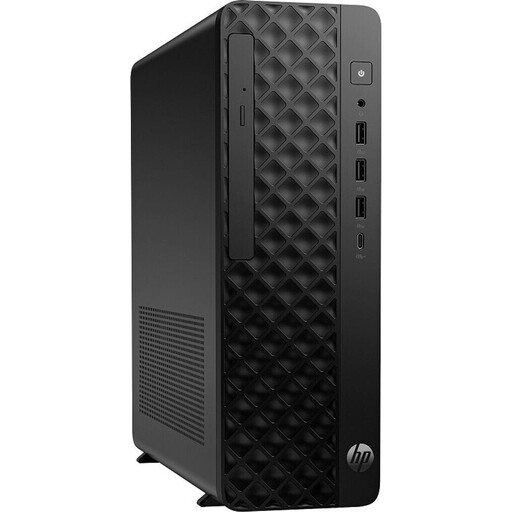 Image unavailable
HP Z2 SFF G1i A40M2ET#ABD, Core Ultra 7 265K
For a photo workstation where a card reader and multiple connections are useful; check your local software requirements before deciding what GPU you need.
The configuration lists 32 GB DDR5 at 5600 MHz, a 1 TB SSD, an NVIDIA RTX A400 with 4 GB and Windows 11 Pro. The SFF case measures 303 × 100 × 308 mm.
Joybuy
 Image unavailable
Apple Mac mini M6, 16 GB Unified Memory, 256 GB SSD
For a photo and observation workflow that’s compatible with macOS; bear in mind that the keyboard and mouse are sold separately.
Specifications include an M6 with a 12-core CPU and 12-core GPU, 16 GB Unified Memory, a 256 GB SSD, Thunderbolt 4 and HDMI.
Joybuy
Image unavailable
Apple Mac mini M6, 24 GB Unified Memory, 512 GB SSD
For a compatible macOS photo and observation workflow; check your software’s compatibility and remember that the keyboard and mouse are sold separately.
The configuration lists an M6 with a 12-core CPU and 12-core GPU, 24 GB Unified Memory, a 512 GB SSD, Thunderbolt 4 and HDMI.
Joybuy
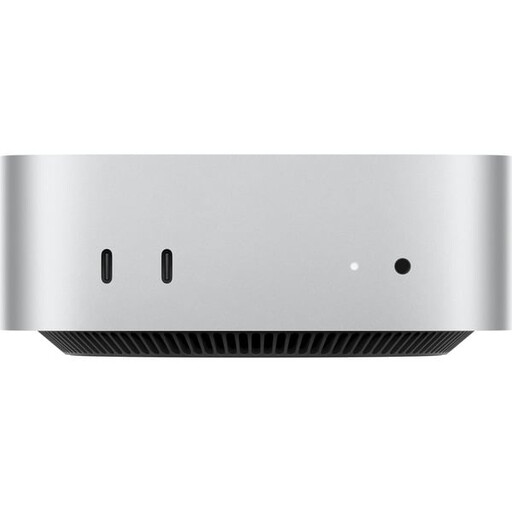 Image unavailable
Apple Mac mini A3534 MHQL4_CTO_8, M6, 24 GB Unified Memory, 1 TB SSD
For a compatible macOS workflow with more SSD storage for a photo archive; make sure the capacity meets your actual storage needs.
Specifications include an M6 with a 12-core CPU and 12-core GPU, 24 GB Unified Memory, a 1 TB SSD, HDMI, Thunderbolt 4 and USB-C.
Joybuy
Frequently asked questions
Do I need a special AI graphics card to identify plants in a browser?
No. The photo uploads described by Pl@ntNet and iNaturalist don’t create a general requirement for a dedicated AI graphics card. If you want to run your own model locally, the requirements depend on your specific project and software. PyTorch recommends an NVIDIA GPU for CUDA on Windows, but doesn’t make one a general requirement.
What should I check before setting up the PC with my monitor and photo storage?
Check that your monitor’s inputs match the video outputs on the specific PC configuration, and consider how you want to transfer and store your photos. If you’re buying a kit, also check whether it includes an operating system and memory.
What should I do if an identification suggestion seems uncertain?
Compare the suggestions with other features of the plant. Pl@ntNet describes possible identifications ranked by confidence and recommends sharp, well-lit photos of different parts of the plant.
What rights do I have when buying a PC online as a private consumer?
For a qualifying consumer purchase made online, Your Europe explains that you generally have a 14-day cancellation period, subject to the relevant conditions and exceptions. Your statutory legal guarantee from the seller is separate from any additional commercial guarantee offered. For new goods, Your Europe specifies a minimum two-year legal guarantee from the date you receive them.
Can I put an old PC in my household rubbish?
No. The German Environment Agency advises that old electrical equipment should be disposed of separately, for example at a recycling centre or an appropriate retailer take-back point.


