Choose a desktop PC based first on whether it’s compatible with your writing and research software, then on how you want to arrange your screen. A split editor or side-by-side windows don’t necessarily require two monitors. A compact PC suits a small workspace, while a slimline desktop may be worth considering if you place more importance on ports and upgrade options. Check the operating system, monitor connections and what’s included with the specific product, as specifications can vary within a model range.
Which PC is right for you?
Authors working with a split manuscript
If you want to see your text and notes at the same time, start by checking the layout options in your writing software and on your screen. Literature & Latte explains how to split the editor horizontally or vertically in Scrivener; Microsoft Support explains how to arrange windows using Snap.
Writers working with lots of sources
If you switch between your manuscript, reference manager and original sources, check that the operating system and software versions are compatible with the tools you actually use. Zotero lists its own system requirements for Windows and macOS.
Writers with a small workspace
If space is limited, a compact desktop could be a good fit. Just remember to check the exact specification and whether a monitor, keyboard and mouse are included.
What should you look for when buying?
Compact Windows PC
A good fit if: You have limited desk space and use writing software that runs on Windows.
Things to consider: A compact design doesn’t remove the need to check the ports and specification of the version you choose.
Slimline Windows desktop
A good fit if: You’re setting up a permanent workspace and place more importance on connectivity or upgrade options.
Things to consider: Dell notes that specifications vary between configurations of the Pro Slim Plus QBS1250.
Mac mini
A good fit if: You want to use macOS and the writing software you need, and are planning to use a separate monitor.
Things to consider: Check that your software is compatible with macOS, and review the storage and connectivity options of the specific product.
First, decide how you want to arrange your manuscript and sources on your screen. Then compare software compatibility, ports and the specification of your complete workspace.
| Your priority |
What to check before buying |
Who is it important to? |
| Arranging text and sources |
Check the editor features in your writing software, your screen layout and the video outputs you’ll need. |
If you want to keep your manuscript and sources in view at the same time, arranging your windows will be a priority. Around 36 % of consumers prioritise a split text area. |
| Using writing and research software |
Check the operating system against the requirements of your writing software, word processor and citation tools. |
If you use a reference manager and writing software as part of the same workflow, compatibility matters. Around 29 % of consumers pay particular attention to how well their programmes work together. |
| Matching your PC to your workspace |
Check the RAM, SSD, monitor connections and what’s included with the specific version. |
If your desk is short on space or you still need a monitor and input devices, your complete setup is key. Around 21 % of consumers base their choice mainly on space and specification. |
| Backing up manuscripts and maintaining your PC |
Plan for a separate backup and check the upgrade options of the specific model if you think you may need them. |
If your manuscripts and research files are stored on your PC, you’ll want to protect against data loss and plan for maintenance. Around 14 % of consumers prioritise backups and ease of maintenance. |
Common buying mistakes
-
Assuming every model with the same name has the same specification
A model range can include different operating systems, storage capacities and ports. Lenovo also doesn’t list a keyboard or mouse as included with one ThinkCentre configuration currently shown.
Compare the product number, operating system, RAM, SSD, video outputs and what’s included as a complete package.
-
Buying a second monitor before trying out your layout
A split editor or side-by-side documents may work perfectly well on a single screen. An extra display takes up space and may require suitable connection technology.
Try the editor layout you want first. If you still need another screen, check that the PC’s outputs match the monitor’s inputs.
-
Relying on an internal SSD as your backup
An internal SSD stores files on your PC, but it isn’t a separate backup. Germany’s Federal Office for Information Security recommends regularly backing up data you’ve created yourself.
Plan for a separate backup and check that you can restore important files.
A closer look at relevant brands
Dell
The Pro Slim Plus QBS1250 is a Windows desktop range designed for a permanent workspace.
- A German manufacturer configuration lists Windows 11 Pro, 16 GB RAM and a 512 GB SSD.
- Dell notes that specifications vary between configurations. F.A.Z. Kaufkompass highlighted the model for office tasks in a comparison updated on 4 November 2026; this assessment doesn’t necessarily apply to every version.
Lenovo
The ThinkCentre M75q Gen 5 Tiny is a compact Windows range for workspaces where desk space is limited.
- Lenovo describes tool-free access to the SSD and memory modules.
- Check the ports and specification of the specific configuration; one version shown did not list a keyboard or mouse.
Apple
The Mac mini with M6 is a compact macOS desktop for writers whose required software is available on Mac.
- Apple says this model supports up to three external displays via Thunderbolt and HDMI.
- Check that each programme is compatible, and review the storage and connectivity options of the specific configuration.
HP
The Pro Mini 400 G9 is a compact Windows range with versions worth comparing when choosing a specific workspace setup.
- HP lists different operating system, processor and connectivity configurations.
- Check the full product number before assuming a particular specification or set of ports.
Joybuy products for writing spaces
This selection includes compact PCs for writing spaces where room is limited or you’re planning to use multiple screens. Check the ports and full specification of each version.
 No image available
SOYO Y5Pro Mini PC, Intel Core i5 8250U/8350U
For a compact writing space where you want to arrange Windows side by side.
Listed in the product title: Windows 11, 8 GB DDR4, 256 GB SATA SSD, Bluetooth 5.2 and Wi-Fi 5.
View on Joybuy
 No image available
MaxMini B3 Mini PC, Intel N4100
A compact option if you’re looking for a small PC for your writing space with connections for two screens.
Listed in the product title: Intel N4100 up to 2.4 GHz, 8 GB LPDDR4, 256 GB SSD, two HDMI ports, 1000M LAN, Wi-Fi and Bluetooth 5.0. The product description states that it’s for indoor use only; use the supplied power adaptor and keep the ventilation openings clear.
View on Joybuy
 No image available
BMAX B6 Mini PC, Intel Core i3-8109U
For a compact workspace where HDMI and DisplayPort are compatible with your existing monitors.
Listed in the product title: Intel Core i3-8109U up to 3.6 GHz, 12 GB RAM, 256 GB SSD, plus HDMI and DisplayPort.
View on Joybuy
 No image available
BMAX B7A Plus Mini PC, AMD Ryzen 5 6600H
A compact design for writing spaces where desk space is limited.
Listed in the product title: AMD Ryzen 5 6600H, 12 GB LPDDR5 and 512 GB NVMe SSD.
View on Joybuy
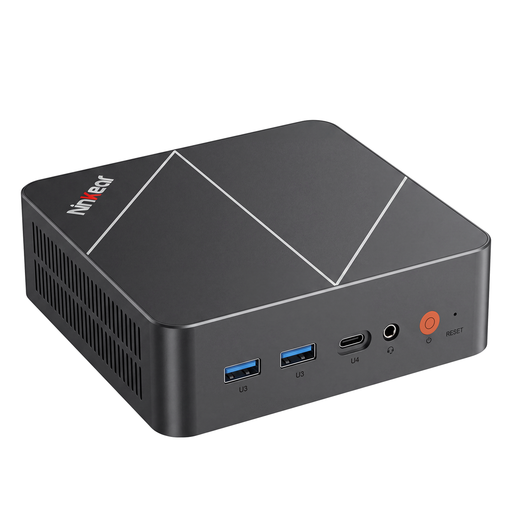 No image available
Ninkear L20 Mini PC, Intel Core Ultra 5 226V
For a compact workspace where you plan to use multiple external screens; check that the display specification suits your monitors.
Listed in the product title: 16 GB RAM, 512 GB/1 TB SSD, support for three 4K screens, Windows 11 and a 0.66-litre case.
View on Joybuy
Frequently asked questions
Do I need two monitors for a split editor?
No, you can use a split editor on a single screen. Literature & Latte explains how Scrivener displays two editor panes within the programme; Microsoft Support explains how to arrange separate windows side by side in Windows. Whether your screen is large enough depends on the layout you want.
How can I set up my writing space to compare sources?
Start by checking the features of your writing software. Scrivener can split the editor horizontally or vertically, while Microsoft Word offers a view for two documents side by side. Arrange your text and sources on your existing screen before planning for additional displays.
What should I back up and update during a long writing project?
Back up your manuscripts and research files regularly, and check that you can restore them. Germany’s Federal Office for Information Security recommends regular data backups and software updates.


