Choose your desktop based first on your target platform and the tools you plan to run at the same time. Local storage alone doesn’t mean you need a particularly powerful graphics processor. SQLite identifies local files as a possible foundation for desktop applications, while the digiKam documentation gives different resource recommendations for different types of image processing. Allow space for original images, previews and the database, and keep a separate backup. The Federal Office for Information Security also recommends testing your recovery process.
Which approach is right for you?
Developers with a local photo archive
If you’re cataloguing images, tags and previews locally, allow enough SSD space for everything. SQLite describes local databases as a possible foundation for desktop applications, while the digiKam documentation lists several types of catalogue data.
Developers using automatic tagging
If you plan to use image recognition or more intensive image processing, check the requirements of the tools you’ll actually be using. The digiKam documentation gives different resource recommendations for different types of processing.
Developers with a fixed target platform
If your operating system or development tools are already decided, check they’re compatible with the specific desktop configuration before you buy. A manufacturer’s specifications for a product range don’t necessarily apply to every variant.
What should you consider when buying?
The right configuration depends mainly on the size of your image collection, your development tools and your target platform. Also decide how you’ll back up local image and catalogue data separately from your working drive.
| Consideration |
What to check before buying |
Who it matters most to |
| Space for images and catalogue data |
Estimate the space needed for your original images, previews, database and development environment combined. Check the SSD capacity of the specific configuration. |
If I want to manage a growing archive locally, the SSD needs space for the catalogue as well as the images. Around 31% of consumers put available local storage first. |
| Memory and tools running at the same time |
Check the requirements of your applications and distinguish manual tagging from automatic image recognition. For digiKam, the documentation recommends 8 GB for large photos or panoramas and 16 GB for AI features; these figures don’t apply universally to your app. |
If I plan to run an editor, app, database and image-processing tools at the same time, my specific workflow matters most. Around 25% of consumers prioritise tools used simultaneously or planned image analysis. |
| Platform and development tools |
Decide on your target operating system and test environment first, then check they’re compatible with the complete computer configuration. Also check the ports you need and what’s included. |
If my tools or test devices require a particular platform, I put storage and performance preferences behind that need. Around 25% of consumers prioritise compatibility with their platform and development environment. |
| Backup and recovery |
Plan a separate backup for your image files and the tag database you actually use. The Federal Office for Information Security also recommends testing your recovery process. |
If I want to restore tags and images after a drive failure or accidental deletion, I need a separate backup that covers both types of data. Around 19% of consumers prioritise preserving their local data and being able to recover it. |
Avoid common buying mistakes
-
Allowing for image files only when choosing an SSD
Photo-management software may store tags, databases and previews as well as images. Make sure you include catalogue storage when planning your local setup.
Estimate the space you’ll need based on the archive you expect to keep and the data you actually plan to store before choosing an SSD configuration.
Extra space for previews and databases can leave less room for images and development tools.
-
Treating automatic image recognition like manual tagging
The digiKam documentation gives different resource recommendations for standard, large and AI-assisted image processing. Don’t apply these figures to every app you develop without checking first.
Base your requirements on the features and tools you actually plan to use.
-
Assuming local storage is the same as a backup
A drive failure or accidental deletion can affect images and tags stored locally, too.
Back up your image files and tag database separately from your working drive. The Federal Office for Information Security recommends testing your recovery process, too.
A separate backup needs an additional storage device and time for backups and recovery tests.
-
Assuming every model in a range has the same specifications
Memory, SSDs and other components can vary between configurations in the same desktop range. The product family name alone doesn’t tell you what’s included in the model on offer.
Check the full model number, memory, SSD and operating system of the specific variant.
Key brands at a glance
Lenovo
The ThinkCentre M75q Gen 5 Tiny is a compact Windows range. For the German configuration 12RQ003QEZ, Lenovo lists 16 GB RAM and a 512-GB SSD.
- Lenovo says the range offers tool-free access to the SSD and memory modules.
- This doesn’t confirm the specifications of every variant or how well it will perform when you’re developing your app.
Apple
The Mac mini M6 is a compact macOS option if its operating system and development tools suit your project. Apple documents a range of memory and SSD configurations.
- You can tailor the configuration to the amount of storage you need.
- You’ll need to factor in a display separately. M6 specifications don’t automatically apply to Mac mini models with M4.
HP
The Pro Mini 400 G9 is a compact Windows desktop range. For the German listing 938A5EA#ABD, HP specifies Windows 11 Pro, 8 GB RAM and a 256-GB SSD.
- The specific configuration is listed with its operating system, memory and SSD.
- HP notes that specifications vary between configurations. If you have a large collection or plan to use additional image analysis, check what your app needs.
Dell
The Dell Pro Micro QCM1250 is a configurable compact desktop range for a dedicated workspace.
- You can choose options to suit the specific configuration.
- Dell notes that your chosen options can change the specifications. Check RAM, SSD and suitability against the fully selected configuration.
Joybuy products for local photo and catalogue data
This Joybuy selection includes compact Mac mini and mini PC configurations for development tools and locally stored image and catalogue data.
 No image available
Apple Mac mini MHQK4ZD/A_CTO, M6, 32 GB Unified Memory, 512 GB SSD
A macOS option if its development tools and target platform suit your needs.
Apple M6 with 12-core CPU and 12-core GPU; 32 GB Unified Memory; 512 GB SSD; 2.5 Gbps Ethernet; silver.
View at Joybuy
 No image available
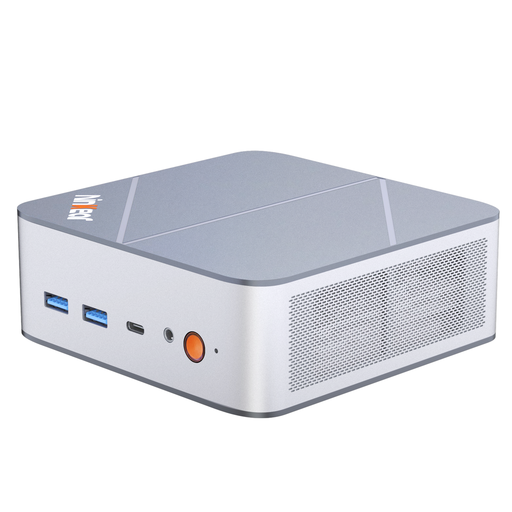
Ninkear M8 mini PC, AMD Ryzen 7 8745HS, 16 GB DDR5, 1 TB SSD
A compact Windows desktop option if you want to keep local data and development tools on a mini PC.
AMD Ryzen 7 8745HS; 16 GB DDR5; 1 TB SSD; Windows 10/11.
View at Joybuy
 No image available
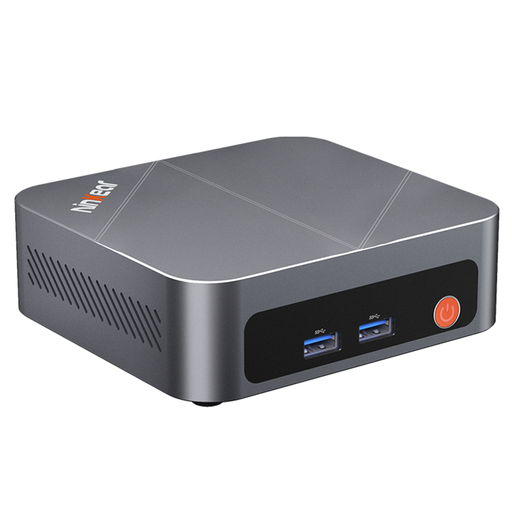
Ninkear M7 mini PC, Intel Core i7-1185G7, 16 GB DDR4, 512 GB SSD
A compact desktop option if you want a local SSD and need to check that your tools are compatible with the operating system.
Intel Core i7-1185G7; 16 GB DDR4; 512 GB SSD; Windows 10/11; described as Ubuntu-compatible in the product name.
View at Joybuy
 No image available
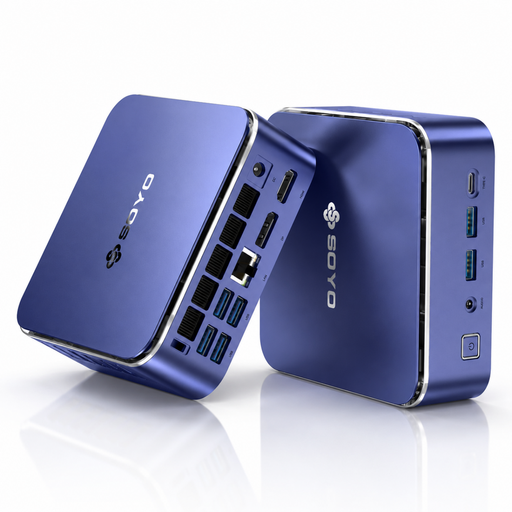
SOYO S5Air mini PC, AMD Ryzen 5 7535HS, 16 GB LPDDR5, 512 GB NVMe SSD
A compact Windows option if your development environment is compatible with Windows 11 Pro.
AMD Ryzen 5 7535HS; 16 GB LPDDR5; 512 GB NVMe SSD; Windows 11 Pro.
View at Joybuy
 No image available
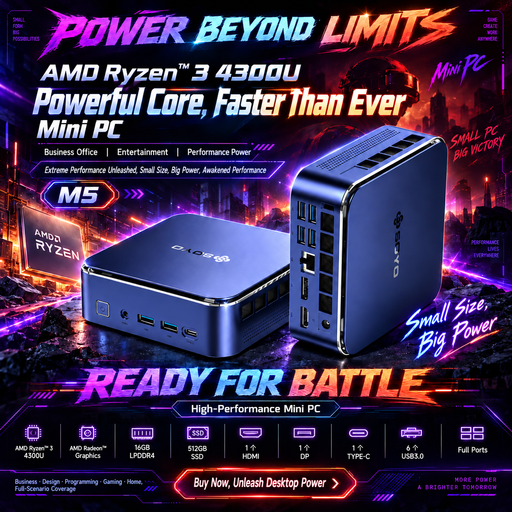
SOYO M5 mini PC, AMD Ryzen 4300U, 16 GB LPDDR4, 512 GB SSD
A compact desktop option if Windows 11 suits your development environment.
AMD Ryzen 4300U; 16 GB LPDDR4; 512 GB SSD; Windows 11.
View at Joybuy
Frequently asked questions
Do I need a database server for local tags?
No, not necessarily. SQLite describes local files as a suitable foundation for desktop applications, including media catalogues. Whether your app needs a server as well depends on its features.
How do I back up photos and tags together?
Back up your original images and the tag or database files you actually use separately from your working drive. The Federal Office for Information Security recommends regular backups and points out that you also need to make sure you can restore them.
How much memory do I need for photo processing?
It depends on the tools and features you use. The digiKam documentation recommends at least 4 GB for standard photo processing, 8 GB for large photos or panoramas and 16 GB for AI features. These application-specific figures aren’t universal minimum requirements for your own app.
Is a photo-tagging app that works entirely locally automatically exempt from data protection rules in Germany?
No. Germany’s federal data protection authority describes an exemption for processing that takes place solely for personal or family activities. If you publish other people’s photos online, that exemption may no longer apply. Storing data locally alone doesn’t provide a general exemption.


