
Lieferung heute & morgen

Qualitätsgarantie

Willkommens-Angebote freischalten: KOSTENLOSE Lieferung | Bis zu 80 % RABATT | Kostenlose 30-Tage-JoyPlus-Testphase
App herunterladen
Developmental toys for babies and toddlers should be fun while matching the child’s abilities. However, choosing the right product is not always easy for parents, grandparents and other family members. Many products advertise a wide range of functions, colourful effects and terms such as “Montessori” or “educational toy”. What matters is not the number of promises, but clear information about age suitability, materials, operation and everyday practicality.
Lights, music, buttons and movement can attract a child’s attention. However, an overloaded toy can be confusing for a baby. Check whether each function is easy to access and whether the child can trigger an action independently. For example, a simple button that activates a sound when pressed helps the child understand the relationship between cause and effect.
A toy for children aged 12 months and over is not automatically suitable for a six-month-old baby. Pay attention to the manufacturer’s age recommendation, warning notices and any small parts. Products with similar names can also have different age recommendations. For example, the VTech Baby Animal Learning Phone is listed for children aged 3 and over, while some baby activity centres are suitable from 6 months.
Musical baby toys often require batteries. Before buying, check whether batteries are included, how securely the battery compartment closes and whether the volume can be adjusted. For toys used on the floor or while travelling, an easy-to-wipe surface is also useful. Textile products such as a busy book require different care and should be stored in a dry place.
For baby toys from 6 months, easily accessible elements that move smoothly are a sensible choice. Rolling figures can encourage reaching, observation or crawling. From around 1 year, sorting, turning and fitting functions become more important. Educational toys for toddlers can increasingly incorporate role play, first words, colours and simple everyday activities.
The age recommendation is not a guarantee of a particular developmental milestone. It is intended as a guide and must be considered alongside the child’s individual development and the level of adult supervision.
For plastic toys, rounded edges, a closed housing and a securely lockable battery compartment are important points to check. Information such as BPA-free materials or references to CE marking and EN 71 can help you assess a product. However, CE marking is not an independent quality seal; it is a manufacturer’s declaration that the relevant EU requirements have been met.
Also check for:
An activity cube or activity centre should stand securely on the floor and should not tip over easily when a child reaches for it. Check the dimensions before buying a product for a small living space, changing table or trip. For electronic sensory toys, a volume control or quiet mode can be particularly useful in everyday life. This makes it easier to adapt the toy to your home, the time of day and shared use.
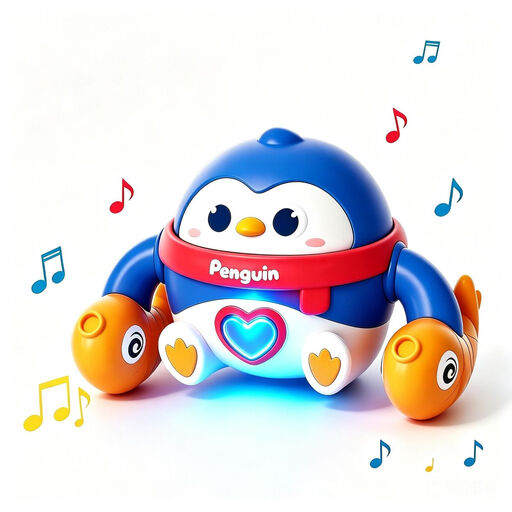
Why this product suits this profile: For families looking for a compact, mobile toy for babies and toddlers aged 6 to 36 months. The penguin combines rolling movement, lights and music in one product.
The functions are clearly described: 360-degree rolling movement, a motion sensor and a light effect. Batteries are not included and should be factored into your budget.
Age recommendation of 6–36 months, ABS plastic, BPA-free material information and rounded edges according to the product data.
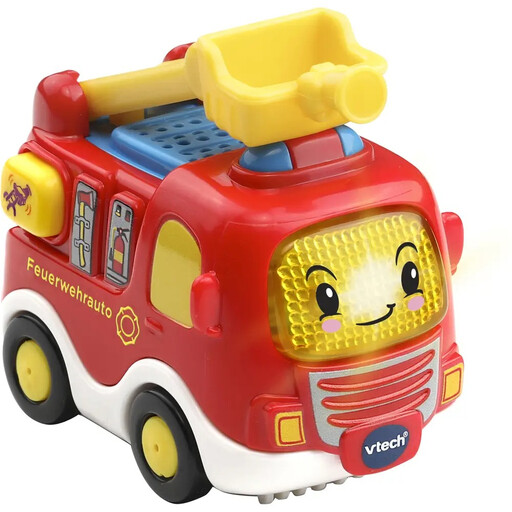
Why this product suits this profile: Suitable for children aged 1 and over who enjoy combining vehicles, movement and recurring melodies. This model can be combined with other Tut-Tut-Baby-Flitzer playsets.
The minimum age of 1 year is clearly stated. According to the product data, the battery compartment should be checked to ensure it is securely closed; clean the toy with a damp cloth.
Three songs, six melodies, a movable fire engine ladder, two AAA batteries included and the statement “no SVHC above 0.1%” in the manufacturer’s test report.
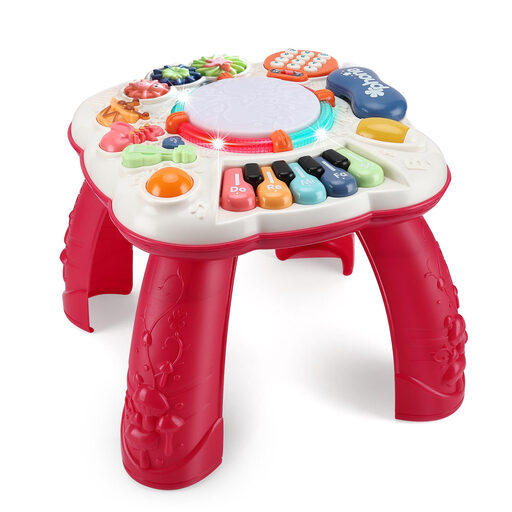
Why this product suits this profile: This 2-in-1 design is ideal for families who want to use a baby activity centre first as a floor play panel and later, with the legs attached, as a play table.
Use can be adapted to the child’s body position. A volume control and quiet mode are practical for homes and shared play areas.
Six play areas, detachable legs, an age recommendation of 6–36 months and, according to the product description, ABS plastic with BPA-free material information.

Why this product suits this profile: This textile Montessori toy for ages 1–3 is ideal for travel, waiting times and situations where a quiet activity is needed.
It does not rely on batteries or loud effects. Before use, check the seams, ribbons and attached elements regularly.
15 activity pages with zips, buttons, laces and hook-and-loop fasteners; soft felt material and a compact format according to the product data.
We have put together a complete, regularly updated list of products that fully meet these strict selection criteria and the safety regulations applicable in the EU.
The actual lifespan of a toy depends on how often it is played with, how it is stored and how it is handled. Electronic toys should be kept dry and cleaned only with a slightly damp cloth unless the product information states otherwise. Remove the batteries if the toy will not be used for an extended period. Regularly check edges, screws, the battery compartment, wheels and moving parts.
A gift for babies and toddlers should not only be suitable for the child’s current age. Products offering several types of play may remain interesting for longer, while a highly specialised toy may be particularly suitable for a specific stage of development. For musical toys, a model with volume control is also worth considering if it will often be used indoors.
From 6 months, easily accessible, robust elements that are easy to grasp may be suitable. An activity centre used as a floor play panel, a simple sensory toy or a rolling object can encourage observation, reaching and following movement. The manufacturer’s information and appropriate supervision remain essential.
This depends on the product and the child. An activity cube with several play zones can offer different activities over a longer period. A busy book is more suited to repeated practice with fastenings and everyday activities. Before buying, check whether the functions match the child’s current development and the expected period of use.
Consumption depends on how often the toy is used, the type of battery and whether it switches off automatically. Look for information about batteries, volume control and automatic shut-off. With frequent use, rechargeable batteries can reduce running costs, provided they are suitable for the product in question.