
Lieferung heute & morgen

Qualitätsgarantie

Willkommens-Angebote freischalten: KOSTENLOSE Lieferung | Bis zu 80 % RABATT | Kostenlose 30-Tage-JoyPlus-Testphase
App herunterladen
By the Joybuy Product Recommendation Officer, August 30, 2026
The selection of developmental toys is vast and often overwhelming. As a parent, grandparent, or friend, you want to make a meaningful choice that not only brings joy but also supports a child's development. However, the market is flooded with products whose educational value is questionable. This guide will help you recognise the most common traps and make an informed decision.
Many well-intentioned purchases turn out to be unsuitable in hindsight. Watch out for these three typical problems to avoid disappointment and unnecessary expense.
To avoid these pitfalls, focus on objective criteria. Three parameters are crucial for selecting safe and genuinely beneficial toys.
The manufacturer's age recommendation is more than just a vague suggestion; it is a critical safety indicator. For example, baby toys for 6+ months are designed to be free of small parts that could be a choking hazard and are suited to the motor skills of that age. A grasping toy is made for small hands, whereas a complex wooden peg puzzle would be frustrating and unsuitable for a baby. In turn, toddler toys for 1+ year already require a degree of hand-eye coordination that younger children do not yet possess. Adhering to the age guidelines protects your child and ensures the toy is neither boring nor overwhelming.
The safety of the material is non-negotiable. Look for clear and verifiable labels:
Good educational toys for toddlers don't have to be electronic. Often, the simplest concepts have the greatest impact. Motor skills toys like a stacking toy or a simple puzzle specifically train fine motor skills, spatial awareness, and problem-solving abilities. A balance bike promotes balance and gross motor skills in preparation for riding a bicycle. These toys leave room for the child's own creativity instead of dictating a prescribed way to play.
Based on the criteria above, we have identified several products that are well-suited for different needs and age groups.
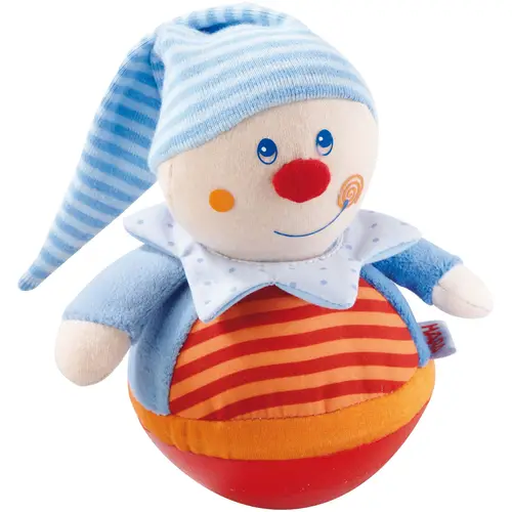
Why it's a great fit: Perfect for babies who are starting to grasp with purpose. The figure's wobbling motion and integrated bell stimulate auditory and tactile senses without overexciting the child.
It avoids the overstimulation trap with a simple, mechanical function. The reaction (wobbling, chiming) is a direct result of the child's action, teaching cause and effect.
Promotes hand-eye coordination and the sense of touch. The soft materials are safe for babies from 6 months old.
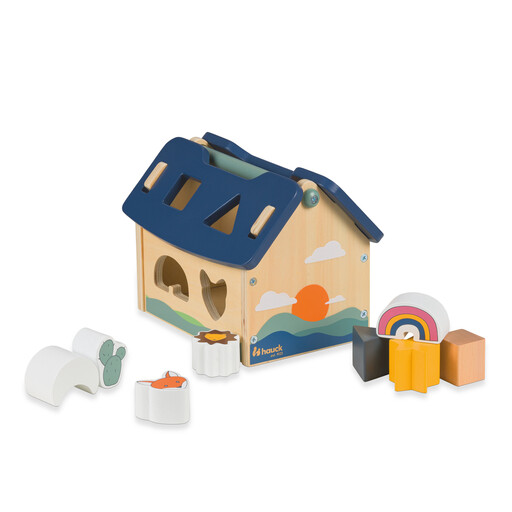
Why it's a great fit: A classic motor skills toy that helps toddlers from 1 year old to recognise and match shapes and colours. It specifically promotes fine motor skills and logical thinking.
It sidesteps the material flaw trap by using FSC-certified wood. The robust construction ensures high durability that extends far beyond the initial phase of use.
Combines shape sorting with stacking elements. The blocks can be stored inside the house, which also encourages tidying up.
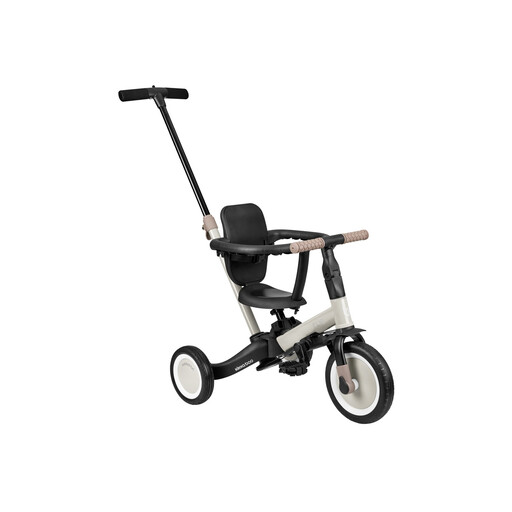
Why it's a great fit: A versatile solution for families looking for a long-term, active play option. It converts from a push-along stroller to a tricycle and eventually a balance bike.
Its 5-in-1 design grows with the child, thus avoiding the short-lived toy trap. It remains relevant across multiple developmental stages, offering long-lasting value.
Promotes gross motor skills, balance, and coordination in various modes. The parent handle provides extra control and safety during the initial stages.
We have compiled a complete, up-to-date list of products that fully meet these strict selection criteria and EU safety regulations.
Look for the CE marking, which confirms the product complies with EU safety standards. For added assurance, seals like the GS mark (Geprüfte Sicherheit / Tested Safety) can be helpful. For plastic products, the BPA-free label is important, and for wooden toys, look for the FSC seal for sustainable forestry.
A balance bike is generally suitable for children from around two to two-and-a-half years old. The key is that the child can safely touch the ground with both feet while sitting on the saddle. It is an excellent tool for training their sense of balance before transitioning to a bicycle with pedals.
Bath toys should be completely emptied after each use and dried in a well-ventilated area. Toys with holes are more susceptible to internal mould growth. Regular cleaning with a mixture of water and vinegar (approx. 1:1 ratio) can help prevent mould. Rinse the toy thoroughly with clean water afterwards.