Photographers focused on the details in dewdrops
If you want to enlarge tiny drops and control the focus precisely, choosing the right lens is key. OM Digital Solutions and Nikon Germany quote a magnification ratio of 1:1 for certain macro lenses.


For spontaneous close-ups with minimal kit, a rugged compact camera with a close-up mode could be a good choice. If you want to capture enlarged details of dewdrops, an interchangeable-lens camera with a suitable macro lens offers more flexibility. What matters is the magnification ratio of the specific lens: OM Digital Solutions and Nikon Germany quote 1:1 for certain macro lenses, but a short focusing distance alone doesn’t prove that a lens can achieve this ratio. Also consider the protection offered by the complete camera-and-lens combination, along with its total weight.
If you want to enlarge tiny drops and control the focus precisely, choosing the right lens is key. OM Digital Solutions and Nikon Germany quote a magnification ratio of 1:1 for certain macro lenses.
If you’re expecting changeable weather while camping, check the protection ratings for the specific camera body and attached lens. OM Digital Solutions describes the TG-7 as a camera for close-ups on the go; protection ratings for a body don’t automatically apply to every kit.
If you don’t want to carry several lenses, weigh up the close-up capabilities of a fixed lens against the versatility of an interchangeable-lens camera. OM Digital Solutions gives the OM-5 Mark II body weight as 418 g with battery and memory card; you’ll need to add the weight of the attached lens.
A good fit if: You want to capture small subjects quickly while camping, without changing lenses.
The trade-off: You can’t swap the fixed lens for a different macro lens, and a short shooting distance doesn’t prove a magnification ratio of 1:1.
A good fit if: You want to capture highly magnified details in dewdrops and change lenses. OM Digital Solutions quotes a 1:1 magnification ratio for the M.Zuiko Digital ED 60mm F2.8 Macro.
The trade-off: You need to consider the lens and body together; the protection rating given for the OM-5 Mark II doesn’t automatically apply to every combination.
A good fit if: You also want to photograph paths and surroundings, then choose a macro lens to suit the subjects you want to capture later.
The trade-off: An interchangeable lens mount doesn’t automatically mean 1:1 macro capability. Check which lens is included and allow for the extra space needed to pack a separate macro lens.
| What you’re looking for | What to look out for | Who is this most important to? |
|---|---|---|
| Details in dewdrops | Check the magnification ratio of the lens you’ll actually use; don’t confuse the minimum focusing distance with magnification. | I want a tiny drop to stand out clearly in the picture, so I’m choosing based on the lens. Around 33% of consumers put details in dewdrops first. |
| Protection on the go | Check the protection ratings for the body and attached lens separately, and follow the manufacturer’s guidance on how to use them. | When I’m taking photos in changeable camping weather, I check how well my specific kit is protected first. Around 27% of consumers prioritise weather suitability. |
| Weight and packed size | Consider the weight of the complete camera-and-lens combination and check whether you’ll need a second lens. | When camping, I want to carry as little as possible, even if that means less flexibility when choosing a lens. Around 20% of consumers prioritise a lighter load. |
| Other subjects and expandability | Check what’s included in the exact kit version, and budget separately for any macro lens you need. | If I want to photograph more than just dewdrops while camping, I weigh up a versatile kit against adding a macro lens later. Around 20% of consumers prioritise versatility. |
The focusing distance alone doesn’t tell you how large the drop will appear on the sensor. A manufacturer’s stated 1 cm distance for the TG-7 or WG-8 doesn’t, by itself, prove a magnification ratio of 1:1.
If a particular magnification matters to you, check the maximum magnification stated for the specific camera lens.
With an interchangeable-lens camera, close-up capabilities and protection also depend on the attached lens. A rating for the body doesn’t automatically describe the entire combination.
Compare the specific body with the lens you plan to use, and check exactly what’s included in the kit.
A separate macro lens means another item to carry and pack away.
Stabilisation can help with camera movement, but for focus bracketing, the drop or the surface it’s resting on must also stay still enough.
If your subject is moving, it’s safer to plan for a carefully focused single shot rather than assume a successful focus stack.
The Tough TG-7 pairs a fixed lens with close-up modes, while the OM-5 Mark II can be used with a separately chosen macro lens.
The WG-8, available from Ricoh Imaging, is a rugged compact camera for close-ups without changing lenses.
The EOS R50 is an interchangeable-lens camera for a range of camping scenes; its macro capabilities depend on the RF or RF-S lens you choose.
The Z system can be paired with the separately available NIKKOR Z MC 50 mm 1:2,8 for dedicated macro photography.
The E-mount system offers the separately available FE 90 mm F2.8 Macro G OSS as an option for dedicated close-up photography.
The Joybuy picks below are listed as action cameras for taking on the go and could suit camping scenes. If you want to take close-ups of dewdrops, also check the close-up capabilities of the specific model.
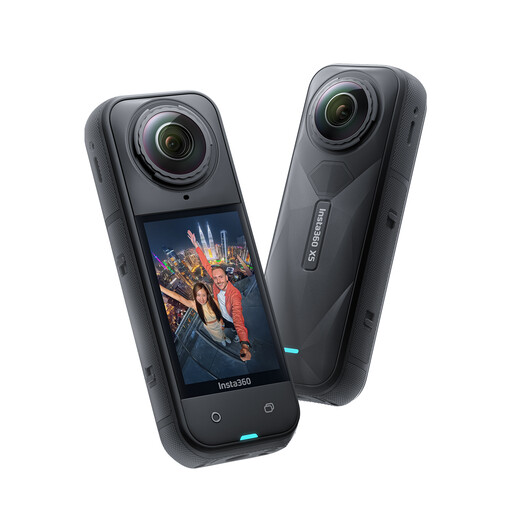 No image available
As an action camera for taking on the go, it could suit camping scenes; the product listing specifies 8K 360° video.
The product description states that it’s waterproof to 15 m without a housing.
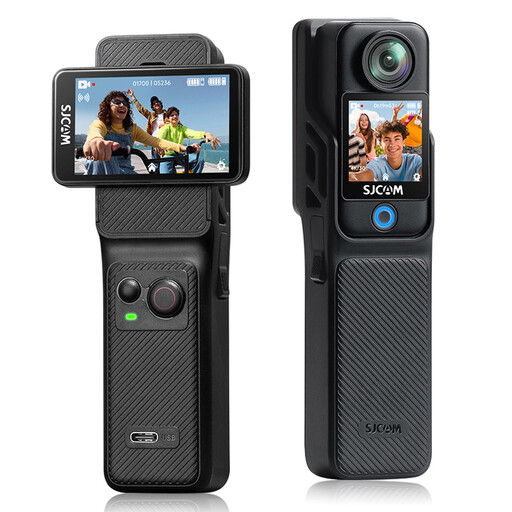 No image available
As an action camera with a photo function, it could be an option for taking pictures on the go; the product title specifies 16 MP photos.
The product listing states that it’s waterproof to 30 m with a housing. It also lists 4K video and image stabilisation.
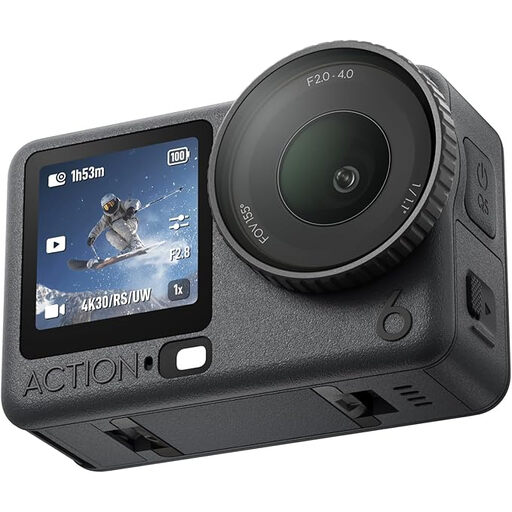 No image available
As an action camera for a range of shots on the go, it could suit camping scenes; the product description specifies a 1/1.1-inch sensor with a variable aperture.
The product listing specifies 4K video and waterproofing to 20 m without a housing.
 No image available
As an action camera for taking pictures on the go, it could suit camping scenes; the product description lists day and night lenses.
The product listing specifies 20 MP photos and waterproofing to 30 m with the supplied housing.
No. A shooting distance of 1 cm alone doesn’t mean a magnification ratio of 1:1. Check the maximum magnification stated for the lens you’ll actually use; with an interchangeable-lens camera, the attached lens makes all the difference. OM Digital Solutions and PENTAX Europe list a 1 cm close-up mode for certain compact cameras, while Nikon Germany specifies 1:1 for a particular macro lens.
Stabilise the camera and check the focus on the drop. If your subject is still enough, you can take a series of shots with slightly different focus points for focus stacking; Nikon Germany explains shallow depth of field in macro photography and this technique.
Check which lens is included in the specific kit and whether its magnification ratio suits the dewdrop photos you want to take. A macro lens you need later will be an additional piece of kit.
That depends on the rules for the area. According to the park authorities, visitors to the Black Forest National Park must stay on marked paths, even when taking photographs. Non-commercial photography is exempt from the permit requirement mentioned for photojournalism, as long as you stay on the designated paths. Check the rules for the specific location where you plan to take photos.