For long dialect interviews where one person does most of the talking and moves around, a body-worn lavalier recorder is an obvious choice. For a fixed interview setting, a suitably positioned handheld recorder may be enough. If the interviewer and interviewee each need their own microphone position, a two-channel kit may be a better fit. A dynamic handheld microphone requires you to position it deliberately and use a suitable XLR recording setup. Plan battery life and storage separately, and keep the unaltered original recording for phonetic analysis.
Who are these solutions for?
Dialect researchers
If you plan to analyse longer recordings later, keep the recording method, any processing and the original file separate. Research published in Language (Cambridge University Press, 2021) and the Journal of the Acoustical Society of America (2026) indicates that recording equipment and noise reduction can affect phonetic measurements.
Oral history interviewers
When interviewing in different locations, it’s important to decide whether you want to record just the interviewee or also your questions using a separate microphone position. This will determine whether one close-worn microphone is enough or whether you should plan for two positions.
People recording two-person conversations
If both people need to be able to move around while their voices are recorded, check the exact two-channel kit configuration, power supply and track routing. Two microphones don’t automatically mean that each voice will be saved on a separate track.
What should you look for when buying?
First decide whether one or two people need their own microphone position. Then plan battery life and storage, and work out how you’ll preserve the original for future analysis.
Body-worn lavalier recorder
A good fit if: One person is the focus and you want to keep the microphone at a fairly consistent distance, even when they move. Zoom quotes up to 15 hours of operation for the F2 with two AAA batteries, and up to 14 hours for the F2-BT.
Consider: A single lavalier won’t automatically give a second person their own microphone position. Check the attachment, clothing, storage and power supply before the session.
Handheld recorder with built-in microphones
A good fit if: Both people can sit in a suitable fixed position, or you also want to capture the surroundings. Zoom describes the H1essential on a tripod as suitable for conversations; the Tascam DR-05XP has built-in stereo microphones and an input for external microphones.
Consider: Distance, placement and room noise have a greater effect on the recording than with a microphone attached directly to the speaker. Built-in microphones are no substitute for two separate close-mic positions.
Two-channel wireless kit with transmitter recordings
A good fit if: The interviewer and interviewee need to move around and each have their own microphone position. The RØDE Wireless PRO includes two lavalier microphones, as does the Sennheiser Profile Wireless 2-channel set.
Consider: The transmitters, receiver, output device, batteries and track routing all need to work together. RØDE quotes more than 40 hours of internal storage per transmitter; Sennheiser quotes up to 30 hours of backup storage per clip-on microphone. These figures are not battery-life estimates.
Dynamic XLR handheld microphone
A good fit if: You can deliberately hold the microphone close to whoever is speaking during a guided conversation. Shure describes the SM58 as having a cardioid pickup pattern for speech and vocals.
Consider: You’ll need a suitable XLR recording setup. Passing the microphone between people changes its distance and position, which can be impractical for long, uninterrupted stories.
| Buying priority |
What to check |
Who is it important to? |
| Consistent distance from the speaker |
Lavalier attachment, cable security and a short test with the clothing you’ll be wearing. |
If I want to record long stretches of speech at a consistently close distance, I pay particular attention to how the microphone sits and is attached. Around 31% of consumers prioritise keeping a consistent distance from the speaker. |
| Long takes without interruptions |
Battery life for the exact model, power supply, available storage and a continuous test recording. |
I don’t want to have to stop a long session because the battery has run out or there’s no storage left. Around 25% of consumers prioritise being ready to record for long sessions. |
| Two clear voices |
Number of microphones or transmitters included, separate tracks and connection to the recording device. |
If my questions matter as well as the interviewee’s story, I need a suitable microphone position for both people. Around 25% of consumers prioritise recording both voices in a conversation. |
| Original recording for speech analysis |
Recording format and export method; keep the original and document the equipment and processing steps. |
For future phonetic analysis, I want to be able to find the unaltered source material and trace any processing. Around 19% of consumers prioritise having an original recording they can verify. |
Common misconceptions
-
Confusing hours of storage with battery life
Manufacturers’ figures for storage and operating time refer to different limits. A large amount of internal storage won’t help if the battery runs out.
Check the battery life of the exact model separately from its storage capacity, based on the session you have planned, and make a full test recording.
-
Assuming 32-bit float makes good microphone placement and the original file unnecessary
A recording format can’t fix poor microphone placement or remove every effect that the recording device and post-processing can have on phonetic measurements.
Test the setup in the actual recording location, keep the unaltered original and document the device settings and any processing.
-
Assuming one microphone will automatically record two separate voices
A two-channel kit can provide two microphone positions; a single handheld microphone or lavalier won’t do this by itself.
Decide in advance whether follow-up questions need their own position or track, and check what’s included in the kit and how the tracks are routed.
-
Taking an older product description as proof that a new model is currently available
Tascam lists the DR-10L Pro as discontinued on its downloads page.
If you’re considering this model, check the condition, what’s included and the service arrangements for the specific offer.
Key brands at a glance
Zoom
Zoom offers the H1essential handheld recorder for conversations in a suitable fixed position, and the F2 body-worn lavalier recorder for capturing one person at close range.
- Zoom quotes up to 15 hours of operation for the F2 with two AAA batteries, and up to 14 hours for the F2-BT. The models differ in features including Bluetooth and battery life.
- The H1essential needs to be positioned appropriately for the conversation. These are model specifications, not an independent comparison of sound quality.
Tascam
The DR-05XP is a handheld recorder with built-in microphones and an input for external microphones.
- Tascam lists a 32-bit float mode and built-in omnidirectional microphones for the DR-05XP.
- Positioning still matters. Tascam lists the DR-10L Pro lavalier recorder as discontinued, so older descriptions don’t confirm that new units are currently available.
RØDE
The Wireless PRO is a two-person wireless kit supplied with two lavalier microphones.
- RØDE quotes local 32-bit float recordings on both transmitters and more than 40 hours of internal storage per transmitter.
- According to RØDE, the 32-bit float specification applies to local transmitter recordings, not automatically to recording on a connected camera. Storage time is not battery life.
Sennheiser
The Profile Wireless 2-channel set combines two clip-on microphones with a receiver for two audio sources.
- Sennheiser quotes up to 7 hours of battery life and up to 30 hours of backup recording per clip-on microphone.
- For longer, uninterrupted sessions, plan the power supply separately; backup storage time is not a battery-life figure.
Shure
The dynamic SM58 is worth considering if you can hold a handheld microphone deliberately towards whoever is speaking and have a suitable XLR recording setup.
- Shure describes a cardioid pickup pattern, a built-in pop filter and a frequency response designed for voices.
- The SM58 isn’t a recorder by itself. For long interviews, its suitability also depends on how you handle the microphone and the recording device you use.
Joybuy products for recording conversations
The following Joybuy voice recorders are included with longer conversations in mind. Before choosing, pay particular attention to microphone position, the recording format you need and the power supply.
 No image available
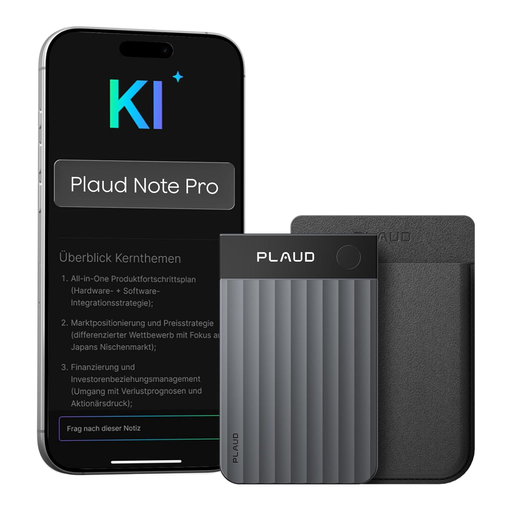
PLAUD Note Pro Voice Recorder, 64 GB
Worth considering as a voice recorder for long conversations if the storage and stated battery life suit your needs.
The product details list 64 GB of storage, 30 hours of battery life and four MEMS microphones. The name also specifies compatibility with Android and iOS; check in advance that the export method works for your analysis.
View at Joybuy
 No image available
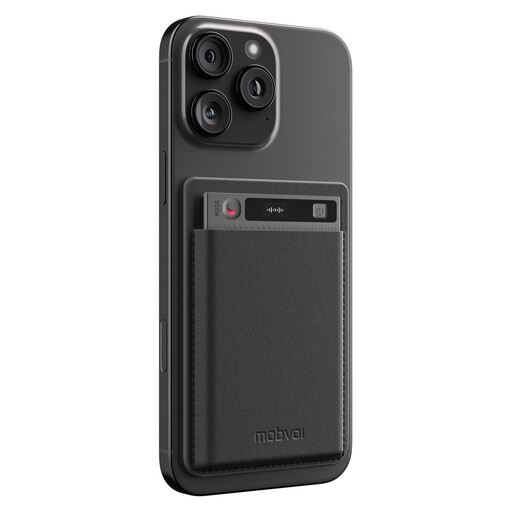
Mobvoi TicNote Lite AI Voice Recorder, 4 GB
Worth considering for interviews if the listed features suit your recording and transcription workflow.
The product name lists 4 GB of storage and support for more than 120 languages. Before buying, check which transcription features you actually need for dialect recordings.
View at Joybuy
 No image available
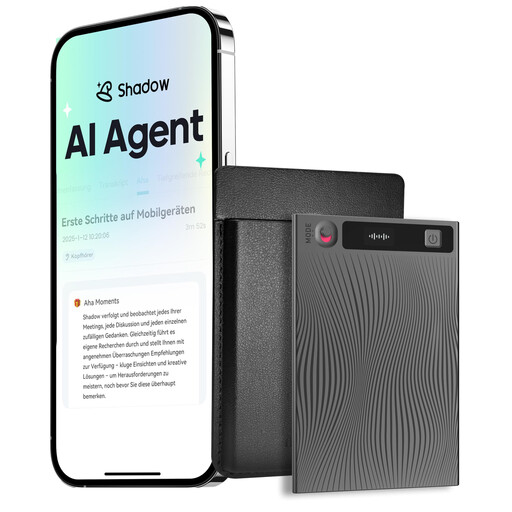
Mobvoi TicNote Standard AI Voice Recorder, 64 GB
For longer interviews, compare this model based on its stated recording time and the storage you need.
The product name lists 64 GB, a 3-microphone array and 20 hours of recording time. Check that the recording mode and file export options suit your planned analysis.
View at Joybuy
 No image available
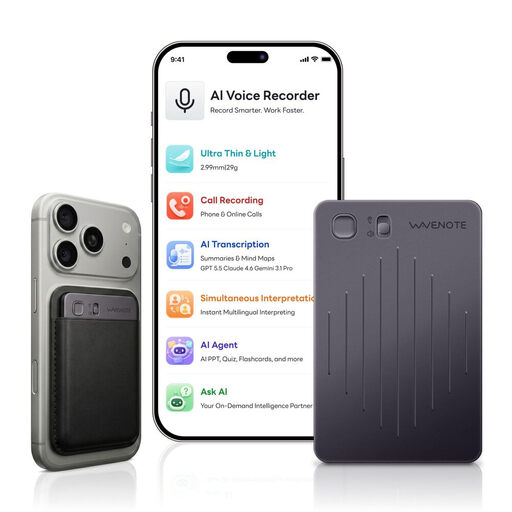
WaveNote AI Voice Recorder, 64 GB, Black Grey
Worth comparing as a voice recorder for conversations if you want to save a file for editing later.
The product name lists 64 GB of storage. Check in advance which recording formats are available and whether they’re suitable for your analysis.
View at Joybuy
 No image available
Digital Voice Recorder, 64 GB
Worth considering for interviews if you want transcription to be part of your workflow.
The product name lists 64 GB and a transcription function. Check whether the features on offer and the file export options suit the way you work with dialect recordings.
View at Joybuy
Frequently asked questions
Can I record a private dialect interview without discussing it first?
Unauthorised recording of another person’s non-public spoken words is covered by section 201(1) of the German Criminal Code (StGB). The Federal Ministry of Justice and the Federal Office of Justice list this provision in the Criminal Code; confirm with everyone involved that you’re authorised to record before you begin. This is not a blanket statement about every conversation in every public place.
Does permission to make an audio recording also cover every type of later processing?
No. Where personal data is processed, there must be a legal basis under Article 6 of the GDPR. The Federal Commissioner for Data Protection and Freedom of Information highlights this requirement; if you rely on consent, it must be freely given and specific to the purpose, among other things. Consider recording, storage, sharing and publication separately in the context in which you plan to use them.
Can I use a wireless transmitter’s storage capacity as the maximum length of a single take?
No. Storage and power need to be planned separately. RØDE lists more than 40 hours of internal storage per transmitter for the Wireless PRO; Sennheiser lists up to 30 hours of backup storage per clip-on microphone and up to 7 hours of battery life for the Profile Wireless 2-channel set. Plan battery life based on the exact model and the session you have in mind.
What should I do with a noise-reduced file if I’m analysing the recording phonetically?
Keep the unprocessed original separately and document any processing. A study in the Journal of the Acoustical Society of America (2026) reports that noise-reduction methods can affect phonetic measurements; this doesn’t mean that every method is equally unsuitable for every measurement.
What practical points should I check before buying a lavalier or XLR system?
Check whether you’ll need batteries or a suitable charging option, and whether you have an appropriate recording setup for an XLR handheld microphone. If you’re considering the Tascam DR-10L Pro, note that Tascam lists it as discontinued, and check the condition, what’s included and the service terms for the specific offer.


