What should you consider when choosing?
Start with the layout and typing feel. Then check whether your dialogue software supports the shortcuts you want, and only after that decide on the shape and any extra features.
| Consideration |
What to check before buying |
Who is this especially important to? |
| Typing feel |
Check the key layout, switch type and the level of feedback you want when typing. |
If I write lots of dialogue, I want to type confidently with familiar key positions and a feel that suits me. Around 33% of consumers put typing feel and text input first. |
| Shortcuts |
Check which editor commands are available, along with the software and key positions you need. |
If I often switch between nodes and text, I want to trigger recurring commands quickly. Around 27% of consumers prioritise shortcuts and frequent editing tasks. |
| Hand position |
Check the shape, palm rest and positions of the arrow and function keys against the space you have available. |
During long writing sessions, the shape may matter more to me than macros or an especially compact design. Around 20% of consumers prioritise hand position. |
| Space and noise |
Check whether you need a number pad and cable, and whether you have enough room for the keyboard and mouse. |
If my desk has little free space, I want a shorter keyboard. But I can only do without a number pad if it suits my workflow. Around 20% of consumers prioritise space and noise. |
A closer look at relevant brands
The examples below relate to the product ranges mentioned and can help you compare them. They aren’t a blanket assessment of the brands or a statement about availability.
Logitech
The MX Keys S is aimed at people looking for a low-profile keyboard and customisable actions; the split ERGO K860 is another option to compare for long writing sessions.
- For the MX Keys S, Logitech lists Smart Actions through Logi Options+; the ERGO K860 has a cushioned palm rest.
- The F.A.Z. Kaufkompass review notes that the ERGO K860 lacks backlighting and wired connectivity. This doesn’t apply to other Logitech models.
Keychron
The K8 Pro ISO may suit writers who want mechanical switches and customisable key mappings.
- Keychron lists QMK/VIA support and several ISO layouts for the range.
- The variant selected on the manufacturer’s website was UK ISO. Check the layout of the exact variant rather than assuming the range includes DE ISO.
CHERRY
The STREAM KEYBOARD TKL is a more compact wired option with scissor-switch keys, designed for a fixed workspace.
- CHERRY describes the TKL model as having a main key area without a number pad and calls its typing action quiet. This is the manufacturer’s description, not a measured noise comparison.
- A Joybuy product page found for this range lists a US layout. Check the layout of the specific offer.
Perixx
According to the manufacturer, the PERIBOARD-335 combines a split design with mechanical switches and wired connectivity.
- Perixx lists a choice of switches and layouts, as well as on-keyboard macro setup.
- According to Perixx, its downloadable configuration software is limited to Windows. For other systems, the manufacturer describes setting up macros on the keyboard itself.
Keyboards at Joybuy
This selection at Joybuy includes keyboards for dialogue work with a German layout, customisable keys, a split design or a compact key layout. For each variant, check which features and connections matter for your workspace.
 No image available
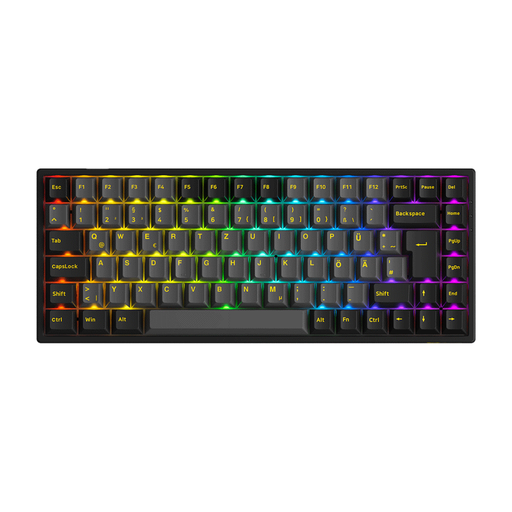
Akko 3084B Plus, 75%, Tri-Mode, ISO-DE
A compact mechanical keyboard for writers looking for a German layout and a smaller key area.
The product title lists ISO-DE, 75%, Bluetooth, 2.4G, USB-C and hot-swap, as well as V3 Pro Cream Blue switches.
View at Joybuy
 No image available
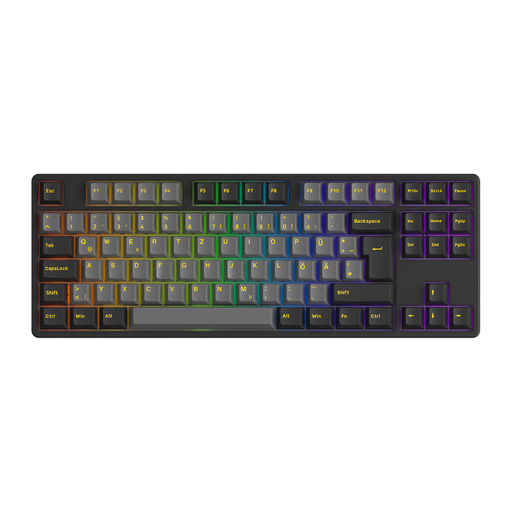
Akko 5087S V1 TKL, ISO-DE QWERTZ
A wired TKL keyboard for writers who want a German layout and a keyboard without a separate number pad.
The product title lists Akko V3 Pro Cream Yellow switches and hot-swap. The product description lists macro support and a USB Type-C connection.
View at Joybuy
 No image available
Logitech ERGO K860, QWERTZ
A split keyboard for anyone who wants to compare a different key shape and a cushioned palm rest for longer writing sessions.
The product title lists QWERTZ, Bluetooth and a USB receiver. The F.A.Z. Kaufkompass ergonomics test notes that it lacks backlighting and wired connectivity.
View at Joybuy
 No image available
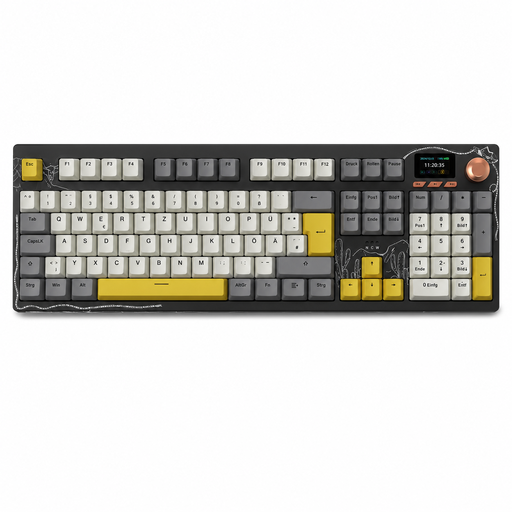
AJAZZ AK35I V4, German QWERTZ
A mechanical keyboard for writers looking for a German layout and a choice of connection types.
The product title lists Bluetooth, 2.4G, USB-C and hot-swap. The product description lists a full-size layout with a number pad, navigation keys and a function row.
View at Joybuy
 No image available
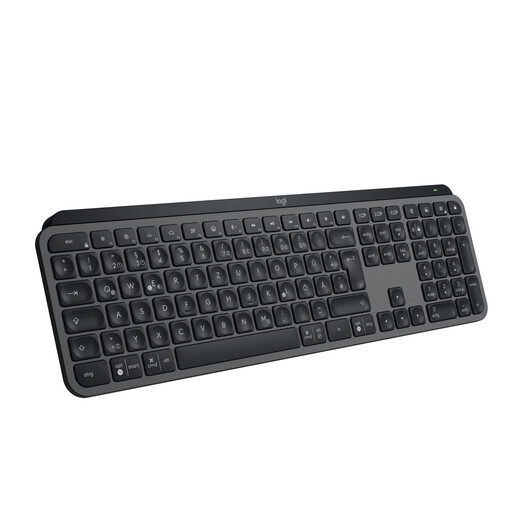
Logitech MX Keys S, Graphite
A low-profile keyboard for writers who want a slim key design and customisable actions.
Logitech lists Smart Actions through Logi Options+. The product description lists Bluetooth Low Energy and a Logi Bolt USB receiver for connectivity.
View at Joybuy
Frequently asked questions
Do I need a keyboard that switches between devices for two monitors?
No, not just because you have two monitors. If both screens are connected to the same Windows PC, you can manage them in the operating system’s display settings. Microsoft also describes switching and arranging windows as Windows features. A keyboard with device switching is mainly useful if you actually use several computers.
How do I set up a keyboard for a dialogue tree?
First, arrange the screens in the operating system so they match their physical positions, then try the window and editor shortcuts already available. Microsoft Support lists Alt+Tab for switching between apps in Windows. Once you’ve identified recurring commands in your editor, it’s worth checking whether you can assign them to programmable keys.
What should I check with a wireless keyboard, and what if it’s faulty?
For the specific model, check its connection type, whether it includes any receiver you need and what it says about power. If you buy faulty goods from a retailer in the EU as a consumer, you have statutory rights against the seller. The European Union’s Your Europe website explains that the minimum period is two years from receipt, which is separate from any additional manufacturer’s guarantee.
Can I return a keyboard bought online if I don’t like how it feels to type on?
For an online consumer contract in Germany, you generally have 14 days from receiving the goods to withdraw from the purchase; you must notify the retailer that you wish to cancel. The Verbraucherzentrale explains this period in its article dated 13 August 2026. Check the terms of the specific offer, and distinguish your right to cancel from claims relating to faulty goods.


