
Lieferung heute & morgen

Qualitätsgarantie

Willkommens-Angebote freischalten: KOSTENLOSE Lieferung | Bis zu 80 % RABATT | Kostenlose 30-Tage-JoyPlus-Testphase
App herunterladen
Setting up the first changing station is a major milestone for expectant parents. However, given the sheer number of options, choosing the right changing station essentials can quickly become overwhelming. Many products promise functionality but prove impractical in daily use. This guide will help you avoid common pitfalls and find a safe, functional, and durable solution that perfectly fits your needs and your living space.
Common Mistakes When Choosing Changing Station Essentials:
To make an informed decision, you should focus on objective criteria rather than marketing promises. The following three parameters are crucial for safety and functionality.
Your baby's safety is the top priority. When looking at changing furniture, pay attention to these features:
The changing area is a place where hygiene is critical. The choice of material plays a central role.
The ideal solution heavily depends on your available space. Weigh the pros and cons of the different systems:
Here are some product recommendations tailored to different lifestyles and requirements.

Why This Fits Their Persona: Ideal for parents in city apartments who need to make the most of every square metre. This wall-mounted unit creates a full-featured changing station without permanently occupying floor space.
It completely solves the problem of bulky furniture (Mistake #1). After use, it simply folds up, freeing up the room again.
Space-Saving: Folding mechanism with shock absorbers for slow, safe closing. Custom Height: Can be mounted at a back-friendly height.
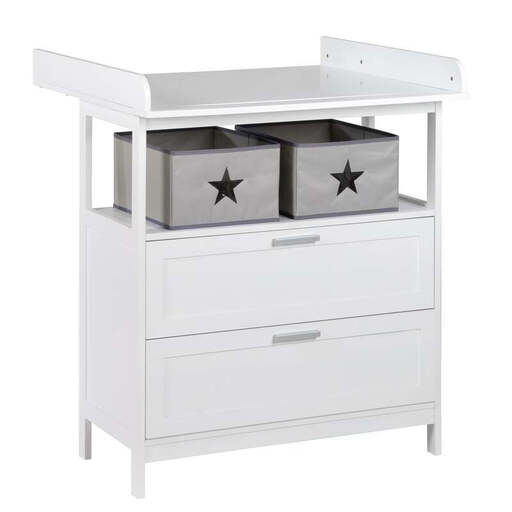
Why This Fits Their Persona: Perfect for families looking for a long-term investment. This dresser offers ample storage and grows with the child, converting into a regular piece of furniture later on.
It addresses the storage problem (Mistake #3) with two drawers and two open compartments, keeping everything organised and within easy reach.
Durable: The changing topper is removable, allowing the dresser to be used for years. Comfortable Height: A changing height of 92 cm is easy on parents' backs.

Why This Fits Their Persona: For parents who don't want or can't set up a permanent changing station. This lounge serves as a portable changing mat, a cosy nest, and a bed bumper—usable in the living room, at the grandparents', or while travelling.
It bypasses the need to commit to a large piece of furniture. The easy-care microfibre and washable cover also solve the problem of high-maintenance materials (Mistake #2).
Multi-Functional: Serves as a changing mat, baby nest, and bed bumper. Easy to Clean: The filling is removable via a zipper, and the cover is washable at 40°C.
We've compiled a complete, up-to-date list of products that fully meet these strict selection criteria and German safety regulations.
1. How high should a changing table be? An ergonomic changing height is crucial to prevent back pain. A height between 85 cm and 95 cm is a good guideline. Many models, like the roba 'Hamburg' Changing Dresser, adhere to this standard with a height of 92 cm. With a wall-mounted changing shelf, you have the advantage of customising the installation height to your own body size.
2. What are the basic essentials for a changing station? Besides the changing furniture itself, the right changing accessories are key for a smooth routine. The core setup includes:
3. Until what age is a changing dresser used? Most children are potty-trained between the ages of two and three. Therefore, the use of the changing function typically ends around this time. However, many changing dressers are designed so that the changing topper can be removed. This allows the furniture to be used for many more years as a regular dresser in the child's room, making it a sustainable purchase.