
Lieferung heute & morgen

Qualitätsgarantie

Willkommens-Angebote freischalten: KOSTENLOSE Lieferung | Bis zu 80 % RABATT | Kostenlose 30-Tage-JoyPlus-Testphase
App herunterladen
As your baby becomes more mobile, a new phase begins—not just for your little explorer, but for your diaper supply as well. The time has come to switch from traditional taped diapers to convenient diaper pants, often called pull-up diapers. But the selection is vast, and the advertising claims are lofty. This often leads to frustration over leaky diapers, red marks on the skin, and the feeling of having spent money on the wrong product.
As your Joybuy Product Recommendation Officer, I'm here to help you identify the common pitfalls and make an informed decision. Let's focus on the facts that truly matter.
To avoid making the wrong purchase, you should focus your attention on three crucial features instead of being swayed by marketing messages.
The correct size is the most important prerequisite for a diaper that works. The weight recommendations on the packaging are a good starting point, but your child's body shape is just as crucial.
The performance of a diaper pant depends on its core and the materials used.
The consumption of diaper pants is high. Buying small packs at the supermarket can become costly in the long run. A monthly box of diaper pants offers a practical and often significantly more affordable alternative. You not only save money per diaper but also time and effort, as your supply is secured for several weeks.
Instead of making a one-size-fits-all recommendation, we have curated products for different needs and profiles.
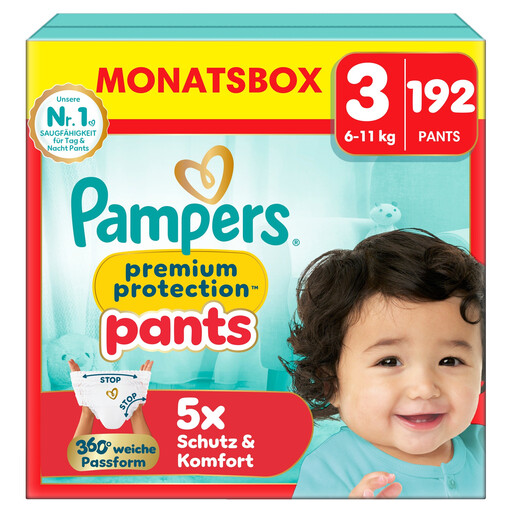
Why This Fits Their Persona: Ideal for parents who rely on proven brand quality and want to optimise costs and shopping trips by purchasing a monthly box. The bulk pack secures their supply for weeks and offers a great price per diaper.
The reliable fit with a 360° waistband and Stop & Protect pocket counteracts the "one-size-fits-all" illusion and minimises the risk of leaks at the back.
Excellent value for money thanks to the monthly box. Dermatologically tested and certified according to OEKO-TEX STANDARD 100.

Why This Fits Their Persona: Designed for parents whose top priority is their child's skin health. This product focuses on materials intended to actively counteract skin irritation.
Directly addresses concerns about skin irritation with a mildly acidic surface that has a pH of 5.5, which is close to the natural acid mantle of a baby's skin.
pH 5.5 surface to support the skin barrier. A very thin (approx. 3.36 mm) yet absorbent core for high wearing comfort.
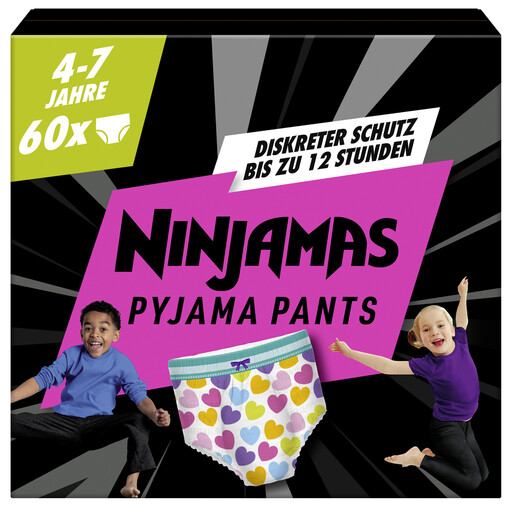
Why This Fits Their Persona: Specially designed for nighttime and for older children who need extra-high absorbency. It offers security and discretion to manage bedwetting and boost the child's self-confidence.
Solves the "12-hour dryness" trap with a special technology for instant moisture absorption, specifically developed for overnight needs.
Maximum absorbency for nighttime. The low-noise "QuietCloth" material and underwear-like design ensure discretion.
We have compiled a complete, up-to-date list of products that fully meet these strict selection criteria and German safety regulations.
The ideal time to switch to diaper pants is when your baby starts to resist being changed while lying down, turns over a lot, or begins to crawl and stand. The easy pull-on design, like underwear, makes changing active toddlers much simpler. This is usually the case around 6 to 10 months of age.
Start by referring to the manufacturer's weight recommendation. You can tell it's a good fit if the diaper is snug around the tummy and legs without digging in. There should be no gaps when your child moves. If you regularly notice red marks on the skin, the diaper is too small. If it frequently leaks, it might be too large or not suitable for your child's body shape.
Yes, many standard diaper pants are also suitable for nighttime use. For children who drink a lot at night or are prone to leaks, special overnight diapers (Night Pants) can be a better solution. These feature a reinforced absorbent core that can hold more liquid and lock it away faster to ensure dry nights.