
Lieferung heute & morgen

Qualitätsgarantie

Willkommens-Angebote freischalten: KOSTENLOSE Lieferung | Bis zu 80 % RABATT | Kostenlose 30-Tage-JoyPlus-Testphase
App herunterladen
By Joybuy Product Recommendation Officer, August 30, 2026
Finding the right die-cast model car can be a challenge. Online images often promise more than the product delivers: a model advertised as "high-quality" turns out to be a fragile plastic toy, or its size doesn't meet expectations. To avoid disappointment, it's crucial to know the common pitfalls and focus on the right features.
Many buyers invest in models that quickly lose value or develop defects due to inferior materials. The most common problems are:
To make an informed decision, you should concentrate on three objective criteria. These will help you evaluate a model's quality, regardless of marketing promises.
The industry standard for high-quality die-cast cars is a zinc alloy, often referred to as Die-Cast or Zamak. This material allows for precise moulding and provides a satisfying weight and high durability. Pay close attention to the body's description. A solid metal body is the foundation for longevity. Plastic is typically used for the interior, windows, and fine details like mirrors or spoilers. A balanced ratio of metal to plastic parts is key.
The scale indicates the size ratio of the model to the original vehicle. A model in 1:36 scale is 36 times smaller than the real car. Common scales for collector cars are:
Check for features like opening doors, a replicated interior, or authentic rims. These details distinguish a simple toy from a toy car for adults and collectors.
A car with a pull-back motor offers an interactive element. When you pull the vehicle back, it moves forward on its own. This function is particularly popular with models that are also intended for play. For collectors who focus on the most accurate replica possible, this mechanism can be seen as a drawback, as it often compromises a detailed underbody. Therefore, consider whether your priority is display quality or play value.
Based on these objective criteria, we have identified several models that are suitable for different profiles and use cases.

Why This Fits Their Persona: The iconic design of a supercar, combined with a striking paint job and interactive elements, makes this model an ideal gift for car lovers. It creates an instant "wow" factor.
The product description specifies a body made from a durable alloy (die-cast). This avoids the trap of a model that only looks like metal on the surface but is mostly plastic.
Combines a famous supercar design, opening doors for more realism, and a pull-back motor for added play value.

Why This Fits Their Persona: This model represents a specific, iconic era of automotive history. It appeals to collectors who prefer nostalgic and historically significant vehicles over generic supercars.
The focus is clearly on the faithful reproduction of a classic. Although a pull-back motor is included, the authentic design takes precedence and is not compromised by excessive play features.
High recognition value for enthusiasts and a detailed replica of a cult classic. The opening doors enhance its realism for display in a cabinet.
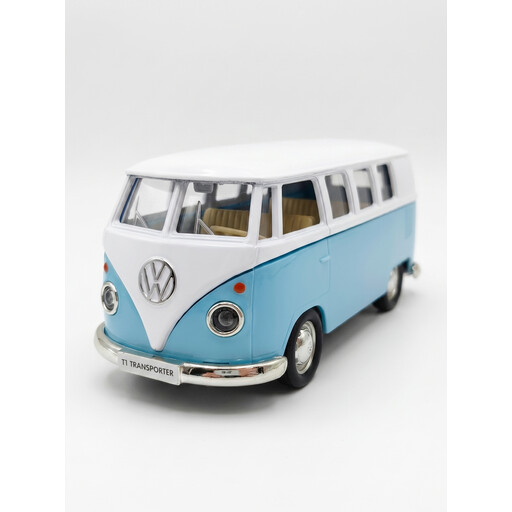
Why This Fits Their Persona: An affordable and universally recognized classic. This model offers a solid entry point into the world of collector cars without requiring a large financial investment, and it has high decorative value.
This model offers transparent value for money. It doesn't promise exaggerated collector features but delivers a sturdy metal body and basic functions like opening doors.
Timeless, charming design and solid construction. It's ideal for starting a collection or as a decorative piece for a desk or shelf.
We have compiled a complete, up-to-date list of products that fully meet these strict selection criteria and applicable safety regulations.
The scale indicates how much the model has been scaled down compared to the original vehicle. A scale of 1:36 means that every unit of length on the model would be 36 times larger in reality. The smaller the second number (e.g., 1:18), the larger the model car.
That depends on the collector's preference. Some appreciate the interactive nature and play value that a car with a pull-back motor offers. Purists who focus on maximum detail and realism often prefer models without this function, as the mechanism can interfere with the faithful reproduction of the vehicle's underbody.
To care for die-cast cars, a soft, dry cloth or a brush is usually sufficient to remove dust. For fingerprints, a microfiber cloth like those used for eyeglasses can help. Be sure to avoid water or aggressive cleaning agents, as they can damage the paint and plastic parts.