
Lieferung heute & morgen

Qualitätsgarantie

Willkommens-Angebote freischalten: KOSTENLOSE Lieferung | Bis zu 80 % RABATT | Kostenlose 30-Tage-JoyPlus-Testphase
App herunterladen
Creating custom cards, scrapbook pages, or decorations requires precision and the right tools. For many paper crafters, die-cutting templates have become an indispensable part of their toolkit. They allow you to cut complex and repeatable shapes cleanly, a feat that is nearly impossible to achieve by hand.
This article serves as a guide. It introduces various types of cutting dies and provides practical tips to help with your selection. The goal is to give you an informed basis for expanding your craft collection.
The selection of designs and types is vast. To find the right templates for your projects, the following criteria can be helpful.
Most metal cutting dies are designed for use in standard die-cutting and embossing machines. These machines work with a "sandwich" system, where the die, along with the paper, is placed between acrylic plates and pressed through rollers. Before purchasing, check the maximum width your machine can handle to ensure the die will fit. Most manufacturers specify the compatibility of their products.
Die-cutting templates are typically made of thin but durable steel. This ensures a long lifespan and sharp cutting edges. The level of detail in the designs varies greatly. While simple geometric shapes are suitable for beginner projects, intricate lettering or patterns often require thicker paper and a precisely aligned machine. It is also important to distinguish between cutting dies and embossing folders. While the former cuts through the paper, the latter creates a raised, three-dimensional pattern on the surface without separating the material.
The thematic range is enormous and covers virtually every occasion. Alphabet die-cutting templates and number sets are a fundamental investment for personalised messages. For recurring events like birthdays, there are special birthday die-cutting templates with lettering and matching symbols. For die-cutting templates for card making and scrapbooking templates, frames, borders, and decorative elements are also very popular for giving projects a professional finish.
Here is a selection of die-cutting templates that stand out for their specific applications.
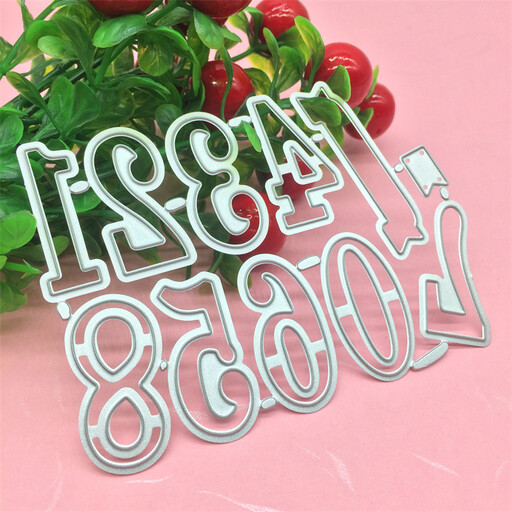
Why it stands out: This set offers a complete collection of capital letters and numbers. The classic font makes it versatile for headlines, names, or dates.
Pros:
Who it's for: Users who regularly want to integrate custom text and dates into their projects. It's a solid foundational kit for anyone who values personalisation.

Why it stands out: This die is specifically designed to create a decorative edge with integrated lettering. The intricate design gives card edges an elegant and elaborate look.
Pros:
Who it's for: Crafters who focus on die-cutting templates for card making and are looking for a way to create impressive borders quickly and easily.
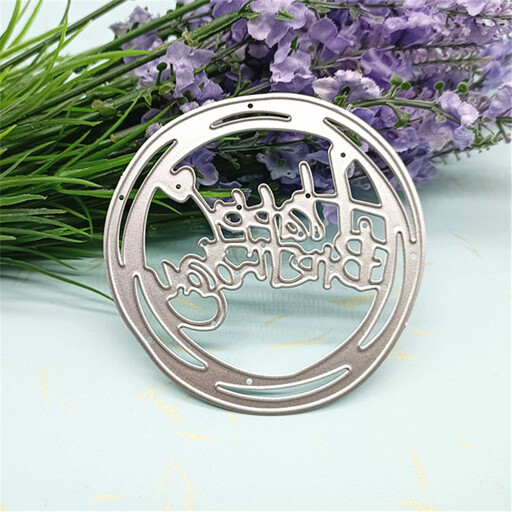
Why it stands out: This set is tailored for the most common occasion for greeting cards: birthdays. It combines clear lettering with decorative elements like balloons and gifts.
Pros:
Who it's for: Users who frequently make birthday cards and are looking for a reliable set that includes all the necessary motifs for a cohesive design.
The products featured here cover only a small fraction of the available options. If you are looking for other designs, styles, or special scrapbooking templates, it's worth taking a look at a broader selection.
Discover our entire range of Stencil Tools and find the perfect tools for your next project.
Die-cutting templates (also known as dies) are metal shapes with a sharp edge used to cut designs completely out of paper or other thin materials. Embossing folders, on the other hand, are typically plastic folders with a positive and negative pattern. The paper is placed inside and pressed through the machine, creating a raised, three-dimensional relief without cutting the paper.
Yes, a die-cutting and embossing machine is necessary for a clean and consistent result. These devices apply the uniform pressure needed for the die's sharp edge to cut through the paper precisely. Attempting to apply pressure manually usually results in messy edges or an incomplete cut.
Since metal cutting dies are often small and numerous, good organisation is key. Many users use magnetic sheets or mats that are filed in binders or storage boxes. The dies adhere to the magnetic surface, which prevents them from shifting or getting lost and allows for clear and organised storage.