
Lieferung heute & morgen

Qualitätsgarantie

Willkommens-Angebote freischalten: KOSTENLOSE Lieferung | Bis zu 80 % RABATT | Kostenlose 30-Tage-JoyPlus-Testphase
App herunterladen
A diecast model car 1:36 can take pride of place in a display cabinet, serve as a gift for car enthusiasts, or be used for play. However, there are significant differences between metal bodies, pull-back mechanisms and remote-controlled stunt vehicles. If you only focus on a realistic product image or lots of feature promises, you can easily overlook important details.
With a metal model car, the description usually refers to the body being made from diecast alloy. The wheels, windows, interior and add-on parts can be plastic. When making a purchasing decision, specific details such as “diecast body”, material descriptions and product images are far more telling than vague terms like “premium” or “high-quality”.
A model car with opening doors offers more interaction and can be appealing for a display cabinet. The doors should be clearly visible in the product images. With a pull-back model car, you pull the vehicle backwards and it rolls forward on its own once released. This function usually doesn’t require batteries, but it doesn’t replace remote-controlled operation either.
Many detailed diecast models are labelled 14+. This relates not only to the appearance, but also to small components, movable doors and the intended use. A collector model car is therefore not automatically a suitable toy for younger children. With RC vehicles, you also have to consider the battery, remote control, charging times and the necessary supervision.
With the 1:36 scale, one centimetre on the model corresponds to roughly 36 centimetres on the real vehicle. The actual length depends on the car. A sports car, a BMW M3 model car and a Volkswagen T1 model car in the same scale are therefore not the same size. For a display cabinet, you should check in advance whether there is enough space and height.
Look out for:
A metal body usually gives a higher weight than a pure plastic model. For children under three, such models are generally unsuitable due to possible small parts, unless the product labelling states a different age limit.
With an RC car for children, the controls and safety information should match the age. A vehicle with 360-degree rotation, LED lighting or drift function needs more space and a certain level of coordination to operate. Also check:
A remote-controlled stunt car with Mecanum wheels can drift sideways and spin on the spot. That’s functionally different from a classic racing car. For use indoors, consider noise levels, available space and delicate furniture.
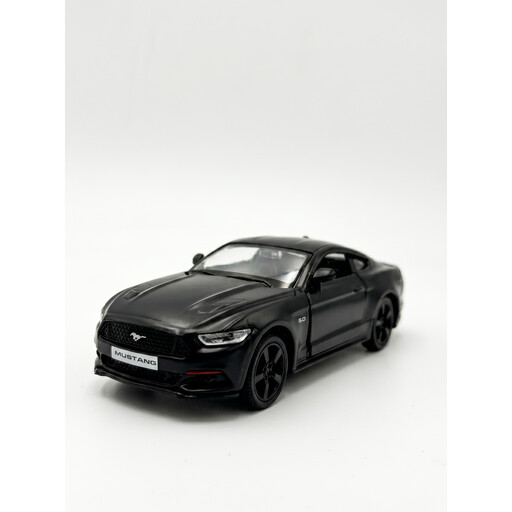
Why this product fits the profile: This black Ford Mustang model car combines a diecast body with opening doors and a pull-back mechanism. It’s ideal for beginners who want a model for display and occasional play without needing batteries. The product recommends use from age 14.
The features are clearly stated: metal body, opening doors and pull-back drive, rather than vague marketing claims.
Diecast body, pull-back function and opening doors; no need to buy batteries for the drive.

Why this product fits the profile: This blue Lamborghini model car is designed for detail-oriented display. The matt blue finish, opening doors and stated alloy material make it perfect for a cabinet or diorama.
The product description lists the relevant details individually and assigns the model to the 14+ age group.
Matt blue finish, alloy body, opening doors and pull-back drive.
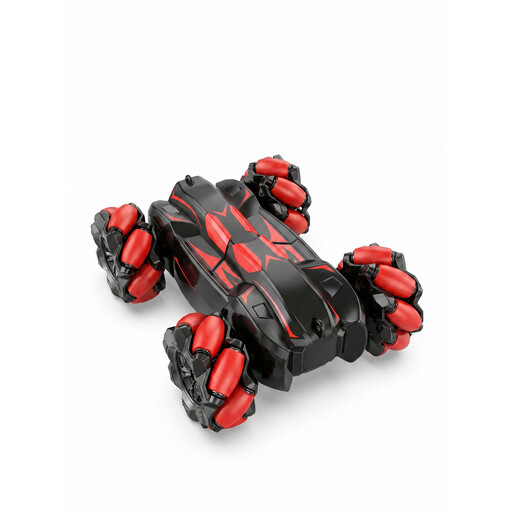
Why this product fits the profile: This drift RC car is aimed at users who want to try sideways driving, flips and 360-degree rotation. The product description mentions 4WD, two control modes, LED wheels and use on different surfaces.
The specific driving manoeuvres and control modes are clearly described. Before buying, consider available space, charging accessories and supervision.
4WD Mecanum wheels, sideways drifting, 360-degree rotation and dual control modes.
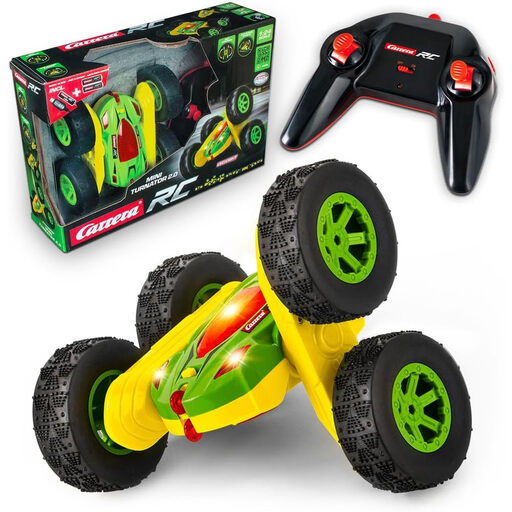
Why this product fits the profile: According to the product information, this remote-controlled stunt car is suitable for children aged six and over. It offers flip functions, LED lights and a top speed of up to 6 km/h.
Age recommendation, speed, battery type and what’s included are all stated. Charging should be done under adult supervision.
360-degree flip function, LED lights, 2.4 GHz remote control and rechargeable battery included.
We’ve put together a complete, regularly updated list of products that fully meet these strict selection criteria and the safety regulations in force across the EU.
The size depends on the original vehicle. A model in 1:36 scale is 36 times smaller than the real vehicle. A compact sports car will therefore usually be shorter than a bus model like the Volkswagen T1.
It’s not possible to give a reliable general lifespan. It depends on the surface, frequency of use, impacts and how the moving parts are treated. For longer-lasting use, store the model in a dry place, don’t pull it by the doors or wing mirrors, and dust it regularly.
With an RC car, you may have costs for electricity, replacement batteries or disposable batteries. According to the product description, the Carrera model includes a rechargeable lithium-ion battery. The F1 remote-controlled car for toddlers, on the other hand, requires three AA batteries, which are not included. Check the product page before buying for details on the battery, charger and spare parts.