
Lieferung heute & morgen

Qualitätsgarantie

Willkommens-Angebote freischalten: KOSTENLOSE Lieferung | Bis zu 80 % RABATT | Kostenlose 30-Tage-JoyPlus-Testphase
App herunterladen
Occasional heartburn, bloating, a feeling of fullness, or sensitivity to dairy products can affect everyday life. However, when looking for suitable digestive aids, the range of options can quickly become confusing: dietary supplements, herbal digestive remedies, medical devices, and enzyme preparations are often marketed side by side, even though they serve different purposes.
As a Joybuy Product Recommendation Officer, I filter the most important product information and explain what adults and adolescents aged 12 and over should consider when shopping. This selection is not a substitute for medical advice. Severe, recurring, or persistent symptoms should be medically evaluated.
Artichoke, peppermint, fennel, caraway, and ginger are often offered as natural digestive support. However, this alone does not indicate whether a product is suitable for an individual’s needs in cases of heartburn, bloating, or constipation. The key factors are purpose, dosage, ingredient list, and dosage form.
If you have known intolerances, you should also check excipients such as sorbitol, sweeteners, and essential oils.
Figures such as “60,000 mg fresh artichoke” or “24,000 FCC lactase” are only meaningful in the context of the recommended daily dose. With artichoke preparations, for example, the figure may refer to a fresh-plant equivalent, while the actual extract content is listed at a considerably lower amount.
For lactase tablets, the FCC figure describes enzyme activity. It is not a general quality indicator and must be appropriate for your personal lactose tolerance and the amount of dairy products consumed.
A dietary supplement for digestion is intended to provide additional nutritional support and is not designed to diagnose or treat diseases. According to the product information, medical devices such as certain heartburn remedies work physically, for example by forming a protective barrier or binding stomach acid.
Even non-prescription products may include information on age restrictions, interactions, and recommended duration of use. This information on the packaging and package leaflet should be checked before purchase and use.
A pack containing 20 capsules is not automatically better value than one containing 40 tablets. Compare the amount per serving, the recommended frequency of use, and how long the product will last. For probiotics or fibre taken daily, long-term tolerance is also an important consideration.
For products intended for adolescents aged 12 and over, the age specification must be explicitly stated on the individual product. Adult dosage information should not be applied independently to younger people.
Look for claims such as gluten-free, lactose-free, or vegan, but always check the current packaging. Psyllium husks and other swelling fibres should be taken at an interval from medicines, as they may affect absorption. Alginates and calcium or magnesium compounds may also be relevant for people following specific dietary regimens or with particular health requirements.
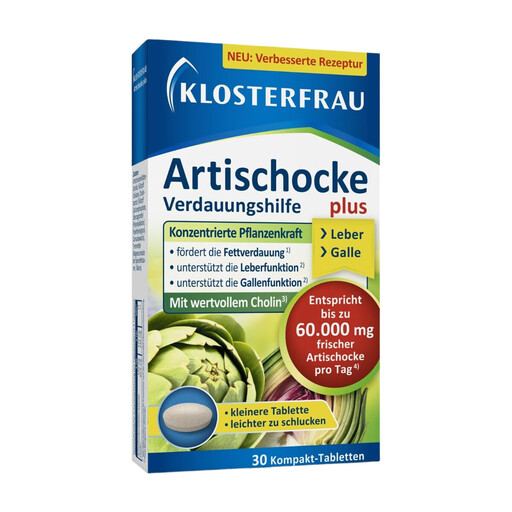
Why this profile is a good fit: Suitable for people looking for a compact herbal digestive aid for occasional, indulgent meals.
The product information states both the extract amount and the fresh-plant equivalent, making the composition easier to assess.
According to the product description, vegan, gluten-free, lactose-free, and free from allergens subject to mandatory declaration.
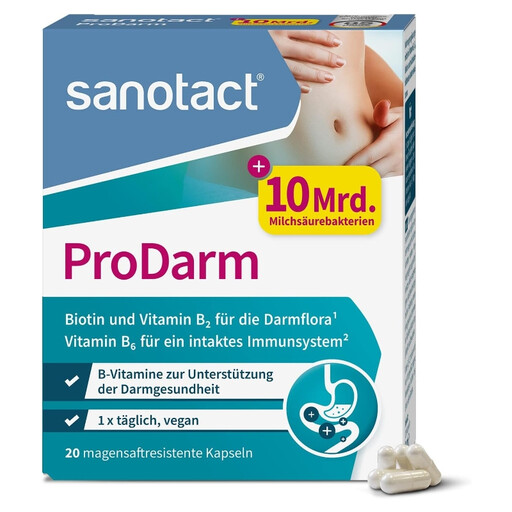
Why this profile is a good fit: For adults who want to compare probiotics containing multiple cultures and added vitamins.
The product information identifies the three bacterial strains and specifies 10 billion live cultures per capsule.
According to the product description, gastro-resistant capsules that are vegan, gluten-free, and lactose-free.
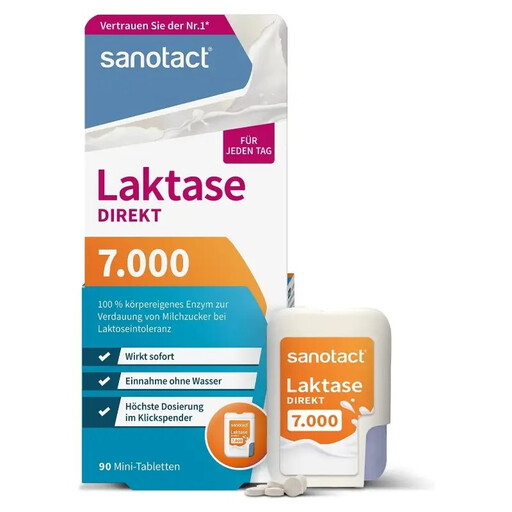
Why this profile is a good fit: Convenient for travel or for meals when water is not available for swallowing tablets.
The FCC activity per mini tablet is clearly specified. According to the product information, the amount can be adjusted to individual tolerance.
90 mini tablets, click dispenser, and 7,000 FCC units per tablet; taken before or during meals containing lactose.
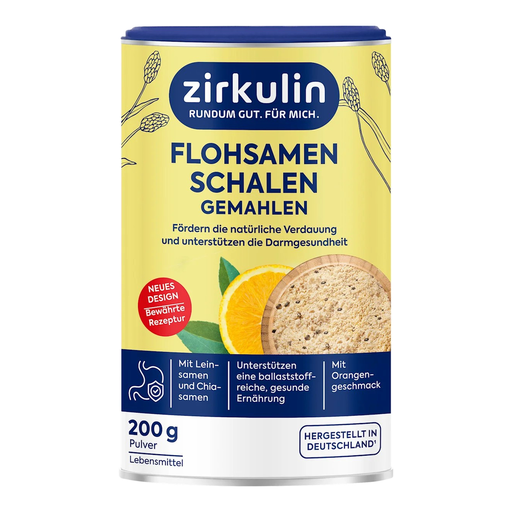
Why this profile is a good fit: For people who want to incorporate fibre powder into their daily diet.
The preparation instructions specify precise quantities and additional fluid. This makes clear that swelling fibres should not be used without sufficient fluid intake.
With psyllium husks, linseed, chia seeds, and inulin; according to the product description, 68 g of fibre per 100 g.
The Gastro category offers a broader selection of products for different digestive complaints and dietary needs.
According to product information, products containing alginates and carbonates are often used as medical devices to form a physical protective barrier and bind acid. Pay attention to the dosage, any stated sodium or calcium content, and the recommended interval from other oral medicines. If heartburn occurs regularly or persists longer than specified, it should be medically evaluated.
Psyllium husks or psyllium husk powder should be mixed with or taken alongside sufficient fluid. The exact amount depends on the label instructions. If you have difficulty swallowing or a known narrowing in the gastrointestinal tract, seek medical advice before use. An interval from medicines may be necessary.
Lactase tablets are intended for people who digest lactose with varying degrees of efficiency. The required enzyme quantity depends, among other factors, on the food consumed and individual tolerance. Persistent symptoms, an unclear diagnosis, or an allergy to milk components should be medically investigated.