If you plan your snack portions
You don’t want to rule out digestive biscuits altogether, but you do want to decide how many to eat before you tuck in. The energy per 100 g and the weight of your portion matter more than the pack size alone.


When buying digestive biscuits for weight management, the energy per 100 g and the portion you actually plan to eat matter more than the product name. If you enjoy classic Digestives, you can include a planned portion as a snack. Compare wholemeal alternatives using their nutrition information, and remember that a gluten-free label alone tells you nothing about the energy content.
You don’t want to rule out digestive biscuits altogether, but you do want to decide how many to eat before you tuck in. The energy per 100 g and the weight of your portion matter more than the pack size alone.
You want to check the ‘of which sugars’ figure and the ingredients list on similar biscuits, rather than assuming that phrases such as ‘less sweet’ tell you how much sugar they contain. The Berlin Consumer Advice Centre points out that descriptions of taste like these don’t reveal the sugar content.
For you, checking that a product is labelled gluten-free comes before comparing its nutritional values. After that, the energy, fat and sugar content, along with the other ingredients and allergen information on the current pack, are still relevant.
Start by comparing the energy per 100 g with the amount you actually plan to eat. Then use the sugar content, wholemeal ingredients or any required gluten-free labelling to narrow down your choice.
| Criterion | What to check | Who it matters to |
|---|---|---|
| Energy and portion size | Compare kcal per 100 g and decide how much your snack portion will weigh. The serving size shown on the pack may not match the amount you plan to eat. | If I include biscuits in my snack plan, I want to know how much energy the amount I actually eat contains. Around 42% of consumers put portion planning first. |
| Sugar and ingredients | Check ‘of which sugars’ per 100 g and look for sugar and syrups in the ingredients list. | When biscuits look similar, I want to compare their sugar content rather than rely on their taste or name. Around 33% of consumers prioritise the sugar content. |
| Wholemeal ingredients and fibre | Check wholemeal ingredients and fibre alongside energy and sugar. Compare plain biscuits separately from varieties coated in chocolate. | If I’m specifically looking for a wholemeal biscuit, I want to understand its recipe without assuming it has a lower energy content. For around 17% of consumers, comparing the recipe comes first. |
| Gluten-free suitability | If you need to avoid gluten, look for gluten-free labelling and check the ingredients and allergen information on the current pack. | If I need to avoid gluten, I first need a suitably labelled variety; I check the other ingredients separately. This suitability takes priority for around 8% of consumers. |
The name and the proportion of wholemeal ingredients don’t replace checking the nutrition information. For example, the Leibniz Wholemeal Biscuit listed by REWE contains 447 kcal per 100 g.
Compare energy, sugar, fat and fibre per 100 g, then take your planned portion into account.
A coating changes the recipe, so differences between two biscuits can’t be attributed to the digestive base biscuit alone.
Start by comparing similar varieties, and check the nutrition information for the specific biscuit if it has a coating.
The Schär Landtaler Digestive biscuits listed by REWE are labelled gluten-free and contain 486 kcal and 24 g of fat per 100 g. A gluten-free label also doesn’t answer every question about other ingredients or allergens.
Check that the product has the labelling you need, then read the nutrition information and the ingredients and allergen details for the specific pack.
The image may not match the pack you receive. The information on the current packaging is what matters when choosing a product.
Before eating, check the ingredients, allergens, pack size and nutrition information in particular.
The Digestive The Original biscuits listed by REWE are classic wheat biscuits with wholemeal ingredients.
Landtaler Digestive is listed by REWE as a gluten-free digestive biscuit.
A German retailer lists Gullón Digestive as a gluten-free biscuit variety.
The Leibniz Wholemeal Biscuit listed by REWE is an alternative for comparison, not a digestive biscuit.
These biscuits are worth comparing with Digestives for their recipes, but they aren’t digestive biscuits themselves. When planning your snack, check the nutrition information and the portion you want to eat on the relevant pack.
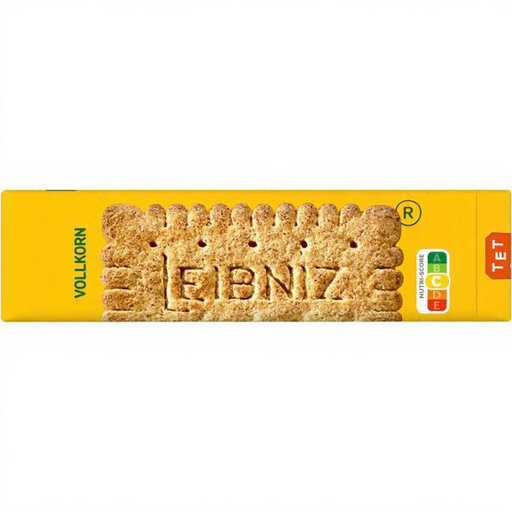 Image unavailable
A wholemeal biscuit alternative if you’d like to compare its recipe with classic Digestives; it isn’t a digestive biscuit. The pack contains 200 g.
For your planned portion, check the nutrition information and the ingredients and allergen details on the pack.
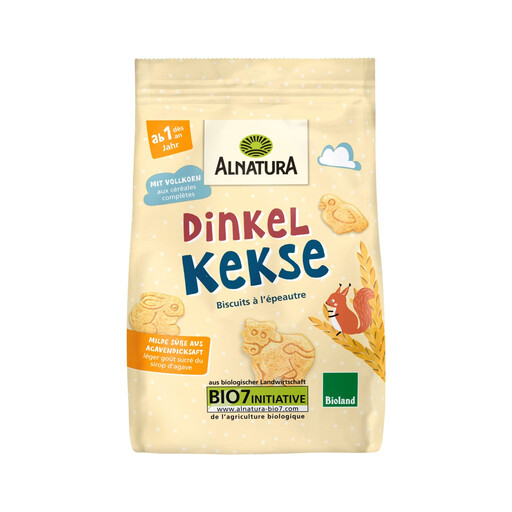 Image unavailable
These spelt biscuits are labelled as suitable from one year of age and aren’t digestive biscuits. If you compare them as a wholemeal alternative, bear in mind who the product is intended for and check the information on the 125 g pack.
For a planned snack portion, the nutrition information and the weight of the amount you actually choose are particularly relevant.
No. The name ‘digestive’ doesn’t tell you how much energy your portion contains. Compare the kcal per 100 g and decide how much you want to eat; sugar and fat can help you compare similar varieties more closely.
Look for gluten-free labelling on the specific pack and check its ingredients and allergen information too. Compare energy, fat and sugar separately, as gluten-free doesn’t automatically mean lower in energy.
No. As the Berlin Consumer Advice Centre explains, ‘less sweet’ doesn’t tell you the sugar content. Instead, compare ‘of which sugars’ per 100 g and check the ingredients list if needed. The energy content is also important when planning your portion.