What should you look for when buying?
First decide whether you want a classic Digestive, an organic biscuit or butter shortbread. Then check the labelling on the specific pack, especially if ingredients or allergens limit your choice.
| What to consider |
What to check |
Who it matters to |
| Organic certification |
Check the EU organic logo, inspection body code and origin information on the pack. The Federal Ministry of Agriculture, Food and Regional Identity explains these details of organic labelling. |
When shopping at an organic shop, I want to be able to identify organic products by their packaging, rather than assuming they’re organic because of where they’re stocked. Around 29% of consumers put this check first. |
| Digestive or shortbread |
Check the ingredients list and intended use for the specific variety: McVitie’s lists wheat flour and wholemeal wheat flour in its Digestives Original, while Walker’s classic shortbread recipe includes butter, among other ingredients. |
If I want a biscuit to enjoy with tea or use as a biscuit base, I’ll look specifically for a Digestive rather than a butter shortbread recipe. This is the main consideration for around 21% of consumers. |
| Gluten and other allergens |
Read the explicit labelling, ingredients and may-contain statements on the pack you choose. The type of biscuit alone doesn’t tell you which allergens it contains. |
If I need to avoid certain ingredients, clear, suitable labelling takes priority over an organic logo or biscuit style. Around 21% of consumers put this requirement first. |
| Ingredients and nutritional information |
Compare the ingredients in order and the nutritional information per 100 g, especially sugar and fibre. The Consumer Advice Centre recommends using the figures given in the nutrition declaration for comparison. |
If I’m comparing wholegrains, seeds or sugar, I want to know what’s in the specific recipe rather than relying on the product name. This is the main concern for around 29% of consumers. |
Notable brands and product ranges
These differences apply to the specific biscuits mentioned, not necessarily to a brand’s entire range.
McVitie’s
Digestives Original is a classic-style Digestive made with wheat flour and, according to McVitie’s, 16% wholemeal wheat flour.
- McVitie’s describes the biscuit as one to enjoy with tea or coffee, or use as the base for a biscuit crust.
- It contains wheat and, according to the manufacturer, may contain traces of milk. The name ‘Digestive’ isn’t proof of organic certification.
Bohlsener Mühle
Vital Keks is listed as a Bioland product made with wholegrain oats and seeds.
- The product information lists 39% wholegrain oat flakes and 14% wholegrain oat flour in this variety.
- Vital Keks isn’t a classically named Digestive and, according to the product information, contains gluten.
Sommer Backkunst
Sommer Backkunst describes its spelt muesli biscuits with hazelnuts, oats and fruit as a Bioland product that is vegan and has no added sugar.
- This variety has a different mix of ingredients from a classic Digestive.
- Spelt is a type of wheat; the biscuits contain hazelnuts and, according to the manufacturer, may contain traces of other nuts and sesame.
Schär
Schär describes its Digestive Landtaler as gluten-free, wheat-free and lactose-free.
- The explicit labelling makes this variety worth considering if you’re looking for a gluten-free Digestive.
- The product information lists soya and says it may contain traces of lupin and egg. Gluten-free doesn’t automatically mean organic.
Alnatura
Alnatura describes its oat and spelt biscuits as vegan organic biscuits made with wholegrain cereals to Bioland standards.
- This variety is an option if you’re looking for an organic wholegrain biscuit rather than a classic Digestive.
- The oat and spelt biscuits mentioned aren’t classic Digestives. Check the pack of your chosen variety for allergen information.
Walker’s
For the classic shortbread variety described, Walker’s lists wheat flour, butter, sugar and salt.
- These ingredients make it a good fit if you’re specifically looking for butter shortbread rather than a Digestive.
- The variety described contains wheat and milk; Walker’s says it may also contain traces of nuts. The product information doesn’t confirm organic status.
Organic spelt butter biscuits at Joybuy
This selection features an organic spelt butter biscuit as an alternative for your biscuit shop. It isn’t described as a classic Digestive or as shortbread, so pay particular attention to the ingredients and allergen information on the specific pack when deciding.
 No image available
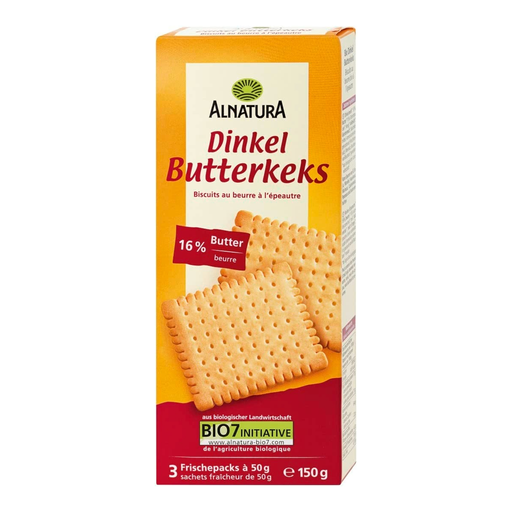
Alnatura organic spelt butter biscuits, 150 g
A good choice if you’re looking for an organic spelt butter biscuit rather than a classically named Digestive. The pack contains 150 g. If you have allergen requirements, check the ingredients and information on the specific packaging.
View at Joybuy
Frequently asked questions
How can I identify a prepacked organic biscuit?
According to the Consumer Advice Centre, the EU organic logo is required on prepacked organic foods produced in the EU. The Federal Ministry of Agriculture, Food and Regional Identity also lists the organic inspection body code and an indication of where the agricultural ingredients come from. Different conditions for using the logo may apply to unpackaged or imported products.
Is a Digestive automatically organic or wholegrain?
No. The name ‘Digestive’ doesn’t indicate organic status or a particular wholegrain content. McVitie’s lists wheat flour and 16% wholemeal wheat flour in its Digestives Original; check the labelling on the specific variety if you’re looking for an organic option.
Are spelt or oat biscuits a gluten-free alternative?
Not just because they’re made with those ingredients: spelt is a type of wheat, and, according to the product information, Bohlsener Mühle Vital Keks contains gluten. If you need a gluten-free biscuit, look for explicit gluten-free labelling on the pack you choose and check for other allergens and may-contain information.
Does ‘no added sugar’ also mean ‘sugar-free’?
No. A claim about added sugar doesn’t tell you how much sugar the finished biscuit contains overall. Compare the nutritional information per 100 g; biscuits containing fruit can still contain sugar.
What does the best-before date on biscuits tell me?
As Lebensmittelklarheit explains, it indicates the date until which an unopened food, stored correctly, will retain its key quality characteristics. Follow the storage and use-by instructions on the relevant pack once it’s opened.


