
Lieferung heute & morgen

Qualitätsgarantie

Willkommens-Angebote freischalten: KOSTENLOSE Lieferung | Bis zu 80 % RABATT | Kostenlose 30-Tage-JoyPlus-Testphase
App herunterladen
A digital bathroom scale should be quick, easy to understand and reliable to use in everyday life. Yet certain marketing claims can often lead to the wrong purchase. A long list of body measurements doesn’t automatically mean every feature will be useful for you. A glass platform, app connectivity or particularly fine increments alone also say little about how practical a scale will be in your bathroom.
Before you buy, it’s worth checking the actual technical specifications. Key considerations include the maximum weight capacity, how easy the display is to read, where you’ll place the scale, and whether you only want to track your weight or also record body composition.
A body fat scale or digital body composition scale can calculate values such as body fat percentage, water percentage, muscle mass, bone mass or BMI, depending on the model. These are generally estimates based on bioelectrical impedance analysis. Results can vary depending on the time of day, hydration levels, skin contact and posture.
These figures can be useful for tracking your progress under consistent conditions, but they don’t replace a medical examination. Anyone with a pacemaker or other electronic implant should follow the manufacturer’s guidance and, where necessary, avoid using the body composition function.
Figures such as 0.05 kg or 100 g describe the display resolution. They don’t automatically mean that every reading will be accurate to within that amount under all conditions. Carpets, uneven floors, wet feet or moving the scale can all affect the result.
For daily weight tracking, placing the scale on a firm, hard and level surface matters more than having the smallest possible display increment.
A glass bathroom scale can suit many contemporary bathrooms. However, glass can become slippery when wet. Keep the surface and feet dry, and don’t use the scale if it’s cracked or chipped. You should also make sure its capacity leaves enough headroom for your weight. A bathroom scale with a 150 kg capacity may suit some households, while those weighing more may need a model with a capacity of 180 kg, 200 kg or 250 kg.
First, check the maximum weight capacity. It shouldn’t only just match your current weight. A larger platform can also make the scale more comfortable to stand on. For example, the Medisana PS 470 XL has a capacity of up to 250 kg and a larger platform than many compact models.
Dimensions matter too. An ultra-slim bathroom scale is easy to store under a piece of furniture, while a larger model needs more room. What matters most is that it stands securely on tiles, wood or another hard, level surface.
A large LCD or TFT display is easier to read, especially if you’re not standing directly above the scale. A step-on function switches the scale on automatically when you step onto it. An auto-off function, low-battery indicator and overload warning are also useful.
If you need readings in different systems, look for switchable units such as kg, lb and st. A mechanical bathroom scale doesn’t need batteries, but it has an analogue display and often measures in larger increments.
A Bluetooth bathroom scale usually sends data to a nearby smartphone. Depending on the model, a Wi-Fi body fat scale can also sync readings without you needing to open your smartphone right away. Before you buy, check:
For body composition scales, try to take measurements under comparable conditions. The app is for recording and tracking your progress, not for medical diagnosis.
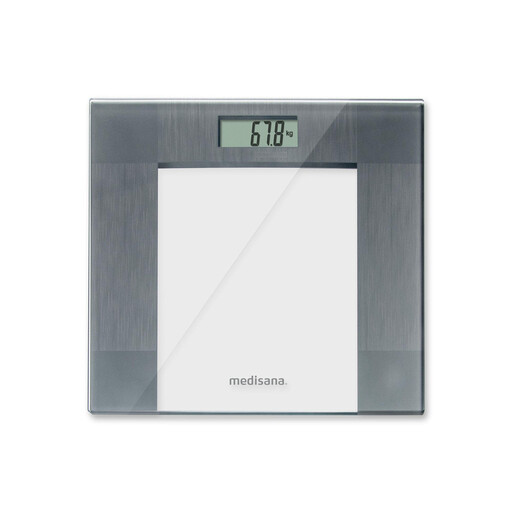
Why it suits this profile: For households that want to keep track of their weight without an app or body composition analysis. At just 1.7 cm high, this scale is particularly slim and easy to store away.
The specifications clearly state a 150 kg capacity, 100 g increments, step-on activation and automatic shut-off after 12 seconds.
6 mm safety glass, a large LCD display and the option to switch between kg, lb and st.
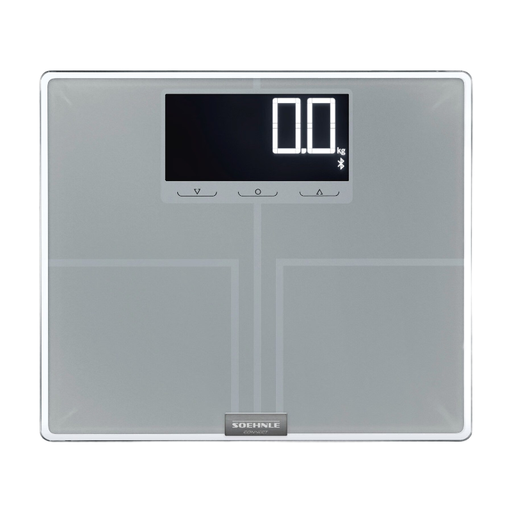
Why it suits this profile: For users who want to track body measurements via Bluetooth and need a capacity of up to 200 kg. Automatic user recognition supports up to eight users.
The features are clearly specified: Bluetooth transfer to the MyScale app, 100 g increments and a separate Athlete mode.
Backlit large display, safety glass platform, Bluetooth and progress summaries in the app.
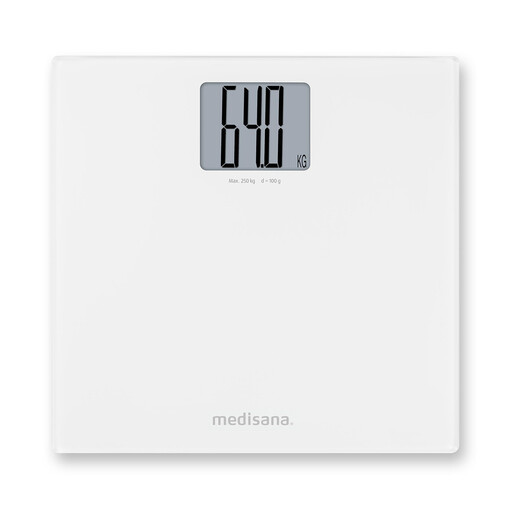
Why it suits this profile: For those who need a higher weight capacity and a particularly easy-to-read display. The maximum capacity is 250 kg.
The weight limit is clearly stated, and the scale also gives overload and low-battery warnings.
71 mm-high LCD display, step-on activation and 100 g increments.

Why it suits this profile: For households that want to save readings in an app via Wi-Fi and Bluetooth. According to the product specifications, the scale supports weights of up to 180 kg and multiple user profiles.
Connectivity is clearly described as Wi-Fi and Bluetooth. Body composition readings should be treated as reference measurements, not as a diagnosis.
13 body measurements, app synchronisation and solar-assisted power.
We’ve put together a complete, regularly updated list of products that meet these strict selection criteria and fully comply with the safety regulations in force in the EU.
If you’d prefer a battery-free option, consider a mechanical bathroom scale such as the medisana PSD. It has an analogue display, measures in 500 g increments and doesn’t need batteries. However, it doesn’t have app features or extra digital measurements.
Depending on the model, the display resolution may be 100 g or 50 g, for example. However, the actual reading also depends on the surface, your posture and how you use the scale. For comparable readings over time, always keep the scale in the same fixed position.
Its lifespan depends on the batteries, sensors, glass platform and how it’s handled. Keeping it dry, stepping onto it carefully and staying within its maximum weight capacity can help it last longer. Don’t continue using the scale if it’s cracked, gives error messages or produces unstable readings.
With basic models, your main ongoing cost is replacement batteries. Smart scales may also use a charging cable or a rechargeable battery. If you’re considering an app-connected scale, check whether its core features are available without a paid subscription.