
Lieferung heute & morgen

Qualitätsgarantie

Willkommens-Angebote freischalten: KOSTENLOSE Lieferung | Bis zu 80 % RABATT | Kostenlose 30-Tage-JoyPlus-Testphase
App herunterladen
A digital bathroom scale can do much more than just show your body weight. Depending on the model, you may also get readings for BMI, body fat, water percentage or muscle mass. However, when it comes to making a purchase, it’s not the longest list of features that matters, but whether the measurement range, operation, weight capacity and placement suit your everyday life.
Many poor purchases come down to three typical pitfalls:
The maximum load capacity should suit the heaviest person in your household. Models with a bathroom scale up to 180 kg are suitable for many families. If you need extra headroom, you can also find a bathroom scale up to 200 kg, such as the Beurer BF400.
The standing area is equally important. Compact models with a side length of around 26 to 28 cm are easy to store. A larger platform can offer more space when stepping on. With glass surfaces, both the feet and the surface must be kept dry.
Specifications such as 100 g or 0.05 kg usually describe the display increments. They do not automatically mean that every measurement deviates from your actual body weight by exactly that amount. For reliable comparisons, you should:
A precise bathroom scale therefore depends not only on the sensor specification, but also on correct usage.
A simple digital scale measures weight and displays it directly on an LCD or LED screen. That’s enough for users who only want to track their weight changes.
A body fat scale or body analysis scale often works using bioelectrical impedance analysis. Electrodes are used to calculate additional values. Fluctuations due to hydration levels, time of day or skin contact are possible. The results are not intended for medical diagnosis.
If you want to store data over the long term, look for Bluetooth, app support and user profiles. A body analysis scale for multiple users is especially practical for families. Even so, the automatic user recognition should be checked before regular use.
The following models have been assigned to different everyday situations based on objectively stated product data.
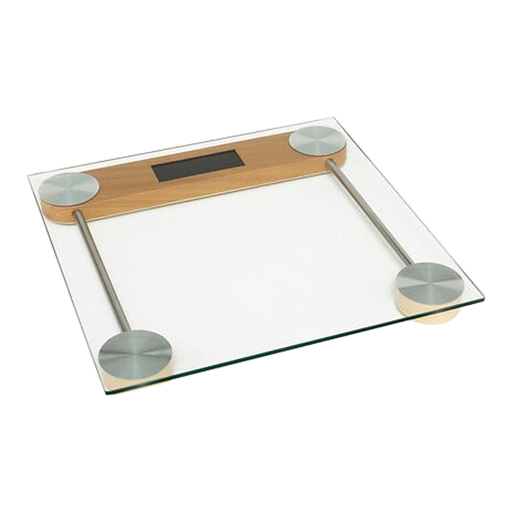
Why this product fits the profile: A straightforward digital bathroom scale for users who only want to measure weight. It requires two AAA batteries and stores data for one user.
The product data explicitly mentions no body analysis or device connection. This avoids any expectations of unused app features.
28 × 28 cm, glass, stainless steel and ABS components, digital weight display and a maximum load of 180 kg.
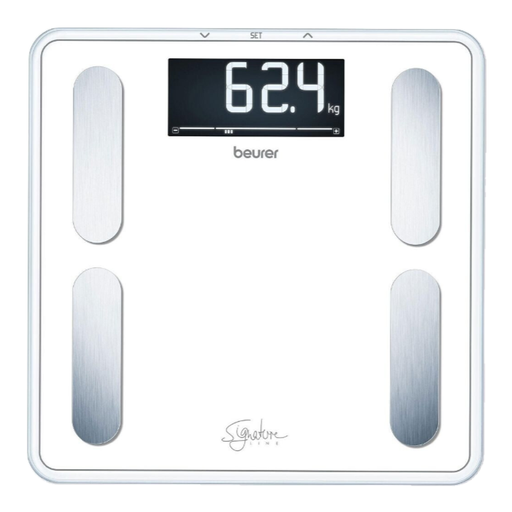
Why this product fits the profile: Suitable for users who want to read weight, BMI and several body metrics on a large display without an app.
The ten user profiles and directly readable values reduce reliance on an additional app.
Body fat, body water, muscle percentage, bone mass and BMI; XL LCD display, 100 g increments and a maximum load of 200 kg.

Why this product fits the profile: For users who regularly capture comprehensive body data and want to store it via Bluetooth on iOS or Android devices.
The extendable handle and eight sensors are clearly stated. Buyers can plan for the extended measurement setup accordingly.
More than 20 stated body parameters, Bluetooth, VitaDock+ and VitaDock Online, and a maximum load of 180 kg.

Why this product fits the profile: Ideal for households that want to automatically transfer measurements via Wi-Fi and Bluetooth and record them in an app.
The connectivity options and compatibility with several health platforms are clearly stated before purchase.
13 stated measurements, Wi-Fi and Bluetooth connectivity, automatic user recognition and solar-assisted power supply; maximum load 180 kg.
We have put together a complete, regularly updated list of products that fully meet these strict selection criteria and the safety regulations in force in the EU.
For a digital bathroom scale, a fixed location is recommended, such as on tiles or another level hard floor. After switching on or stepping on, you should stand still. With a body analysis scale, your feet usually need to be dry and bare so that the electrodes can make contact.
The body analysis function should not be confused with a medical examination. People with implanted medical devices should follow the manufacturer’s instructions and, if necessary, seek medical advice before use. A scale does not replace a doctor’s diagnosis.
That depends on your goal. For tracking progress, one measurement at regular intervals is often enough. Consistent conditions in terms of time of day, clothing and location are important. Individual fluctuations should not be overinterpreted.
Causes can include a soft or uneven surface, a change in posture, different times of day, or the scale not being re-zeroed. Place the scale on a hard floor and measure under as consistent conditions as possible.
The scale itself requires batteries or a rechargeable battery, depending on the model. The app may require a mobile phone, Bluetooth or Wi-Fi. Whether a user account, cloud storage or additional paid features are involved should be checked in the respective product and privacy information before purchase.