
Lieferung heute & morgen

Qualitätsgarantie

Willkommens-Angebote freischalten: KOSTENLOSE Lieferung | Bis zu 80 % RABATT | Kostenlose 30-Tage-JoyPlus-Testphase
App herunterladen
A digital camera for beginners should be easy to use, take good photos and ideally work well in a range of situations. A camera with 64MP, 80MP, 4K or 5K video may sound appealing at first to teenagers, students, parents, travellers and aspiring vloggers. In practice, though, individual figures tell you little about actual image quality or how well a camera performs day to day.
It’s easy to pay for features you’ll hardly ever use if you don’t know how to interpret the marketing claims. The points below will help you choose a suitable compact camera and avoid common buying mistakes.
Figures such as 64MP or 80MP refer to the potential resolution of an image file. They don’t automatically tell you how detailed, colour-accurate or free from noise a photo will be. Factors such as sensor size, lens, lighting conditions and image processing all play a part.
High resolution can be useful for everyday snaps, travel and social media. However, you should also check whether the camera has reliable autofocus, a suitable focal length and enough storage.
Some models are described in their product name as a digital camera with 4K/5K video. Even so, you should check the supported resolution, frame rate and actual recording quality in the technical specifications. For example, the Songdian Pocket Camera’s product name mentions 4K, while its description lists a video resolution of 1920 × 1080P.
For video, 25 or 30 frames per second, audio recording, file format and storage requirements also matter. A 5K mode can create large files that take longer to process on older smartphones or laptops.
Digital zoom simply enlarges part of an image, which can make details look less clear. Optical zoom, on the other hand, changes the magnification through the lens. So if you’re choosing a travel camera, taking photos of wildlife or capturing performers on stage, look out for the words “optical zoom”.
It’s also worth checking what “18x zoom” actually means. Is it optical zoom, digital zoom or a combination of the two?
For everyday photos, a camera with clearly stated resolution is usually enough. If you’re looking for a camera for YouTube or a vlogging camera, you should also check:
Higher resolution means larger files. A memory card with enough capacity and a suitable speed class is therefore an important part of your set-up.
Reliable autofocus makes it easier to get started, especially when photographing people on the move or subjects at different distances. For children, teenagers and spontaneous travel photos, a simple point-and-shoot camera is often more practical than one with lots of manual settings.
Image stabilisation can help reduce camera shake when recording on the move. It’s worth distinguishing between optical and electronic stabilisation. Electronic systems such as EIS use digital processing to steady the image, but may crop it slightly in the process.
A flip-out or easy-to-see screen can be useful when filming. A dual camera with a front and rear camera is also worth considering for selfies and vlogging. A touchscreen makes it easier to select subjects, settings and focus areas.
For teenagers and beginners, these features also matter:
Wi-Fi makes file transfer easier, but it doesn’t replace a memory card and can use up more battery power.
The selection below matches models to specific uses. The features listed reflect the available product information. If resolution details conflict, the technical specifications on the relevant product page should take priority.
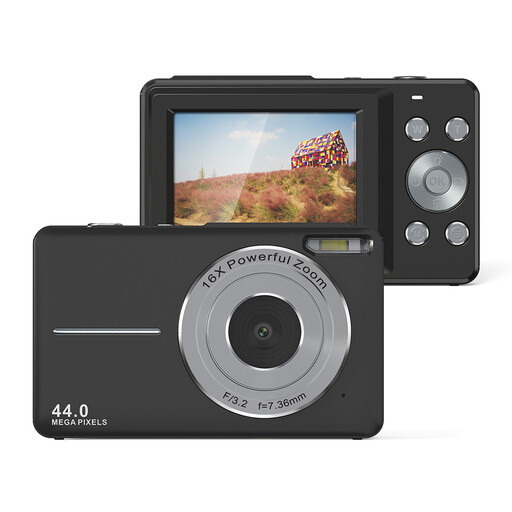
Why this product suits this profile: Its compact design, autofocus and 16x digital zoom make it a good fit for anyone looking for a simple camera for everyday use, school or their first trips.
The description clearly states the video resolution as 1920 × 1080P. This makes it easier to understand the actual specification, rather than judging the camera by the 4K label in its name alone.
Autofocus, webcam function, removable storage and a compact design.
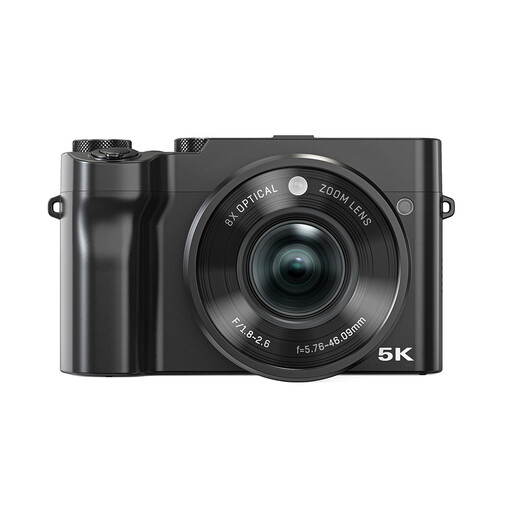
Why this product suits this profile: Its listed features will appeal to buyers who want optical zoom, stabilisation and flexible shooting options in a travel camera.
The specifications distinguish between 8x optical zoom and electronic image stabilisation. Autofocus, a dual camera and Wi-Fi are also listed.
5K/25FPS according to the product information, 64MP, 8x optical zoom, EIS and Wi-Fi connectivity.
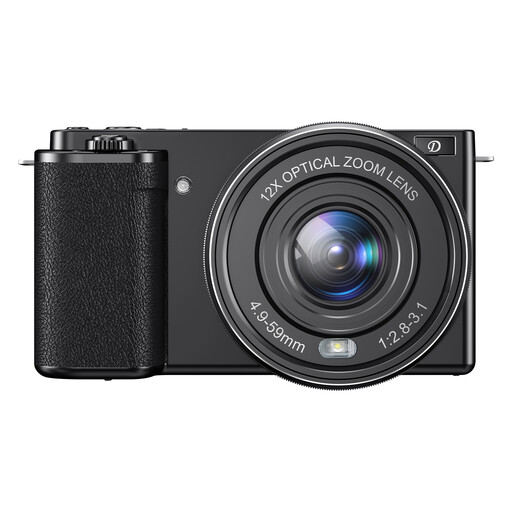
Why this product suits this profile: This model is aimed at aspiring vloggers and anyone looking for a camera for YouTube or travel photos without relying on a smartphone, with Wi-Fi connectivity included.
The 12x optical zoom is different from digital zoom alone. Before buying, check the video resolution, sound quality and battery life to make sure they suit your vlogging plans.
12x optical zoom, 4K in the product name, a 64MP specification and Wi-Fi according to the product description.
The KOMERY G7 5K Digital Camera is described as a portable camera for beginners and teenagers, with 80MP and 18x zoom. It could be a good choice if you’re looking for a camera for teenagers with a distinctive design and a high stated resolution. The pink version is available as the KOMERY G7 5K model.
Another option is the Songdian 5K digital camera with 56MP. According to the product information, it has 10x optical zoom, front and rear cameras, and electronic stabilisation with a built-in 6-axis gyroscope. This can be useful for travel photos and short videos.
Whatever the model, remember that a camera isn’t automatically waterproof. Keep batteries, memory cards and small accessories out of reach of young children. Pointing the camera directly at the sun can damage the lens or sensor.
We’ve put together a complete, regularly updated list of products that meet these strict selection criteria and fully comply with the safety regulations in force in the EU.
Look for a model with an easy-to-understand menu, autofocus, an accessible shutter button, and clearly stated video and storage specifications. Optical zoom can be useful for travel. If you’re vlogging, Wi-Fi, a front camera, a screen and a suitable audio set-up are also worth considering.
As well as the purchase price, you may need to budget for a memory card, spare battery, charger or protective case. If your camera takes high-resolution photos and videos, make sure the memory card is large and fast enough. If you film regularly, you’ll also need more storage and will have to charge the battery more often.
A camera’s lifespan depends on its battery, body, lens, how often it’s used and how it’s stored. Moisture, high temperatures, drops and charging it in unsuitable conditions over a long period can all shorten its useful life. Keeping it somewhere dry and protected, and taking care of the battery and accessories, can help it last longer.