
Lieferung heute & morgen

Qualitätsgarantie

Willkommens-Angebote freischalten: KOSTENLOSE Lieferung | Bis zu 80 % RABATT | Kostenlose 30-Tage-JoyPlus-Testphase
App herunterladen
The dedicated digital camera is experiencing a renaissance. Young creatives and students, in particular, are seeking an alternative to the smartphone to give their photos and videos a unique aesthetic or simply to shoot more intentionally. However, the market for entry-level cameras is filled with tempting offers that often promise more than they deliver. Before you make a decision, it's crucial to understand the typical marketing traps that can lead to disappointment and unnecessary expenses.
This guide will help you objectively evaluate technical specifications and find a digital camera for beginners that truly fits your needs—whether for your next hobby project, as a vlogging camera for beginners, or to achieve the popular look of a retro digital camera.
Choosing a camera can be overwhelming, especially when manufacturers advertise with impressive numbers. Here are three pitfalls to watch out for:
Instead of being swayed by marketing buzzwords, you should focus on the following practical features.
The most important component for image quality is the sensor. A larger sensor can capture more light, leading to better results in low-light conditions and more detailed images overall. The lens also plays a decisive role. A compact camera for beginners with a high-quality glass lens will deliver sharper and clearer images than a model with a simple plastic lens, even if the megapixel count is lower.
A fast and reliable autofocus is essential for beginners. A good camera with autofocus ensures that your subject is sharply captured without you having to make manual adjustments. Modern systems even offer features like Eye Autofocus, which automatically tracks and keeps people or animals in focus—ideal for portraits and dynamic scenes.
If you plan to shoot videos, pay attention to the combination of resolution and frame rate. Full HD (1080p) at 60 frames per second (FPS) is often more practical than 4K or 5K at only 25 or 30 FPS. Electronic image stabilisation (EIS), often supported by a gyro sensor, is crucial for smoothing out footage filmed while walking or handheld. This is a must-have for any vlogging camera for beginners.
Here are some recommendations tailored to the different needs and budgets of beginners.
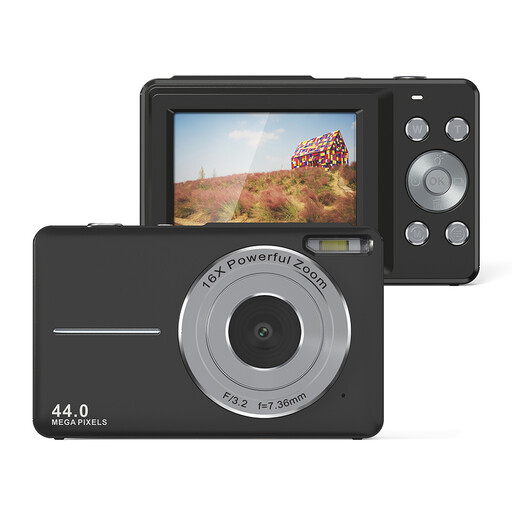
Why This Fits Their Persona: Ideal for anyone looking for an extremely compact and straightforward camera to get started. As a camera for students, it fits in any bag and is an easy option for exploring photography as a hobby without a large investment.
This camera focuses on simplicity and a low price point. It avoids the trap of inflated expectations by offering fundamental features like autofocus and a simple video function in a very portable package.
Advantage: Extremely compact and lightweight. Pros: Autofocus function for easy operation, can also be used as a webcam.
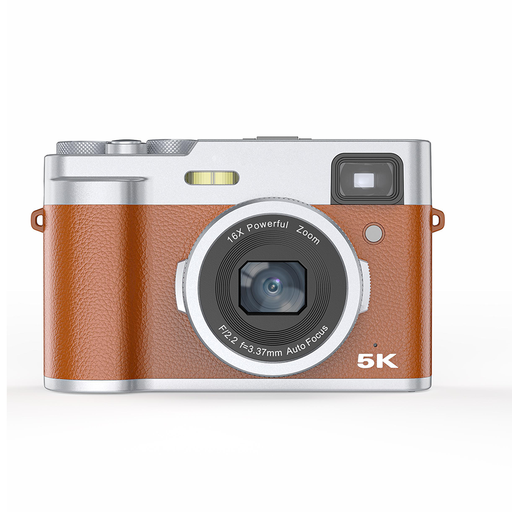
Why This Fits Their Persona: Perfect for users who love the Y2K look and the aesthetic of a digital vintage camera. The design is a statement piece, ideal for creating social media content that stands out from the crowd.
This camera is more than just a pretty case. It avoids the trap of being purely cosmetic by integrating useful features like autofocus, an optical viewfinder, and electronic image stabilisation.
Advantage: Authentic retro design with modern features. Pros: Front and rear cameras, autofocus, support for an external microphone, optical viewfinder.
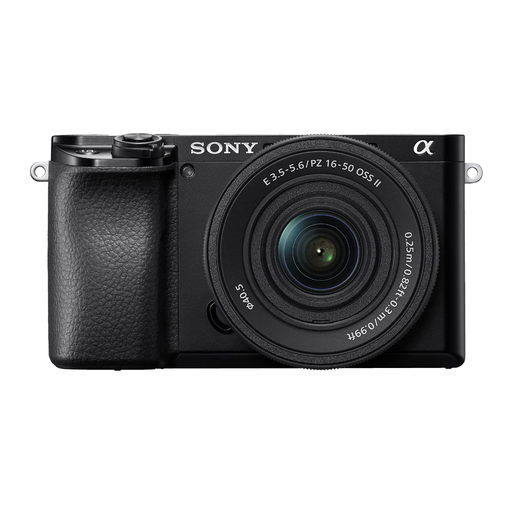
Why This Fits Their Persona: For beginners who are ready to invest in a system that will grow with their skills. It offers image quality that is significantly above that of smartphones and basic compact cameras, and it's an excellent vlogging camera for beginners with professional ambitions.
This camera delivers what it promises. Instead of relying on interpolated megapixels, it features a large APS-C sensor and an autofocus system that, according to Sony, responds in 0.02 seconds. Here, quality isn't a marketing trap—it's the core product.
Advantage: Professional image quality and autofocus performance. Pros: Large APS-C sensor, fast real-time tracking with Eye AF, tilting screen, interchangeable lens system.
Every digital camera needs a memory card. Pay attention not only to the capacity (GB) but also to the speed class. For recording 4K video, a card with a V30 (Video Speed Class 30) rating is recommended to ensure smooth recording without interruptions. Models like the Lexar Professional 1066x SD Card offer the necessary speed and reliability for high-resolution photos and videos.
We have compiled a complete, up-to-date list of products that fully meet these strict selection criteria and German safety regulations.
1. Isn't my smartphone enough? Smartphones are excellent for everyday snapshots. However, a dedicated camera offers advantages like a true optical zoom, significantly better low-light performance due to larger sensors, and the ability to change lenses. It also encourages a more intentional approach to photography and allows for a unique, non-digital look that is prized in a digital vintage camera.
2. What is the difference between optical and digital zoom?Optical zoom is a physical adjustment of the lens to bring the subject closer without any loss of quality. Digital zoom, in contrast, simply enlarges an existing portion of the image, which severely reduces image quality. For sharp images from a distance, optical zoom is always the better choice.
3. What memory card do I need for my first digital camera? For most beginner cameras that shoot photos in JPEG or RAW format and videos in Full HD or 4K, a Class 10, U3, V30 SD card is a solid choice. A capacity of 128 GB, like that offered by the Lexar 128GB Professional 1066x SD Card, is a good starting point, providing enough space for several hundred photos and longer video clips.