
Lieferung heute & morgen

Qualitätsgarantie

Willkommens-Angebote freischalten: KOSTENLOSE Lieferung | Bis zu 80 % RABATT | Kostenlose 30-Tage-JoyPlus-Testphase
App herunterladen
Choosing a new digital camera can be a challenge given the vast array of models and technical terms. From the ultra-compact mini camera that fits in your pocket to the high-performance mirrorless system camera, the market offers the right device for every need. But which features are truly relevant, and which model suits your individual requirements?
This article serves as a guide. We'll introduce different camera types, explain key purchasing criteria, and present a selection of models for various uses—from spontaneous everyday shots and creative photography to vlogging.
To make the right decision, it helps to understand a few basic criteria. The following points will help you define your requirements and narrow down your options.
The most fundamental difference lies in the camera's construction, which determines its flexibility and size.
Resolution is measured in megapixels (MP) and describes the level of detail in a photo. For most applications, such as viewing on screens or printing in standard sizes, 12 to 24 MP is perfectly sufficient. A higher megapixel count is primarily advantageous if you plan to crop images heavily or print in poster sizes.
In terms of video quality, 4K has established itself as the standard for high-quality recording. A 4K camera is particularly interesting for content creators and vloggers, as it delivers crystal-clear video and offers more leeway in post-production. For personal use or social media clips, however, Full HD (1080p) is often completely sufficient.
Modern cameras offer a wealth of features. Three of them are especially practical:
Based on the criteria mentioned, we have selected three different models that cover various user profiles.
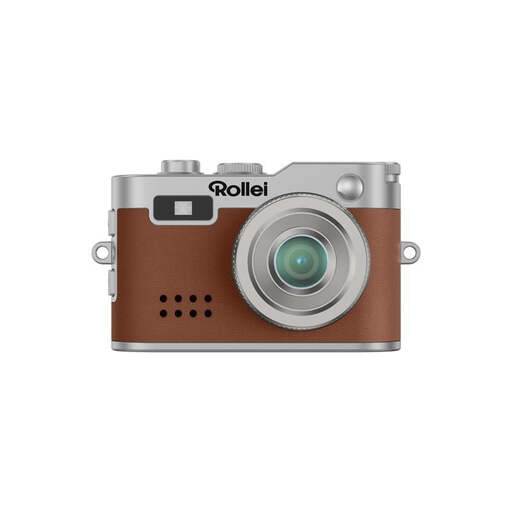
Why It Stands Out This mini camera redefines portability. Weighing just 18 grams and featuring ultra-compact dimensions, it's less of a classic photo camera and more of a constant companion for spontaneous moments. Its 4-in-1 functionality also makes it a versatile tool.
Pros
Who Is It For? The Rollei Mini is ideal for users looking for a discreet and always-ready camera for spontaneous snapshots. It's also suitable as a first camera for children aged 6 and up (with supervision) or as a creative gadget for fans of a retro aesthetic.
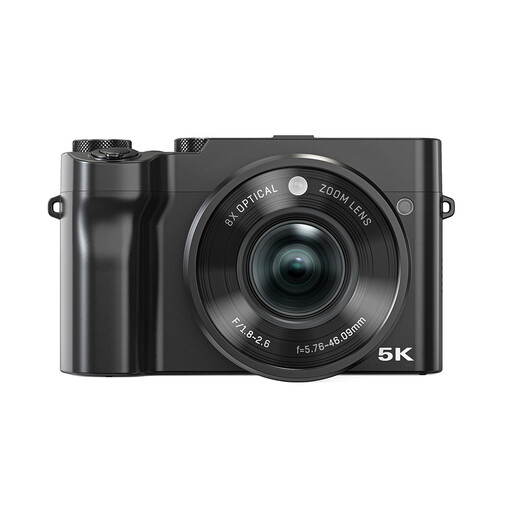
Why It Stands Out This model combines high resolution with a powerful optical zoom and modern features. Its dual-lens system and the ability to record video in 5K resolution make it stand out in its class.
Pros
Who Is It For? This camera is a great choice for photography beginners, students, and young people looking for a versatile all-in-one solution. The powerful zoom makes it appealing for travel and nature photography, while the high resolution and easy operation make it an attractive camera for beginners.
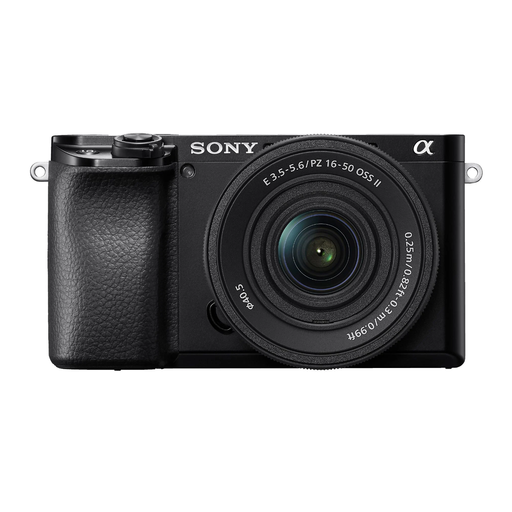
Why It Stands Out The Sony Alpha 6100 packs professional technology into a compact body. Its fast autofocus, large APS-C sensor, and the ability to change lenses make it a powerful tool for ambitious photographers and videographers.
Pros
Who Is It For? The Alpha 6100 is aimed at ambitious beginners, content creators, and hobbyist photographers seeking high image quality and creative flexibility. It's the right choice for anyone looking to dive deeper into photography and invest in an expandable camera system.
The models presented here cover only a small fraction of the market. If you want to compare more cameras or search for models with specific features, you'll find a wider selection in our comprehensive category.
? Discover more models in the Digital Camera category
1. What is the difference between optical and digital zoom? Optical zoom uses the lens to physically magnify the subject, which occurs without any loss of quality. Digital zoom, in contrast, is just a software-based crop of the image that has already been captured. This inevitably leads to a loss of detail and sharpness. When buying a camera, the optical zoom specification should always be the priority.
2. Which camera is suitable for beginners? A good camera for beginners should be easy to use, have helpful automatic modes, and still offer room to learn manually. Models like the Songdian with its touchscreen and clear menus, or an entry-level system camera like the Sony Alpha 6100 with its intelligent autofocus functions, are well-suited for this. Compact cameras are also a popular choice due to their straightforward handling.
3. Do I need a camera with an interchangeable lens? That depends on your ambitions. If you mainly take straightforward photos on holiday or in everyday life, a compact or bridge camera with a fixed lens is often sufficient and more practical. However, if you plan to grow creatively and experiment with different styles like portrait, landscape, or macro photography, a system camera with interchangeable lenses offers the necessary flexibility and typically higher image quality.