
Lieferung heute & morgen

Qualitätsgarantie

Willkommens-Angebote freischalten: KOSTENLOSE Lieferung | Bis zu 80 % RABATT | Kostenlose 30-Tage-JoyPlus-Testphase
App herunterladen
The digital camera market is filled with technical jargon and impressive-sounding numbers. High megapixel counts, extreme zoom factors, and 5K video resolution are often highlighted in promotional materials. However, these specs alone don't guarantee a great camera. Many buyers are left disappointed when their new device fails to deliver the expected quality. This guide clarifies which features truly matter and helps you sidestep common buying traps.
Before you make a decision, it's important to be aware of the most common marketing claims, which often obscure more than they reveal.
To make an informed decision, you should focus on the technical features that fundamentally determine a camera's performance.
The image sensor is the heart of every digital camera. Its size determines how much light it can capture. Larger sensors generally deliver better image quality with less noise, especially in poor lighting conditions. Instead of focusing solely on megapixels, pay attention to the sensor size, often specified in inches (e.g., 1/1.3-inch or 1-inch sensor). This is a key factor for anyone looking for a high-quality compact camera or travel camera.
The lens is crucial for the sharpness and clarity of your shots. When it comes to zoom, optical zoom is the feature that magnifies the subject by physically moving the lens elements. This happens without any loss of quality. Digital zoom, on the other hand, is a software-based crop that degrades the image. A camera with zoom should primarily offer a good optical zoom range for capturing distant subjects.
For video creators, a 4K camera is now the standard. However, the frame rate (fps) is just as important. 24/30 fps is sufficient for cinematic shots, while 60 fps or more enables smooth slow-motion and is ideal for action scenes. Image stabilisation is equally vital. Electronic Image Stabilisation (EIS) can help, but Optical Image Stabilisation (OIS) or a mechanical gimbal often deliver superior results for steady, professional-looking footage. This is especially relevant for an action camera or underwater camera.
Based on the quality criteria mentioned, we have identified several models suitable for specific use cases and user profiles.
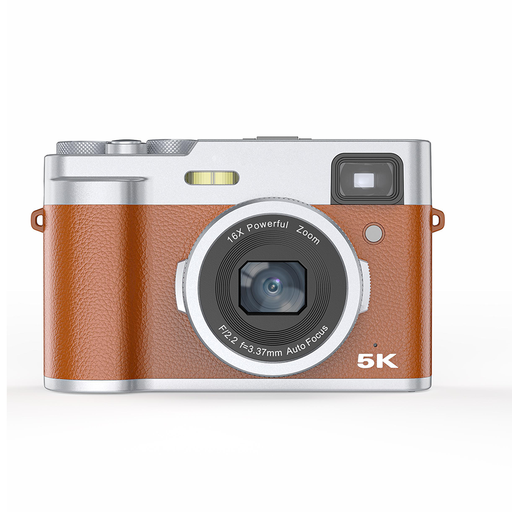
Why it's a good fit: This camera combines a user-friendly retro design with modern features like autofocus and dual cameras. It's an approachable tool for learning the fundamentals of photography, with the optical viewfinder offering a classic shooting experience.
While it advertises a high megapixel count (achieved through interpolation), its value lies in tangible features like front and rear cameras, the optical viewfinder, and a focus assist light. These are practical benefits that go beyond a mere number.
The dual-camera system and optical viewfinder offer flexibility for various shooting scenarios and encourage a classic photography experience.
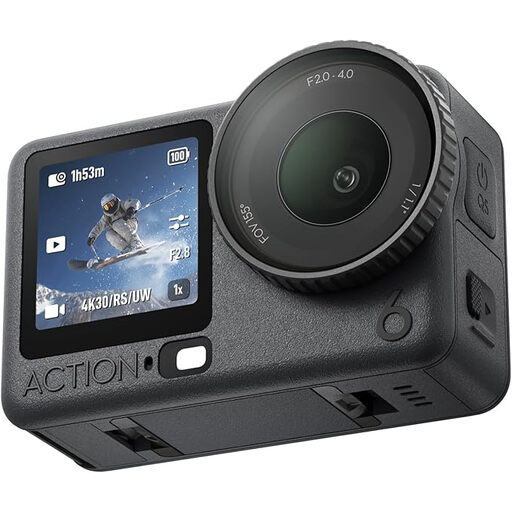
Why it's a good fit: Designed for dynamic environments, this camera is rugged and waterproof down to 20 metres without an additional case. Its long battery life and cold-resistant design make it a reliable companion for sports and adventures.
It delivers high-quality action footage not just through 4K resolution, but with a variable aperture (f/2.0–f/4.0) that adapts to changing light conditions. This is a verifiable technical advantage, not just a marketing claim.
The variable aperture ensures clear shots in any light, and its waterproof capability down to 20 metres without a separate case offers maximum flexibility.
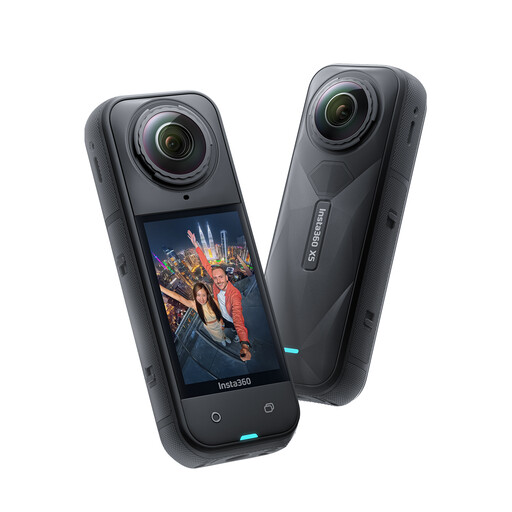
Why it's a good fit: This 360-degree camera offers immense creative freedom. By recording everything around it in 8K, creators can reframe their shots in post-production. The "Invisible Selfie Stick" effect produces stunning third-person perspectives.
Instead of just competing on standard metrics, it offers a unique core feature: 360° video. This is backed by high-end specs like 8K resolution, FlowState Stabilisation, and a Triple AI Chip, creating a truly powerful creative tool.
The 8K 360° video capture allows for post-production reframing and creates cinematic perspectives for vlogs and creative videos with the "Invisible Selfie Stick" effect.
We have compiled a complete, up-to-date list of products that fully meet these strict selection criteria.
Optical zoom uses the camera's lens elements to physically magnify a subject without degrading image quality. Digital zoom is a software-based function that crops and enlarges a portion of the image. This inevitably leads to a loss of sharpness and detail. For high-quality magnification, optical zoom is essential.
Yes, recording high-resolution video like 4K requires a high-speed memory card. Look for cards with a U3 (UHS Speed Class 3) or V30 (Video Speed Class 30) rating. These guarantee a minimum write speed necessary to handle the large data streams of 4K video, preventing stuttering or recording failures.
Image stabilisation is very important for preventing blurry photos and shaky videos, especially when shooting handheld, in low light, or while using the zoom. Electronic Image Stabilisation (EIS) corrects shake using software, while Optical Image Stabilisation (OIS) physically moves lens elements, which is often more effective. For vlogging and action shots, good stabilisation is essential.