
Lieferung heute & morgen

Qualitätsgarantie

Willkommens-Angebote freischalten: KOSTENLOSE Lieferung | Bis zu 80 % RABATT | Kostenlose 30-Tage-JoyPlus-Testphase
App herunterladen
The search for the right digital camera can quickly become overwhelming. Manufacturers advertise ever-higher megapixel counts and a flood of technical specs that are often difficult for beginners to decipher. The result is frequently a poor purchase: cameras that are either too complicated, have follow-up costs that break the budget, or are unsuitable for their intended purpose. This guide will help you see through marketing promises and make an informed decision.
Before we dive into the important technical features, you should be aware of two common marketing traps that often lead to disappointment.
To make the right choice, you should focus on a few crucial parameters that directly impact the performance and usability of your future digital camera.
The sensor size determines how well a camera can handle light. Common formats include:
For modern video content, a 4K camera has become the standard. However, pay attention not only to the resolution but also to the frame rate (fps – frames per second):
A good vlogging camera should offer at least 4K at 30 fps and ideally 60 fps for more flexibility.
The best technology is of little use if the camera is cumbersome to operate. For vloggers and content creators, an articulating or tilting screen is essential for seeing yourself while recording. A fast and reliable autofocus that detects faces and eyes is also a decisive advantage. For outdoor enthusiasts, a waterproof camera or a rugged Action Cam may be the more sensible choice.
Here are some models tailored to specific needs that avoid the pitfalls mentioned above.
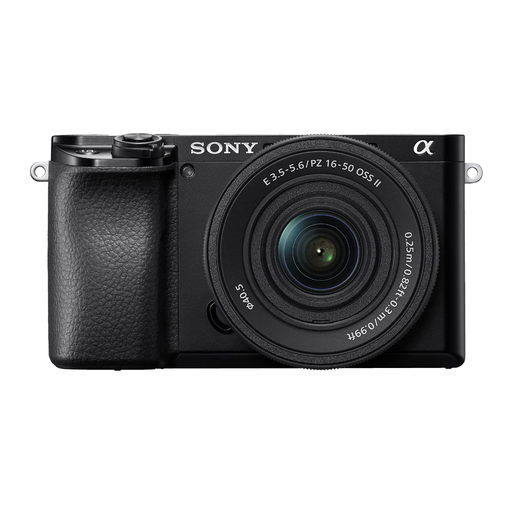
Why This Fits Their Persona: This interchangeable-lens camera is an excellent choice for users looking to upgrade their video quality for YouTube or vlogs. The large APS-C sensor delivers high image quality even in low light, and the tilting screen makes self-recording easy.
It avoids the hidden cost trap by coming with a versatile kit lens that is sufficient for many use cases. At the same time, its interchangeable lenses offer a clear upgrade path for the future without requiring an immediate new purchase.
According to Sony, the autofocus responds in just 0.02 seconds and features reliable eye-detection for humans and animals. The 4K video recording and 11 fps continuous shooting speed are impressive features in this price range.
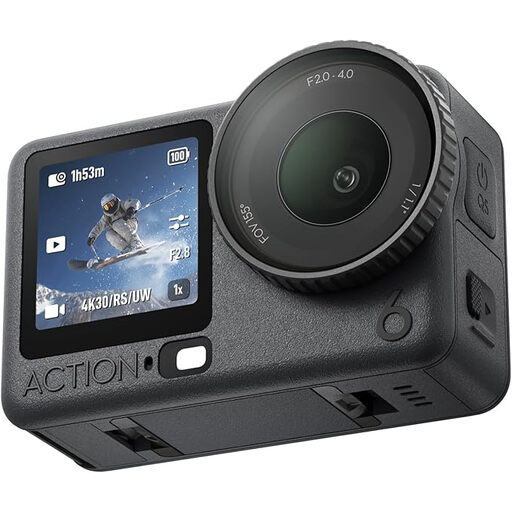
Why This Fits Their Persona: This action cam is designed for use in harsh conditions. It is waterproof down to 20 metres and cold-resistant without an additional case, making it a great choice for winter sports, diving, or mountain biking.
It focuses on what counts for action shots: durability, image stabilisation, and ease of use. It avoids the baggage of an interchangeable-lens camera (e.g., swappable lenses) that would only be a hindrance in the outdoors.
The variable aperture from f/2.0 to f/4.0 allows for adaptation to changing light conditions, a rare feature in action cams. The 1/1.1-inch sensor is impressive for a camera of this size and enhances recording quality. The battery life of up to 4 hours under normal conditions is also a plus.
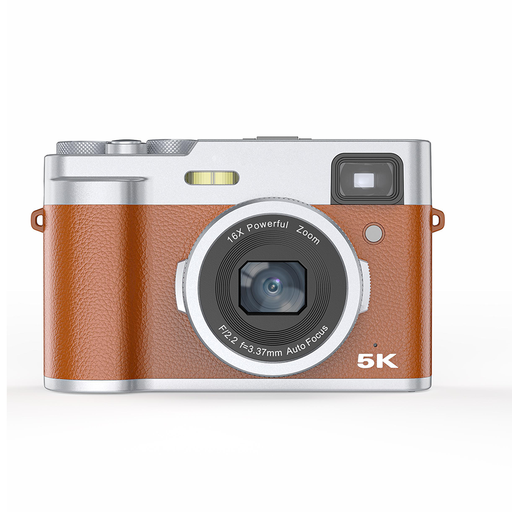
Why This Fits Their Persona: This retro-style compact camera is ideal for students, teenagers, and photography beginners. It offers modern features like 5K video and autofocus in an easy-to-use body, without the complexity and cost of professional equipment.
It bypasses the megapixel myth by focusing on useful features. Instead of just relying on a high MP count (achieved here through interpolation), it offers an optical viewfinder, a port for an external microphone, and electronic image stabilisation—features with real added value.
The combination of a front and rear camera, autofocus on the front camera, and an optical viewfinder is unusual in this price range. The hot shoe for an external flash offers creative possibilities that go beyond typical entry-level cameras.
We've compiled a complete, up-to-date list of products that fully meet these strict selection criteria and all relevant safety standards.
For most users today, 4K resolution is a worthwhile investment. It not only provides sharper videos but also offers more flexibility in post-production, such as the ability to zoom into the frame without losing quality. If you only watch videos on a smartphone and don't edit them, a good Full HD (1080p) camera may also be sufficient.
A compact camera has a fixed, built-in lens. It is generally smaller, lighter, and easier to use. An interchangeable-lens camera (or mirrorless camera) allows you to swap lenses. This provides greater flexibility and image quality but also requires a larger investment and a steeper learning curve. For beginners who just want to take great photos, a high-quality compact camera is often the better choice. Those who plan to dive deeper into photography will benefit from the expandability of an interchangeable-lens camera.
The storage requirement depends heavily on the resolution and video format. As a rough guideline: one hour of 4K video at 30 fps requires about 30-40 GB of storage space. For occasional recording, a 64 GB card is often enough. If you plan to shoot longer videos or vlogs, you should opt for at least a 128 GB or 256 GB card. Pay attention to the card's speed class (e.g., V30 or higher) to ensure smooth 4K recording.