For checking readings yourself every day
You want to check the temperature and humidity in a damp room at a glance, and don’t necessarily need an app. The German Environment Agency recommends keeping an eye on relative humidity.


If you check the temperature and humidity yourself on a regular basis, an easy-to-read thermo-hygrometer is often all you need. For recurring periods of damp, stored readings or an app history can be more useful. Alerts can come in handy if you rarely look at the display: Govee describes the H5075 as a Bluetooth model, while SwitchBot says a hub is needed to receive phone notifications from the Meter Plus. A hygrometer displays readings, but it won’t fix the cause of damp or structural damage.
You want to check the temperature and humidity in a damp room at a glance, and don’t necessarily need an app. The German Environment Agency recommends keeping an eye on relative humidity.
You want to see whether humidity only rises briefly or returns after airing the room. Stored readings or charts can be useful for this.
You rarely look at the device, so you’d like a visual alert or – with a suitable connection and set-up – a notification on your phone.
First decide whether you want to check the device yourself, track changes over time or receive an alert without having to look at the display regularly.
| What you need | What to check before buying | Who might find this particularly important? |
|---|---|---|
| Keeping track of everyday humidity | An easy-to-read display showing relative humidity and temperature; consider where you’ll place it. | If I want to check readings in the room regularly, I need a display that’s easy to read where I put it. Around 36 % of consumers are likely to have this as their main priority. |
| Spotting recurring damp | Check whether min./max. readings are enough or whether you need an app history over time; if you use an app, check how readings are stored and how the specific model connects. | If I want to know whether damp returns after airing the room or at certain times, a history is more useful than a single reading. Around 29 % of consumers are likely to prioritise tracking changes over time. |
| Noticing high readings | Distinguish between an alert on the device and a phone notification; check the trigger threshold, range and any additional equipment required. | If I can’t check the display often, I want to notice an alert even when I’m not looking at the device. Around 21 % of consumers are likely to need this kind of alert. |
| Finding a space-saving place for it | Compare the dimensions and options for standing or mounting the specific version; make sure the display will still be easy to read in your chosen spot. | If there’s little spare surface space in my small flat, finding a suitable place for it matters – without making the display hard to read. Around 14 % of consumers are likely to prioritise a space-saving set-up. |
The device initially shows the humidity where it’s placed. Cold external walls or poorly ventilated areas behind furniture can still develop damp patches.
Take recurring readings and any areas of concern into account. For mould, the consumer advice centre recommends finding and dealing with the cause.
A Bluetooth connection doesn’t automatically mean you can access the device when you’re out. SwitchBot says a hub is needed to receive phone notifications from the Meter Plus.
For the specific model, check separately whether it offers a history, alerts and remote access, and what connection or additional hardware is needed.
According to the manufacturer, the Hama TH-10 displays a symbol when relative humidity reaches 70 %. The German Environment Agency recommends a range of 40 to 60 % to help keep the risk of mould as low as possible, so the fixed alarm threshold shouldn’t be confused with this guidance.
Check readings yourself and look at how they change over time, rather than waiting for a warning symbol.
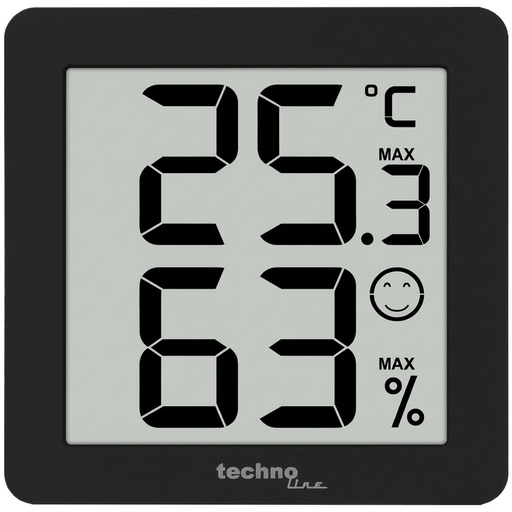
The 30.5055 digital thermo-hygrometer displays readings on the device itself. TFA Dostmann lists min./max. readings, a magnet and a stand among this model’s features.
The H5075 Bluetooth hygrometer combines a display with app features. Govee lists charts, data export and app alerts.
The Meter Plus is designed for use with its display and app. SwitchBot lists data export as a feature.
The TH-10 combines a display with min./max. memory and a warning indicator for high humidity.
According to Xiaomi Germany, the Mi Temperature and Humidity Monitor 2 is a compact Bluetooth device with a display.
The Joybuy products below include thermo-hygrometers with easy-to-read displays, as well as a model with app alerts and stored histories.
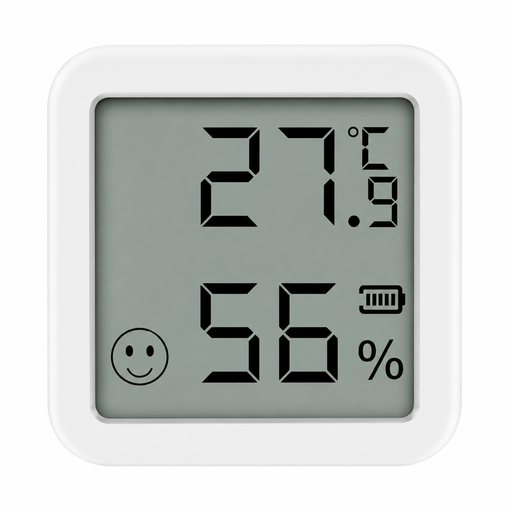 No image available
Designed for living rooms and bedrooms; the digital LCD displays room temperature and humidity.
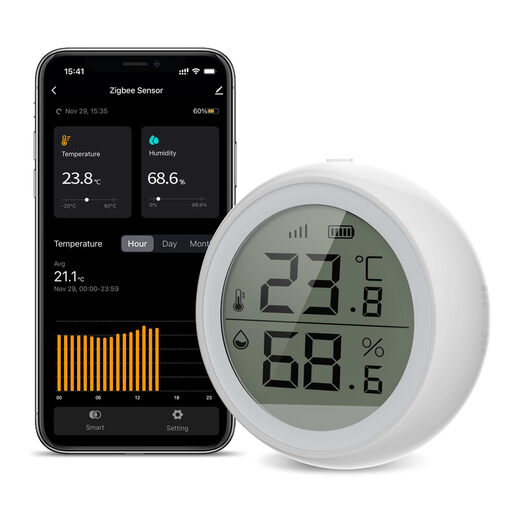 No image available
For anyone who wants to use readings and app alerts; the title specifies an LCD for temperature and humidity.
According to the product description, a Tuya gateway or compatible dongle is required for an app connection and remote monitoring. Philips Hue and other non-Tuya hubs are listed as incompatible.
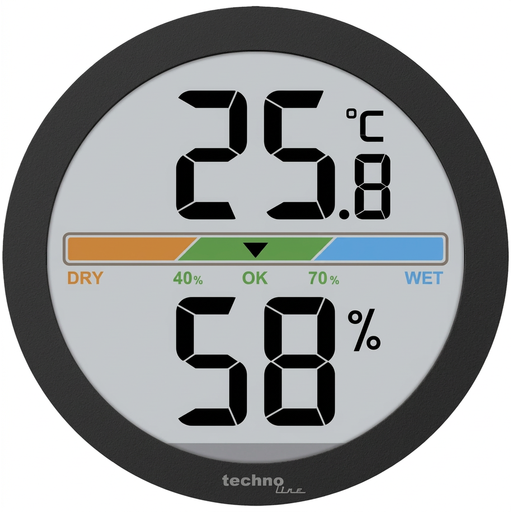 No image available
For checking conditions directly in the room; the product description lists simultaneous readings for temperature and relative humidity.
Includes a comfort indicator, MIN/MAX memory, a stand and wall mounting.
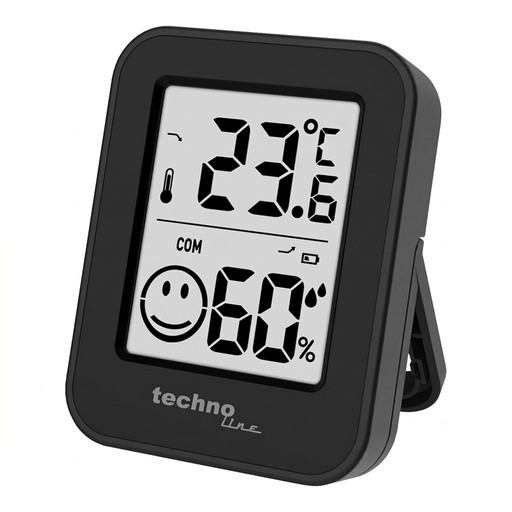 No image available
For checking room temperature and humidity directly; the product details list current readings and MIN/MAX memory.
Includes a trend indicator, magnet, table stand and wall mounting.
 No image available
For displaying indoor temperature and humidity directly; the product description lists an LCD showing both readings.
Includes MIN/MAX memory, a comfort indicator, magnet, wall mounting and a table stand.
The German Environment Agency recommends keeping relative indoor humidity between 40 and 60 % to help minimise the risk of mould. This is a guide for the air in the room, not a guarantee that cold areas of the wall will stay dry. So consider repeated readings alongside any visible signs of damp.
Place the hygrometer somewhere you can check the room readings regularly. Follow the placement guidance for your specific model, and pay particular attention to keeping it away from radiators and direct sunlight.
A hygrometer won’t fix the cause of damp. The consumer advice centre recommends finding and dealing with the cause of mould promptly.
Check the battery type for the specific model and whether the feature you want requires a hub. Hama says the TH-10 uses two AAA batteries; according to the manufacturer, SwitchBot requires a hub for phone notifications from the Meter Plus.
The German Environment Agency points out that old electrical equipment must not be put in household waste. Take the device to a suitable collection or take-back point. Remove the batteries if this is straightforward, and take them separately to a battery collection point.