Anyone weighing rice in a bowl
You want to tare the bowl to zero, then add the rice and weigh it in grams.


If you weigh rice straight into a bowl, look for an easy-to-use tare function and a display that shows grams. Make sure the bowl and its contents together stay within the scale’s capacity. In a small kitchen, footprint and storage matter too; a backlit display or app is only worth considering if you’ll actually use those features. Manufacturers’ claims about display increments are not, on their own, evidence of a model’s measurement accuracy.
You want to tare the bowl to zero, then add the rice and weigh it in grams.
You’re looking for a scale that fits into a small kitchen and is easy to store, without overlooking how easy it is to use with a bowl on top.
Depending on the model, a backlight and larger buttons may be useful. Check that you can still see the display clearly when using your bowl.
Start with the tare function and the capacity needed for your bowl and rice. Then check that the footprint, storage options and display are right for your kitchen. Extra features are only worth considering if you plan to use them.
| What you need | What to check | Who it matters most to |
|---|---|---|
| Weighing rice in a bowl | Check how the tare function works and that the display shows grams; the bowl and its contents together must be within the scale’s capacity. | When I weigh rice in a bowl, I want to tare it and keep the scale’s footprint and capacity in mind. Around 36% of consumers prioritise the tare function and using a bowl. |
| Saving space | Compare the scale’s dimensions and weighing platform with your available worktop and storage space, as well as with your bowl. | In a small kitchen, I want to put the scale away easily after cooking, without compromising on a suitable surface for weighing. Around 29% of consumers focus on space-saving storage. |
| Using the display and buttons | Check the display position, backlight and button layout with a bowl of a similar size. | When there’s a bowl on the scale, I want to be able to read the figures clearly and reach the controls. Around 21% of consumers prioritise readability. |
| Power and extra features | Check the battery type, what’s included and whether the scale switches off automatically. Choose an app only if you’ll use its extra tracking features. | When I weigh ingredients regularly, I want to know how the scale is powered and whether I really need an app. Around 14% of consumers put power and extra features first. |
The fact that a scale displays readings in specific gram increments doesn’t, by itself, tell you the maximum measurement error when weighing.
Compare the increments for the weight range you’ll be using. To find out about measurement error, you’ll need a suitable test of the specific model.
A flat scale may be easier to store, but the bowl needs a suitable surface to sit on and mustn’t cover the display.
Compare the weighing platform and display position with your bowl, and check that the scale’s height suits your available storage space.
According to GEFU, the SCORE can be used for weighing without a mobile phone; the app adds the option to track nutritional information.
Choose an app feature only if you’ll actually use it for this extra purpose.
The KS 19 Pure White is a low-profile option for weighing ingredients in a bowl and storing the scale in a small space.
The Optiss BC50U0 combines bowl weighing with a backlit display and a hanging hook.
The SCORE is aimed at people who want to weigh rice and optionally track meals using an app.
The black digital kitchen scale, measuring 23 × 15 cm, is an option if large buttons are important to you.
Joybuy’s digital kitchen scale options for weighing rice. For each model, check that the features, dimensions and capacity suit your bowl and kitchen.
 No image available
The tare function mentioned in the product title is useful for weighing rice in a bowl.
The product title lists a capacity of 5 kg, stainless steel, an LCD display, Bluetooth connectivity and nutritional analysis via an app.
 No image available
The tare function mentioned in the product title is useful for weighing ingredients in a bowl.
The product title lists a capacity of up to 5.000 g, automatic switch-off and 1 g increments. This figure alone doesn’t prove the maximum measurement error.
 No image available
The tare function mentioned in the product title is useful for weighing rice in a bowl.
The product title lists a capacity of 10 kg, 1 g increments, stainless steel and plastic, and dimensions of 21 × 15,5 × 2,9 cm. Check the dimensions against your storage space; the 1 g figure is not proof of the maximum measurement error.
 No image available
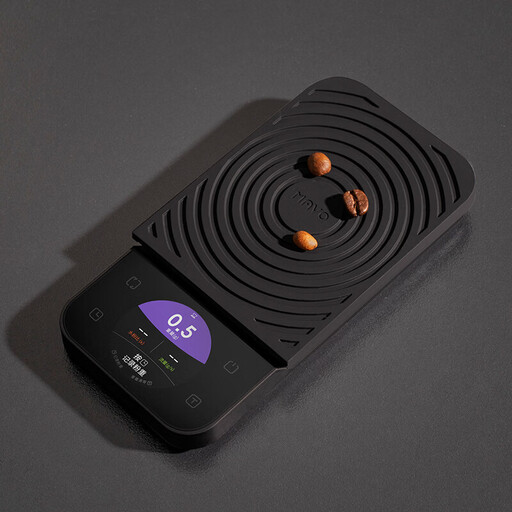
The product title describes this model as a portable kitchen and coffee scale. It also positions it for pour-over coffee; before buying, check that the product details meet your requirements for weighing rice.
 No image available
The product description lists a removable bowl. Check that its shape and the model’s dimensions suit the amount of rice you need to weigh and your storage space.
Place the bowl on the scale, use the tare function to zero it, then add the rice while the display is set to grams. The bowl and its contents together must not exceed the stated capacity.
No. The figure describes the display increments in the first instance. Tefal lists increments of 0,5 g up to 999 g and 1 g at higher weights for the Optiss BC50U0; this alone doesn’t establish an independently measured error limit.
Clean kitchen utensils and work surfaces between tasks. Kitchen hygiene is particularly important after contact with raw meat or fish. Check the relevant instructions to see whether a specific scale can get wet or has dishwasher-safe parts. The Verbraucherzentrale offers general advice on kitchen hygiene.
For a consumer purchase in Germany, statutory rights against the seller are separate from a voluntary guarantee. The Verbraucherzentrale generally states that the statutory warranty period is two years. For sales contracts from 31 July 2026, it also describes a one-off 12-month extension if you choose a repair when a fault occurs. The applicable conditions depend on the circumstances of your case.
If you’re simply weighing your own dinner for personal use, the verification requirement for commercial transactions doesn’t apply. The Measurement and Verification Ordinance distinguishes private activities from commercial transactions; this doesn’t apply to use for setting prices or in another regulated context. The relevant sources are the Measurement and Verification Ordinance and the guidance of the Physikalisch-Technische Bundesanstalt.